The American French Film Festival: A Transatlantic Cinematic Bridge
ByTa-Nehisi Coates
The American French Film Festival, now in its third decade, stands as a testament to the enduring bond between the United States and France, particularly within the realm of cinema. This event transcends a mere showcase, evolving into a crucial conduit for cultural exchange and industry collaboration, bridging two continents through the universal language of film.
A Legacy of Alliance: The Enduring Franco-American Connection in Film
The historical camaraderie between America and France, spanning over two and a half centuries, finds a modern echo in their shared passion for cinema. This deep-rooted mutual admiration has fostered a fertile ground for cultural exchange, making the American French Film Festival a significant annual event.
The Festival's Genesis: A Union of Industry Powerhouses
Now in its 30th year, the American French Film Festival is a monumental collaborative effort. It is presented and produced by the Franco-American Cultural Fund, a unique alliance formed by the Directors Guild of America, the Motion Picture Association, France's Society of Authors, Composers and Publishers of Music, and the Writers Guild of America West. This collaboration, in association with France's national film organization CNC, underscores the festival's deep industry roots and its commitment to fostering cross-continental ties.
Beyond a Showcase: Building Bridges for Cinematic Innovation
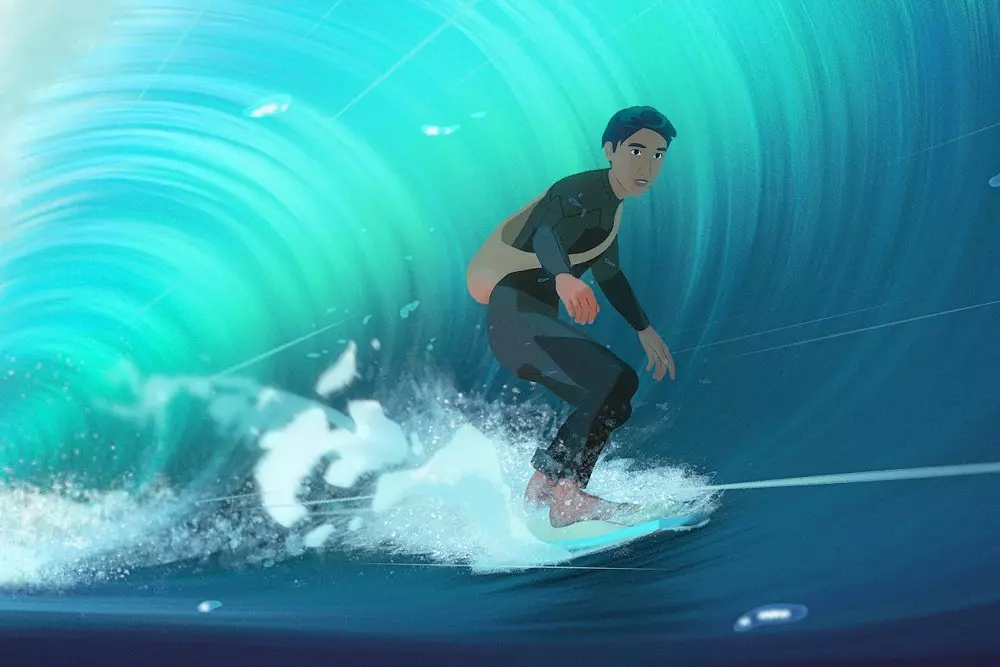
Anouchka van Riel, the festival's deputy director, emphasizes its role beyond mere exhibition, describing it as a vital bridge connecting two continents. The festival's industry origins are fundamental to its mission, actively cultivating and sustaining cross-continental relationships. A prime example is the opening night feature, "In Waves," an animated film based on an American graphic novel, brought to life by French producers and developed through the festival's workshops. This English-language production, set against the backdrop of Southern California and directed by a French-Vietnamese animator, was acquired by Netflix at Cannes, epitomizing the seamless intertwining of the two nations' cinematic endeavors.
A Transformative Vision: Expanding Perceptions of French Cinema
François Truffart, who has served as the festival's executive producer and programmer since 2004, alongside van Riel, highlights the festival's profound impact on reshaping how French films are perceived. Over the years, the audience has grown exponentially, drawn by a diverse program that spans various genres, including documentaries, animation, and short films. This broad selection showcases the rich tapestry of French creative talent, producers, and production houses, demonstrating the vast scope of French cinematic artistry.
Curating Diversity: A Feast for Every Cinephile
Truffart notes the festival's success in attracting diverse audiences for its wide array of films. He considers the sheer scale of the event—featuring 60 films, shorts, and series—a significant accomplishment, especially in the face of a challenging global economy. The festival, concluding on November 8, presents a curated selection of films, including several contenders in the international Oscar race. Notable entries include France's "Minotaur" by Andrey Zvyagintsev, Japan's "All of a Sudden" by Ryūsuke Hamaguchi, Belgium's "Coward" by Lucas Dhont, Romania's Cannes Palme d’Or winner "Fjord" by Cristian Mungiu, and Morocco's "Strawberries" by Laïla Marrakchi.
Universal Narratives: Fostering Empathy Through Film
Truffart passionately believes in the power of film to foster understanding and shared perspectives in an increasingly interconnected world. His curation philosophy prioritizes unique and original cinematic works for American audiences that also explore universal themes. He observes that over time, the festival's audiences have shown a growing appreciation for films that offer fresh viewpoints and innovative approaches to storytelling.
Evolving Horizons: From Series Showcases to Industry Engagement
Since 2015, the festival has integrated television series into its programming, successfully introducing several blockbuster shows. Truffart underscores the importance of a competitive element, reflecting "the opinion of Hollywood." Beyond screenings, the festival enriches the industry dialogue through panels, talks, and workshops, providing invaluable opportunities for professional development and networking.
Inspiring the Next Generation: A Magical Cinematic Experience
Van Riel's enthusiasm is palpable when she describes the free screenings offered to local high school students. Each morning, a 600-seat theater at the DGA is filled with students who watch a film followed by a Q&A session. She describes these moments as "magical," as they actively cultivate a new generation of attendees for the American French Film Festival, broadening their horizons and deepening their appreciation for global cinema.
About the author
Ta-Nehisi Coates
Author and journalist whose work on culture, race, and history includes writing for Marvel's "Black Panther."