“Aroma”: A Deep Dive into Sensory Experiences and Hidden Desires
ByJohn Lasseter
“Aroma,” the latest cinematic creation from director Xue Ma, embarks on a profound journey into the intricate landscape of human senses, emotions, and the often-indistinguishable boundaries separating reality from imagination. This film, set to make its global debut at the Tallinn Black Nights Film Festival, promises a distinctive viewing experience, inviting its audience to delve into a world where scent acts as a conduit to profound inner realms.
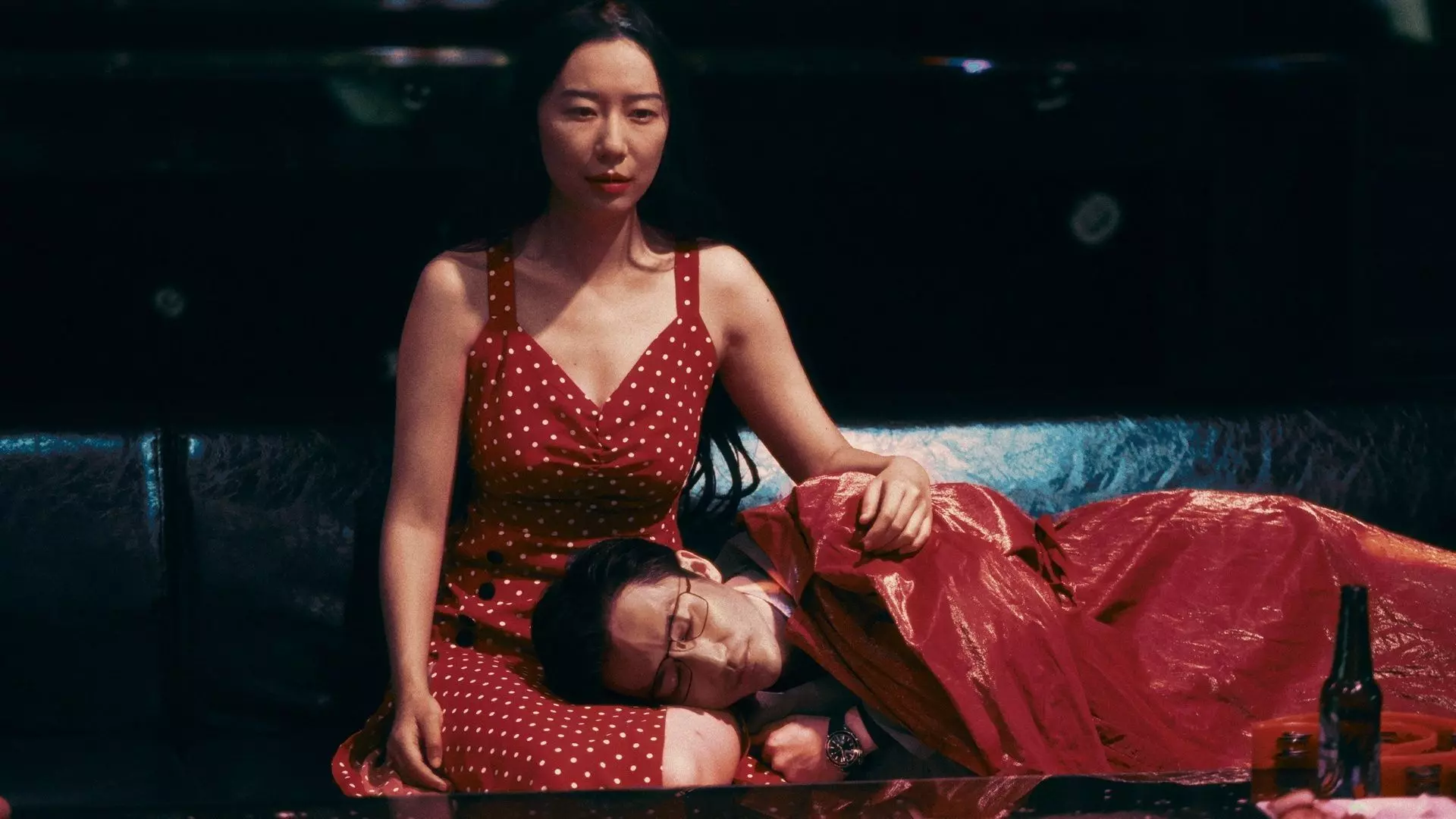
At the core of “Aroma” is Yang, a character for whom olfaction is not merely a sense but a dominant force, shaping her perception of the world. Her unusual sensitivity renders most smells unbearable, with only the distinct notes of lemons and disinfectants providing solace. This peculiar existence is upended when an unfamiliar fragrance draws her to Fang, a man seemingly lost in a coma. Yet, Fang’s unconscious state belies a vibrant internal life, a complex tapestry woven from childhood memories, vivid fantasies, and unacknowledged desires. His sister, who once navigated a life supporting them as a masseuse, reappears in his inner world as a mysterious woman in red, further blurring the lines between the tangible and the illusory.
Xue Ma, known for her previous works “White River” and “Sonata of Wave,” crafts “Aroma” as her third feature, an endeavor that continues her exploration of unconventional narratives. The film’s selection for the “Rebels With a Cause” Competition section at the 30th edition of Estonia’s Tallinn Black Nights Film Festival underscores its unique and thought-provoking nature. Jiali Zhao embodies Yang, with Weihao Xu portraying Fang, supported by Ze Ying and Lu Huang. Ash Chen’s cinematography and Maxime Pozzi-Garcia’s editing are integral to the film’s distinctive aesthetic.
The festival’s promotional material tantalizingly suggests that Ma transforms scent into an unseen pathway connecting the conscious mind with the subconscious. Chen’s evocative cinematography lends a tactile quality to elusive recollections, guiding viewers from stark clinical scenes into a dreamscape pulsating with both peril and longing. “Aroma” is described as a sensuous, disquieting, and subtly provocative piece that guards its deepest enigmas just beyond reach, prompting the question of whether Fang is the sole individual ensnared within a personal fantasy.
In a dialogue with The Hollywood Reporter, the filmmaker elaborated on her thematic choices, emphasizing cinema’s capacity to evoke human emotions through sensory engagement. Ma articulates her deliberate approach to cinematic language, aspiring to forge a shared sensory journey encompassing sight, sound, smell, and touch, all meticulously interwoven with emotional depth. She also expresses a desire to subvert expectations often placed upon Asian filmmakers, seeking greater artistic liberty in her storytelling.
Ma highlights the universal resonance of themes such as loneliness and the yearning for connection, transcending linguistic and cultural barriers. She notes that in many societies, particularly in Asia, individuals often conceal their true feelings and emotional needs behind a facade, suggesting that audiences globally can relate to the protagonists’ predicament. This sentiment is especially pertinent in the contemporary post-pandemic era, where widespread uncertainty and a sense of detachment have amplified feelings of isolation. The film, therefore, serves as a reflection on the inner turmoil and struggles that lie beneath the surface of everyday existence.
The intentional ambiguity between fantasy, reality, and dreams is a deliberate artistic choice. Ma posits that dreams, far from being mere illusions, can reveal profound truths about one’s inner self, often more candidly than waking life. She envisions the film’s narrative as a complex puzzle, designed to encourage viewers to re-evaluate their perspectives and priorities, ultimately fostering a deeper introspection into their own lives.
About the author
John Lasseter
Former chief creative officer of Pixar, whose principles of storytelling have shaped modern animation.