Arthur Jafa on Art, Film, and the Influence of Black Aesthetics
ByAndré Leon Talley
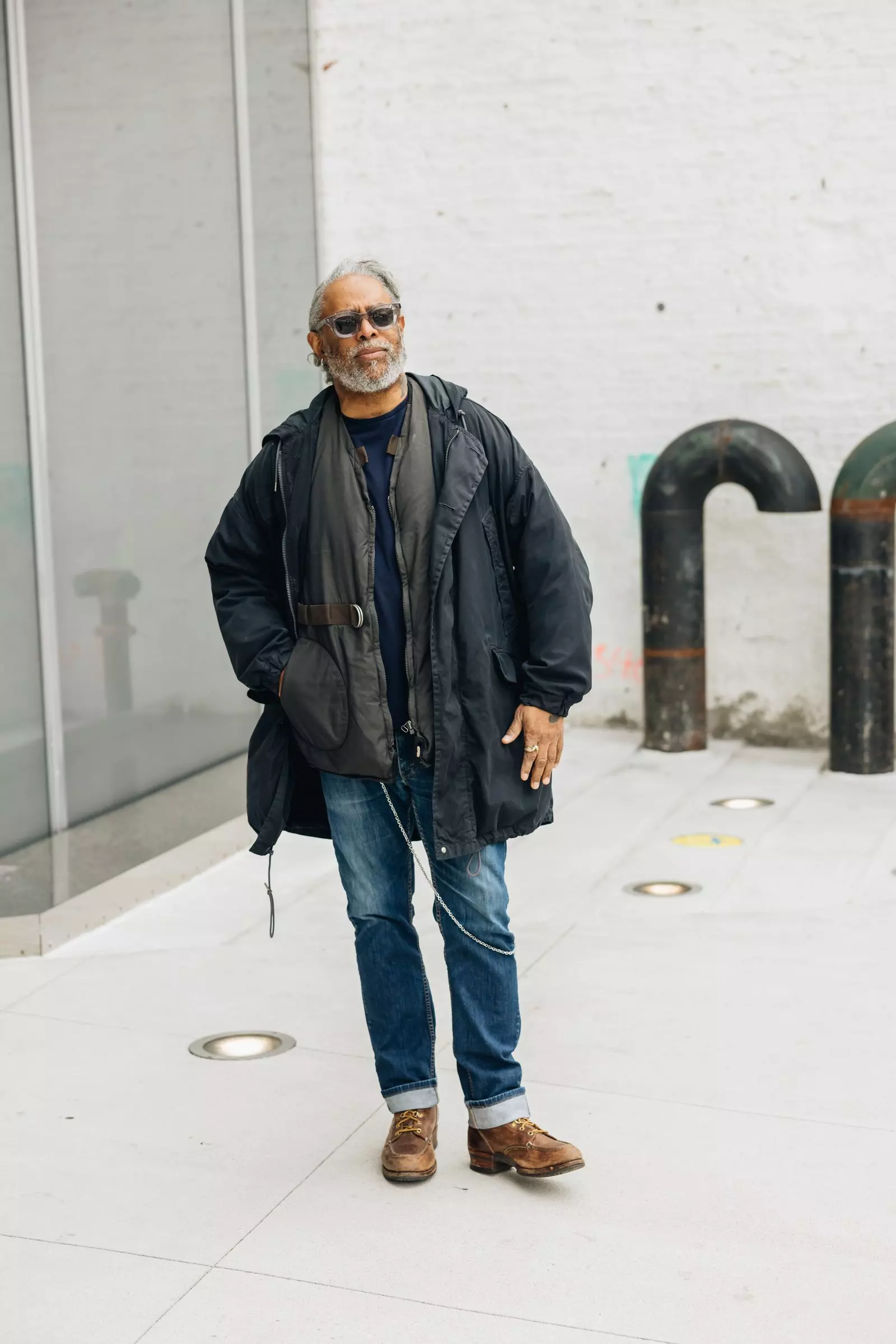
Arthur Jafa, a multifaceted artist and filmmaker from Mississippi, consistently imbues his work with a singular and powerful vision, whether he is capturing cinematic narratives, crafting iconic music videos, or exploring the intricacies of Black American life through video art. His profound and nuanced perspective is evident in every project he undertakes. This distinctive approach extends to his personal style, which has evolved from an early appreciation for boundary-pushing designers like Martin Margiela to a sophisticated blend of avant-garde pieces from Rick Owens, durable Visvim workwear, and refined Fear of God tailoring, establishing him as a prominent figure in contemporary art with a keen sense of fashion. His ongoing exhibition, 'I Am Tony,' at the New Museum in New York City, accompanied by a comprehensive catalog from Phaidon, celebrates his diverse contributions.
Jafa's artistic journey began in early childhood, where a natural inclination for creativity was sparked by assembling objects with Lincoln Logs and Lego blocks. This early fascination soon broadened to include comic books, which he identifies as his first significant encounter with a formal art form. Jack Kirby's dynamic creations, particularly the Marvel Comics universe with titles like 'Fantastic Four' and 'Silver Surfer,' left an indelible impression on him, shaping his nascent artistic sensibilities long before the advent of dedicated comic book stores.
Despite his acclaimed career as a cinematographer, contributing to films such as Julie Dash's 'Daughters of the Dust' and Spike Lee's 'Malcolm X' and 'Crooklyn,' Jafa initially aspired to be a director. His entry into cinematography was somewhat serendipitous; he stepped into the role for 'Daughters of the Dust' due to budget constraints, ultimately earning a Sundance award that opened doors to larger projects. While cinematography became his primary means of livelihood, his passion for directing feature films remains strong, with two scripts currently in development, reflecting his ongoing desire to shape narratives from behind the camera.
Jafa also delves into the relationship between art, purpose, and the influence of Black aesthetics. He asserts that art doesn't inherently require a singular purpose, often deriving meaning from the audience's interpretation. He discusses how Black culture has profoundly impacted mainstream aesthetics, particularly in fashion, where street style, heavily influenced by Black sartorial choices, has become a dominant force. His admiration for the late Virgil Abloh, a visionary Black creative and a profound change agent, underscores Jafa's belief in the importance of individuals who not only create but also share the pathways to cultural advancement.
Reflecting on his personal style evolution, Jafa recalls that his awareness of fashion as a form of expression emerged later in life. Initially, comic book characters' distinct uniforms first illustrated how clothing could convey identity. It wasn't until college that he delved deeply into fashion history and designers, an interest he likens to his appreciation for architecture. His approach to collecting fashion, particularly pieces from Rick Owens, is often driven by an appreciation for their artistic merit rather than their wearability. Jafa's philosophy, as encapsulated in his MoMA exhibition title, 'Less Is Morbid,' emphasizes the enduring freedom of imagination, even in constrained environments, a principle that continues to guide his diverse artistic pursuits and his fervent ambition to make his mark in cinema.
About the author
André Leon Talley
Former creative director and editor-at-large at Vogue, a towering and influential figure in fashion journalism.