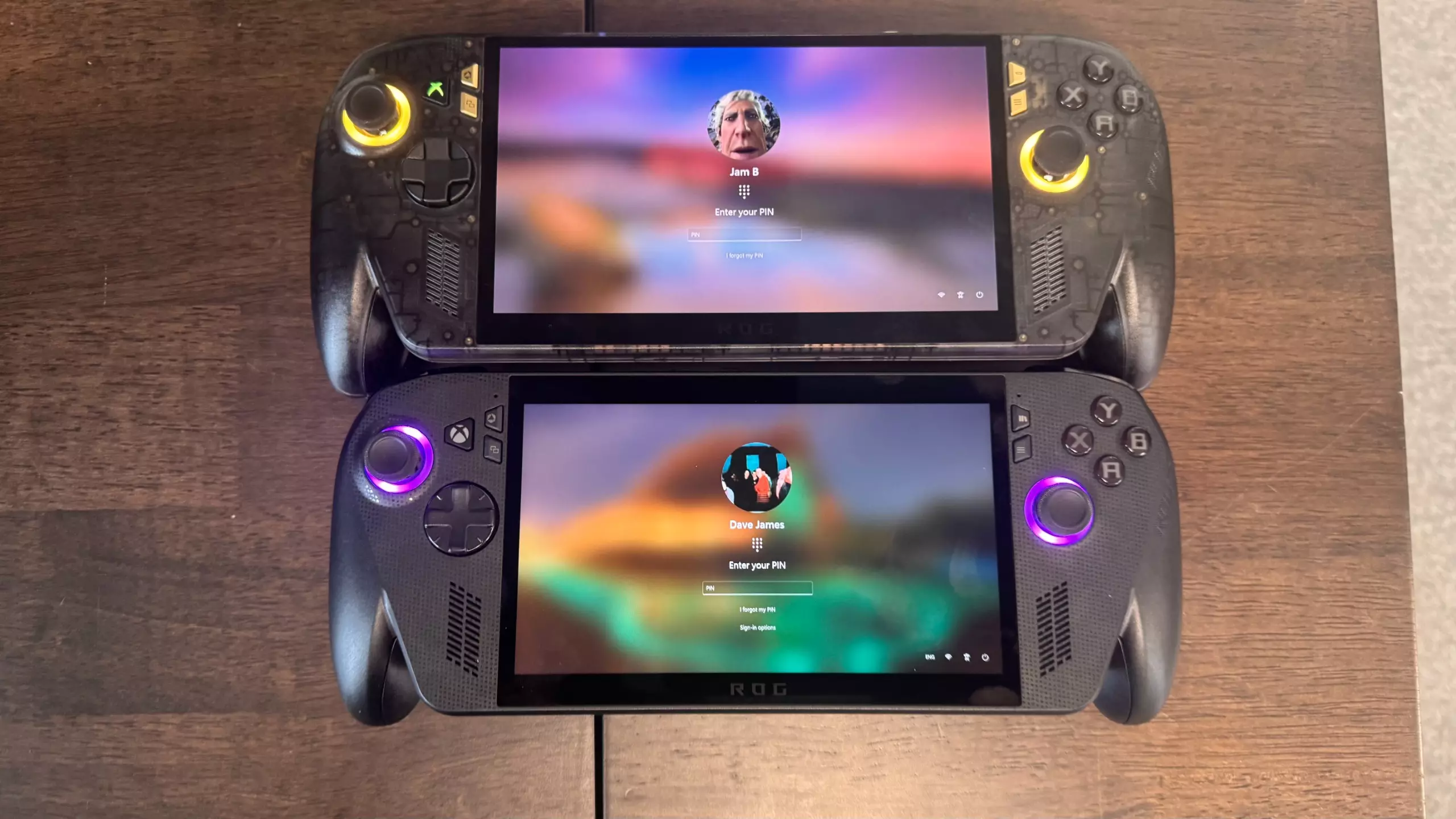
Asus ROG Ally X20 vs. Asus ROG Ally X: A Detailed Comparison
ByRoberta Williams
When considering the Asus ROG Ally X20, one might question if its $300 premium over the original Ally X is warranted. The decision largely hinges on individual preferences and the value placed on a pristine OLED display. Unlike other anniversary editions that might feature mere cosmetic enhancements, the X20 introduces substantial upgrades, including an OLED screen, advanced TMR thumbsticks, superior thermal efficiency, and MicroSD Express compatibility. Additionally, it boasts Impulse triggers for independent rumble and a customizable D-Pad for enhanced tactile feedback.
The display stands out as a primary advantage, featuring a 1400 HDR-certified OLED panel capable of reaching a dazzling 1,400 nits of peak brightness. This vivid display significantly enhances the gaming experience, offering stunning visuals that can be almost too intense, as noted during gameplay. A detailed comparison of specifications reveals that both devices share the same AMD Ryzen Z2 Extreme processor, identical CPU and GPU architectures, and similar memory configurations (24 GB LPDDR5X). However, the Ally X20 distinguishes itself with its 7.4-inch OLED display compared to the Ally X's 7-inch IPS LCD, and its much higher peak brightness of 1400 nits versus 500 nits.
Despite featuring the same core processing unit and memory, the real-world performance between the two devices is remarkably consistent. While some game benchmarks showed slight variations—lower performance in Metro Exodus and F1 24 for the X20, but better results in Horizon Zero Dawn, Cyberpunk 2077, and 3DMark—these differences tend to balance out overall. The X20 also boasts a significantly improved thermal design, running up to 17°C cooler than its predecessor. This enhanced cooling means the device maintains a comfortable temperature during extended gaming sessions, never exceeding 80°C even under heavy loads. Furthermore, the X20 offers a slightly better battery life, lasting up to 2 hours and 9 minutes in 25W gaming mode and nearly 3 hours in 17W mode, and up to 9 hours for indie games, making it a reliable companion for gaming on the go.
In conclusion, while the raw performance figures might not dramatically differentiate the Asus ROG Ally X20 from the original Ally X, the X20 offers a markedly improved daily user experience. The vibrant, super-bright OLED screen, the premium feel of the controls, and its quiet operation contribute to a superior gaming environment. The exceptional thermal management provides peace of mind, allowing for higher wattage settings without concern for overheating. For those deliberating between the two models, the X20’s refinements present a compelling case for a more polished and enjoyable portable gaming experience, making it an attractive option for enthusiasts willing to invest in a premium device.
About the author
Roberta Williams
Pioneer of graphic adventure games, co-founder of Sierra On-Line, and creator of "King's Quest."