Blizzard's Narrative Misstep: The Eight-Year Mystery of Azeroth's Sword
ByReiner Knizia
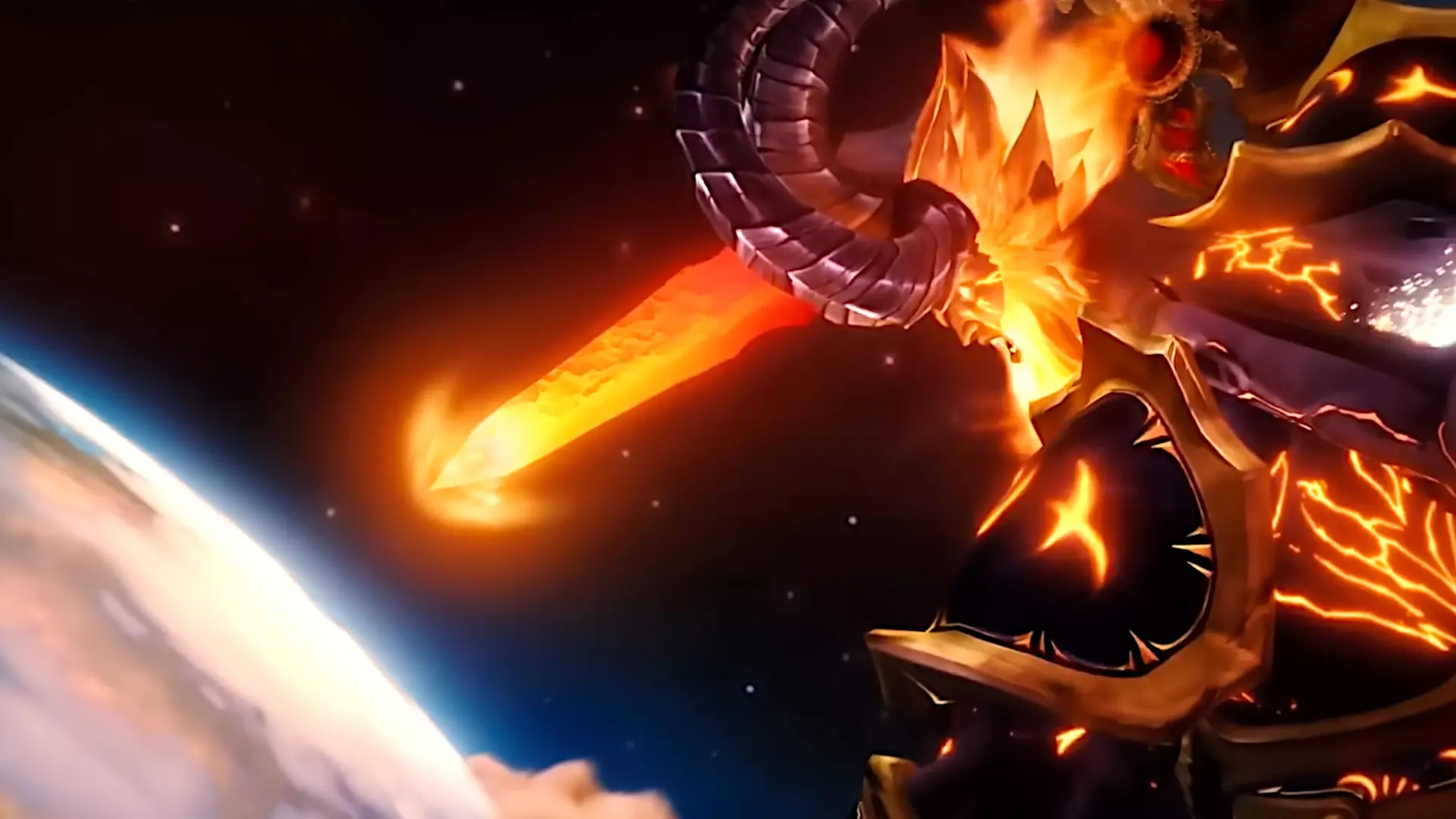
For nearly a decade, a persistent question has echoed through the World of Warcraft community: what became of the colossal blade plunged into Azeroth? This monumental inquiry, born from the dramatic conclusion of the Legion expansion when the formidable Sargeras attempted to corrupt the planet's core, has remained a central enigma. The revelation, delivered recently through an interview, confirms that the ominous spike depicted near Azeroth's Worldsoul is indeed the legendary sword. While this provides a long-awaited answer, it also sparks a discussion about the effectiveness of narrative delivery in modern gaming, particularly when compared to titles like Final Fantasy 14, which often integrate major plot points seamlessly into environmental storytelling.
The mystery of Sargeras's sword has been a recurring theme since the conclusion of World of Warcraft: Legion. For precisely eight years and nine months, its fate represented a significant unresolved aspect of the game's intricate lore. This long-standing query gained particular relevance given Blizzard's often fragmented approach to expansion storylines. Unlike previous expansions, the current Worldsoul Saga marks Blizzard's first concerted effort to craft a cohesive, multi-expansion narrative, drawing parallels to Final Fantasy 14's acclaimed decade-long epic, which spanned from A Realm Reborn to Endwalker.
The answer to this enduring puzzle was provided by Associate Game Director Paul Kubit in an interview with WoWHead. Kubit confirmed that a jagged spike shown in a screenshot of Azeroth’s Worldsoul, featured in the Midnight: What's Next recap, is indeed Sargeras's sword. He explicitly stated, “Yeah, yeah. That's the Sword,” adding that "Eagle-eyed viewers have identified that, and yeah, we've been thinking about the Sword and it should become very apparent to people as you play through Eclipse that we haven't forgotten about the Sword. This is not something that is going away. Also, how tragically close it came to the Worldsoul is a testament to how close he came, but also maybe the power of the Worldsoul herself." This direct confirmation, while clarifying, bypassed the immersive discovery many players might have anticipated.
From a purely conceptual standpoint, the detail itself is undeniably compelling: the world-ending blade came within mere feet of piercing Azeroth’s very essence, a catastrophic event that would have saturated the entire planet with fel magic. According to the intricate cosmology of World of Warcraft, this act would have thwarted the Void Lords' ambition to transform Azeroth into a Dark Titan. However, such an event would have necessitated the annihilation of all life on the planet, rendering it an unsustainable narrative path. Yet, the method of this revelation leaves something to be desired. The author expresses a sense of disappointment, envisioning a more impactful scenario where players would organically stumble upon this critical visual cue within the game world, leading to an immediate and profound realization of the peril averted.
This contrasts sharply with the narrative prowess often demonstrated by Final Fantasy 14, a game renowned for meticulously guarding its story elements until their official release within patches or expansions. Final Fantasy 14 skillfully weaves its narrative into its environments, with vistas and landscapes serving as integral storytelling devices. Memorable instances include the breathtaking sight of an impossible shimmering city submerged beneath the ocean or the haunting beauty of a fairy realm in its twilight, each evoking a powerful emotional response and deepening the player’s connection to the ongoing saga. In these cases, the environment itself becomes a character, speaking volumes without explicit dialogue.
World of Warcraft, however, frequently deviates from this approach. The game often previews major narrative beats and cinematic moments during Public Test Realm (PTR) phases, interviews, and press conferences. This practice, while providing early information to eager fans, inadvertently deprives Blizzard of a potent narrative tool: allowing the environment to naturally unveil the story. Instead of players encountering the sword’s ominous proximity in Midnight's final raid and piecing together its significance through in-game exploration, they are effectively told in advance by a developer exactly what they will see months later. This pre-emptive disclosure diminishes the potential for genuine surprise and emotional impact. While elements of Midnight's story have shown promise, the consistent tendency to reveal critical lore through external channels rather than organic in-game discovery hinders the emotional resonance that could otherwise be achieved, preventing the narrative from gripping players’ hearts with the same intensity as its contemporaries.
About the author
Reiner Knizia
Prolific and award-winning board game designer with a PhD in mathematics, known for elegant game mechanics.