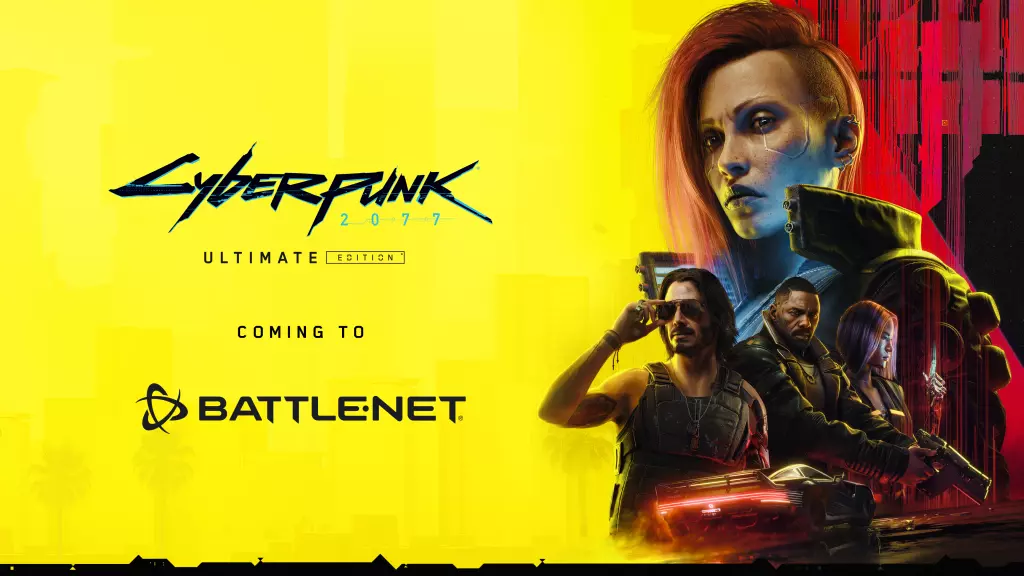
Blizzard's Battle.net platform is undergoing a significant strategic shift, moving beyond its traditional exclusive focus on Blizzard titles to carefully integrate select third-party games. This evolution was highlighted at BlizzCon, where it was confirmed that CD Projekt Red's highly anticipated "The Witcher 3: Wild Hunt Remastered" and "Cyberpunk 2077" will soon be available on the digital storefront. This marks a notable expansion for Battle.net, yet Blizzard maintains a clear vision: to offer a curated selection that aligns with its audience's preferences, rather than pursuing a broad, all-encompassing catalog akin to Steam or the Epic Games Store.
Battle.net, established in 1997 with the release of the original "Diablo," initially served as a foundational platform for multiplayer interactions, predating many contemporary digital storefronts. For years, its content remained exclusively Blizzard-centric. The first significant deviation occurred in 2017 with the launch of "Destiny 2" on the service, followed by other Activision-published franchises such as Call of Duty and Crash Bandicoot. More recently, post-Microsoft's acquisition of Activision Blizzard, titles from Xbox Game Studios and Bethesda, including "Avowed," "Sea of Thieves," "The Outer Worlds 2," and "Doom: The Dark Ages," have also found a home on Battle.net. The addition of CD Projekt Red's popular role-playing games further diversifies the platform's offerings.
Despite this trend of integrating more external titles, Blizzard's representative, Andrew Guerrero, clarified in a BlizzCon interview that the company has no aspirations to directly challenge the market dominance of Steam or the Epic Games Store. Guerrero emphasized a "much more focused approach," prioritizing games that resonate deeply with Battle.net's existing passionate player base. The strategy centers on identifying "top-tier quality experiences" that genuinely appeal to their audience, rather than simply increasing the volume of available games. This selective curation aims to maintain the platform's integrity and ensure that every addition enhances the user experience.
Guerrero also touched upon the developmental considerations for supporting third-party titles, noting that Battle.net wasn't originally designed for broad third-party publishing. However, efforts have been made to streamline the integration process, moving away from entirely bespoke solutions for each new game. Nevertheless, a "self-publish" model, where developers can freely upload their games, is not on Blizzard's agenda. The company is wary of the curation challenges faced by larger platforms like Steam, where the sheer volume of content can sometimes overwhelm users. Blizzard's goal is to ensure that every game presented to its users is carefully chosen and likely to be enjoyed, reflecting a commitment to quality over quantity.
Blizzard's deliberate expansion of Battle.net to include high-profile third-party games like "The Witcher 3: Wild Hunt Remastered" and "Cyberpunk 2077" signifies a strategic yet cautious evolution. The company's focus remains on providing a quality-driven, curated experience for its dedicated player community, carefully selecting titles that complement its existing library without directly competing in the broader digital storefront market. This approach underscores a commitment to player engagement and a distinct identity within the competitive gaming landscape.
About the author
Kim Swift
Video game designer known for pioneering work on "Portal," focusing on innovative puzzle mechanics.