BMW's Advanced Driver Assistance System Targets Urban Environments by 2027
ByBrock Yates
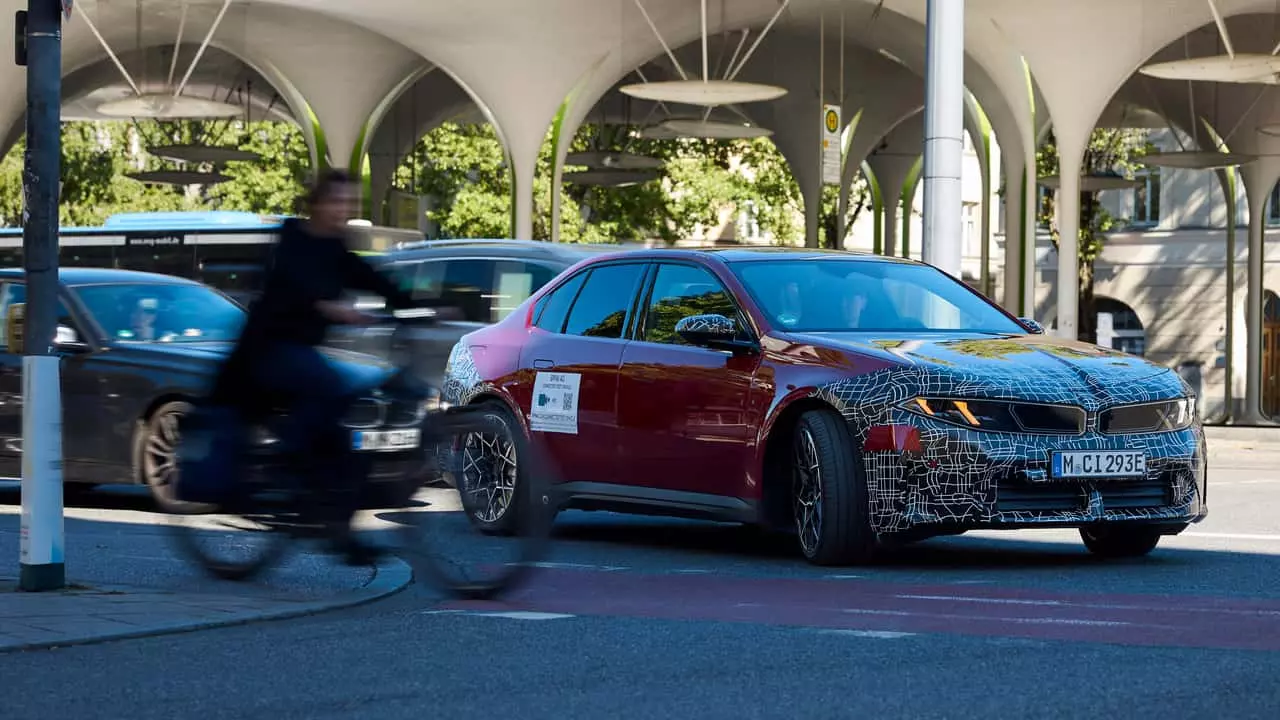
BMW has successfully concluded real-world trials for a sophisticated driver assistance system capable of managing turns, navigating roundabouts, and making right-of-way decisions within city traffic. The automaker is targeting regulatory approval by early 2027, with an initial launch planned for Germany.
BMW's Enhanced City Assistant to Revolutionize Urban Driving Experience
The updated City Assistant system builds upon BMW's existing technology, which already facilitates automatic stops and starts at traffic lights in supported regions. The new iteration incorporates navigation-guided maneuvers, though it remains classified as SAE Level 2, necessitating continuous driver attention to the road.
BMW intends to introduce this urban driving system across Europe, commencing in Germany in 2027, with a gradual rollout to other markets thereafter. Joachim Post, a board member for development at BMW AG, articulated the company's objective: to deliver a substantial improvement in driving comfort, providing seamless assistance to drivers along their navigation routes, from motorways through rural roads, and into bustling cityscapes.
The enhanced City Assistant relies on active route guidance from BMW's navigation system to anticipate upcoming driving situations. Upon detecting an approaching turn, roundabout, or merge, the software takes control of steering, braking, and acceleration to execute the maneuver. BMW refers to this expanded functionality as Symbiotic Drive, designed to augment the driver's capabilities. Drivers retain the ability to override the system by taking the wheel or applying the brakes, at which point the system immediately cedes control.
Addressing the complexities of urban driving, the system also handles right-of-way scenarios, which are inherently more challenging in city environments compared to highways. Unprotected left turns, four-way stops, and shared intersections are notoriously difficult for most driver assistance software. BMW's emphasis on successful real-world testing for these specific situations will be closely scrutinized upon the system's release to consumers. While pricing for these new urban features has not yet been disclosed, BMW has confirmed that the necessary hardware will be standard in certain models. The functionalities will be activated later via over-the-air software updates, a method already employed by BMW for other automated driving features.
Reflections on the Future of Urban Mobility and Driver Responsibility
The advent of advanced driver assistance systems like BMW's City Assistant marks a significant step forward in automotive technology, promising a future where urban commutes are safer and more comfortable. However, this evolution also highlights the delicate balance between automation and human oversight. While these systems aim to reduce driver fatigue and enhance safety, the continuous requirement for driver attentiveness underscores the ongoing importance of human responsibility behind the wheel. As vehicles become increasingly intelligent, the nature of driving transforms, prompting us to consider how technology can best complement human skills rather than entirely replace them, ensuring a harmonious and secure co-existence on our roads.
About the author
Brock Yates
Legendary automotive journalist who created the Cannonball Run and wrote for Car and Driver.