A Cinematic Symphony: Paul Thomas Anderson's 'Cameron Winter at Carnegie Hall'
ByStephen King
Paul Thomas Anderson's latest film, "Cameron Winter at Carnegie Hall," offers a profound and immersive journey into the solo artistry of Cameron Winter. This cinematic experience, which premiered at the New York Film Festival, focuses entirely on Winter's captivating voice and piano performance. Spanning 75 minutes, the movie captures the raw emotion and intricate musicality of his concert, creating an atmosphere that is both intimate and grand. The deliberate pacing and focus on the sonic landscape highlight Winter's unique ability to weave narratives through his melancholic tunes, leaving audiences with a deeply moving and unforgettable impression.
The Ethereal Soundscape of Carnegie Hall: A Cinematic Event
On October 1, 2026, the New York Film Festival unveiled a truly remarkable cinematic endeavor: Paul Thomas Anderson's "Cameron Winter at Carnegie Hall." This 75-minute concert film documents Cameron Winter's spellbinding solo performance at the iconic Carnegie Hall on December 11, 2025. Unlike conventional concert recordings, Anderson's direction elevates the experience into a visually and sonically enthralling narrative. Winter, known as the frontman of the band Geese, takes center stage, seated at a Steinway grand piano, delivering a series of deeply meditative and emotionally charged songs.
The film meticulously captures the rich, resonant acoustics of Carnegie Hall, allowing Winter's powerful low baritone to echo through the space with astonishing clarity and depth. His vocals, occasionally soaring to higher registers, exhibit a mesmerizing vibrato and sustained quaver that captivate the listener. Critics have drawn parallels between Winter's performance and the distinct styles of Thom Yorke, Tom Waits, and even early Bruce Springsteen, particularly in his ability to convey profound emotion through his melodic phrases. There are also echoes of John Cale's seminal live work, and the free-flowing, almost stream-of-consciousness lyrical delivery reminiscent of Bob Dylan at his most inspired.
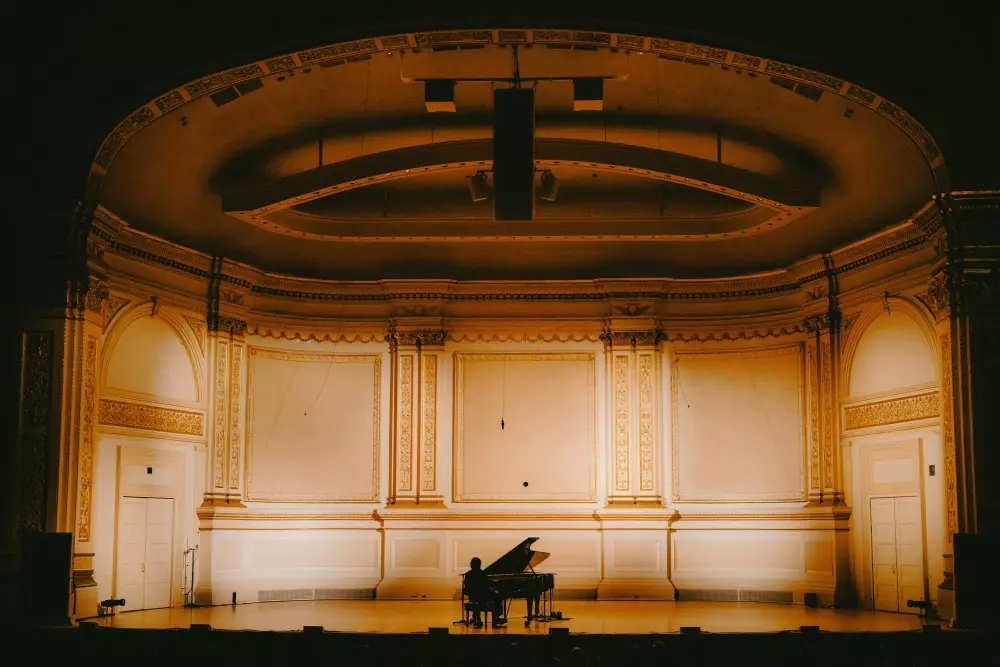
Anderson's directorial choices are subtly brilliant. Despite Winter often performing with his back to the audience, emphasizing the primacy of the music, the camera skillfully brings viewers into his emotional sphere. The staging of the piano at a slight angle on the minimalist Carnegie Hall stage, combined with Anderson's artful framing, creates a sense of profound intimacy. The visual aesthetic, bathed in a warm orange-yellow glow, evokes a classical, almost spiritual ambiance, reminiscent of candlelight in a hallowed space. This visual poetry perfectly complements Winter's music, which explores themes of mystery and heartbreak, transforming sorrow into a transcendent joy.
Winter's repertoire includes introspective pieces like "It All Fell in the River," which appears to explore catharsis, and the evocative "If You Turn Back Now," a relationship drama interspersed with spiritual musings. The song "$0" delves into feelings of emasculation and insignificance, yet remarkably pivots to a stirring declaration of faith: "God is actually real." The concert culminates with "Take It With You," a poignant ballad echoing the romantic intensity of Dylan's most majestic works. While Winter's songs typically maintain a slow tempo and unconventional structures, his extraordinary vocal instrument imbues each performance with an indie, operatic grandeur that is both captivating and deeply moving.
This film is not merely a documentation of a concert; it is a meticulously crafted artistic statement that showcases Winter's unparalleled talent and Anderson's keen directorial vision. It solidifies Winter's standing as a chanteuse capable of channeling profound sadness and unwavering faith through his music.
Paul Thomas Anderson's "Cameron Winter at Carnegie Hall" offers a compelling redefinition of the concert film genre. It’s a testament to the power of artistic collaboration, where a director's vision can amplify a musician's profound talent. This film suggests that true artistic expression lies not just in the performance itself, but in the ability to create an immersive experience that resonates deeply with the audience. It inspires contemplation on how sound and visual artistry can coalesce to create something truly magical and enduring.
About the author
Stephen King
Prolific author of horror and suspense, who also writes extensively on the craft of writing and pop culture.