Coen Brothers Advocate for Cinema Experience Amidst Streaming Boom
ByMindy Kaling
During the recent Lumière Film Festival in Lyon, esteemed filmmakers Joel and Ethan Coen shared insights into their illustrious careers, their perspectives on the evolving landscape of film distribution, and their unwavering support for the traditional cinematic experience. Despite having engaged with prominent streaming services such as Netflix and Apple TV+, the brothers conveyed a clear preference for the communal viewing environment of movie theaters, lamenting the trend of audiences watching films on personal devices like iPhones.
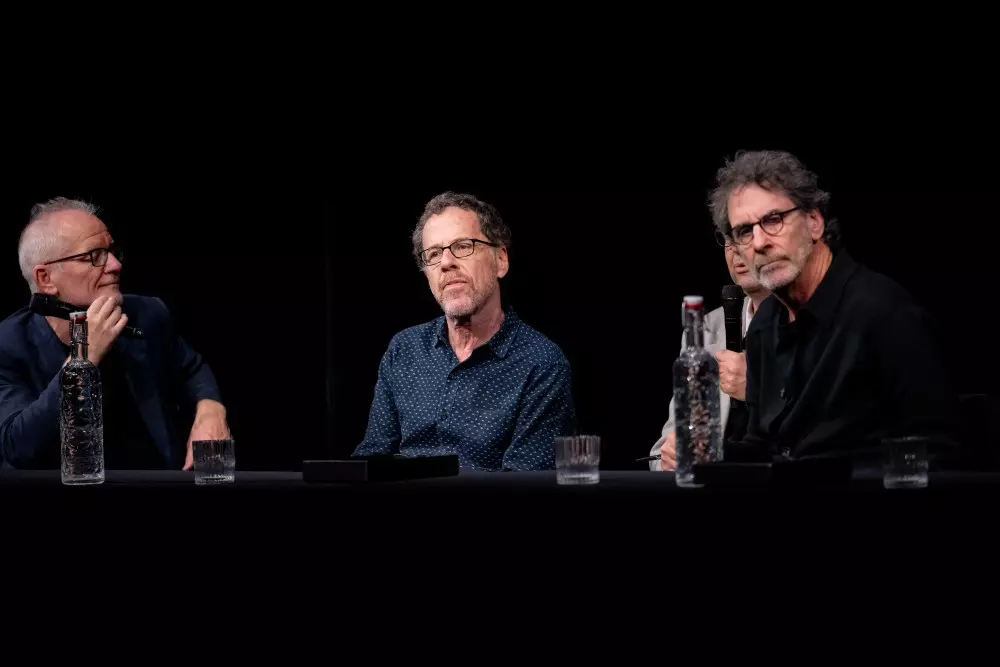
The Coen brothers, known for critically acclaimed works such as 'Fargo' and 'No Country for Old Men,' articulated their views during a masterclass led by festival director Thierry Frémaux. They received the prestigious Lumière Award, a testament to their significant contributions to cinema. Joel Coen noted that the emergence of home video played a pivotal role in broadening the reach of their earlier independent films, opening up new markets for their distinct storytelling. However, he emphasized that this accessibility should not overshadow the unique magic of shared big-screen viewing.
Joel Coen highlighted the irreplaceable joy of experiencing a film collectively in a cinema, describing the diminishing platforms for film consumption as 'disheartening.' He commended the Lumière Film Festival for fostering an environment where large audiences gather to watch movies on the big screen, an experience he feels is becoming increasingly rare in the United States.
Throughout the masterclass, the brothers, in a characteristically self-deprecating yet insightful manner, reflected on their four-decade-long creative partnership. They candidly shared humorous anecdotes and acknowledged the indispensable contributions of their collaborators, stressing that their films are a product of collective endeavor. Ethan Coen humorously stated, 'I always feel I am not worthy' at the session's commencement, setting a light-hearted tone.
Their creative synergy was evident as Joel described their writing process as a constant exchange of ideas, famously quipping that Ethan retypes the book while Joel holds it open when adapting a work. Ethan playfully added that they prefer hardcover books for this reason, drawing laughter from the audience. They recalled the origin of 'Burn After Reading,' which sprang from a casual conversation about a film they initially deemed unmakeable. Both brothers underscored the importance of collaboration, with Joel explaining that the essence of such partnerships lies in recognizing when the other's idea is superior. Producer Eric Fellner, a long-time collaborator, attested to their enjoyable working relationship, calling them 'by far and away the most joyful people to make films with in the industry.'
Joel also fondly remembered meeting his wife, Frances McDormand, during the casting of their debut film, 'Blood Simple,' when she was a fresh drama school graduate. He humorously recounted her refusal to return for a second reading that day, as she had commitments to watch her boyfriend on television, eliciting more laughter from the crowd. The brothers also touched upon their extensive history with the Cannes Film Festival, recalling their Palme d'Or win for 'Barton Fink' in 1991 and the subsequent, surprising lack of awards for 'No Country for Old Men,' which later garnered multiple Oscars.
When asked about screenwriting rules, Ethan asserted their general unawareness of them, while Joel advised aspiring screenwriters to defy as many rules as possible. As the masterclass concluded and Frémaux prepared to honor them, Ethan playfully reiterated, 'We are not worthy,' a sentiment that encapsulated their humble yet profound presence.
The Coen brothers' dialogue at the Lumière Film Festival offered a compelling look into their careers, emphasizing the enduring value of the communal cinema experience in an age increasingly dominated by digital platforms. Their reflections underscored the collaborative spirit of filmmaking and their unique approach to storytelling, leaving audiences with a deeper appreciation for their work and their perspectives on the future of film.
About the author
Mindy Kaling
Actress, writer, producer, and author of humorous essays on Hollywood and life.