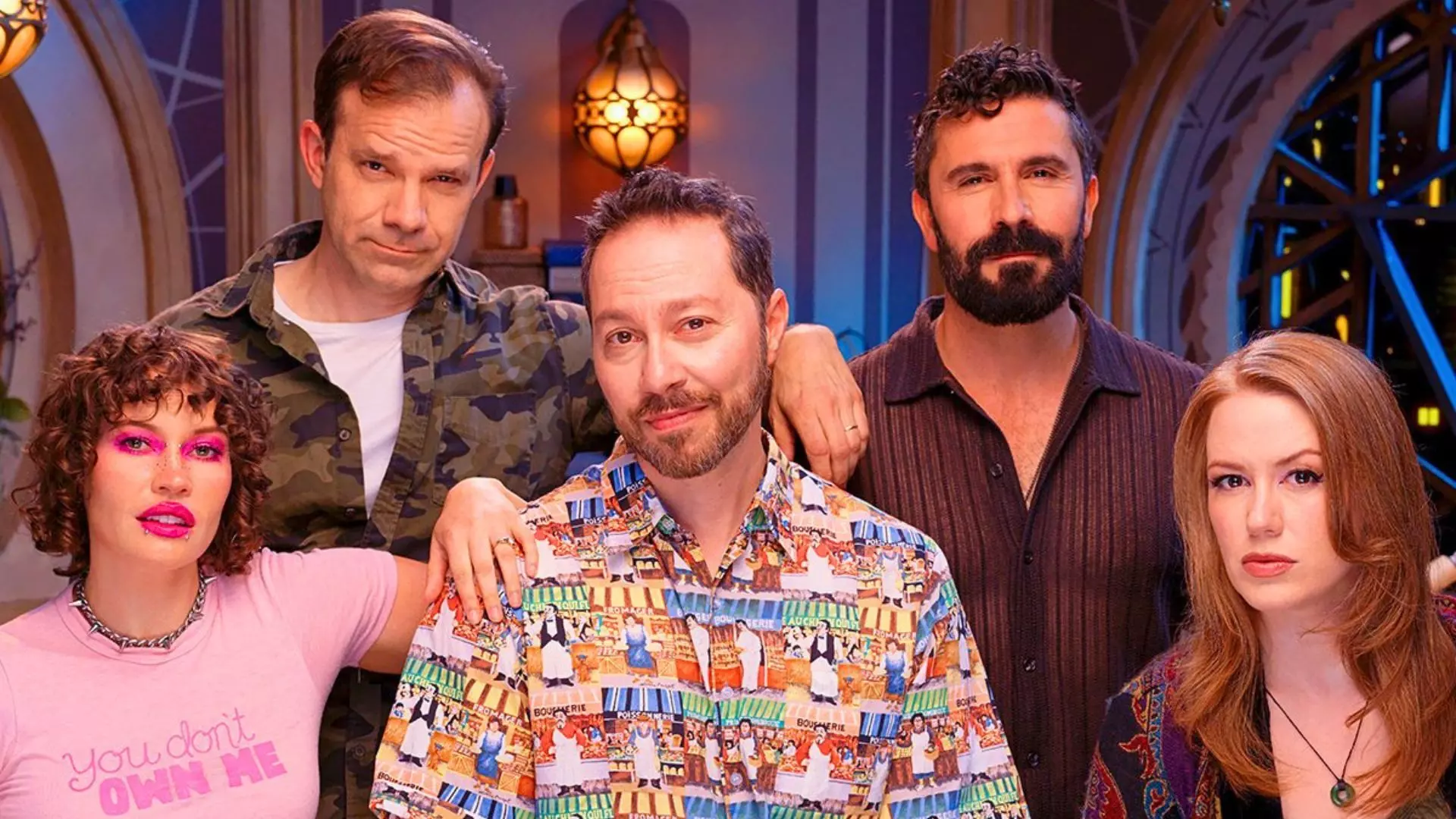
Critical Role's Fourth Campaign: A Deep Dive into Uncharted Territories
ByHideo Kojima
Critical Role's latest endeavor, Campaign 4, marks a significant departure from its predecessors, venturing into an unfamiliar and perilous realm. This campaign distinguishes itself not only through its setting but also through a novel gameplay methodology. By adopting the West Marches format, the cast is segmented into three groups—Soldiers, Seekers, and Schemers—each experiencing distinct segments of the unfolding narrative. This intentional fragmentation means players operate with limited knowledge of events occurring at other tables, creating an atmosphere of genuine uncertainty and compelling improvisation that has become a defining characteristic of this groundbreaking season.
Liam O’Brien, a co-founder and cast member of Critical Role, shed light on the unique challenges and rewards presented by Campaign 4 during an episode of “Tale Gate,” an exclusive talk show on Critical Role’s Beacon platform. O'Brien described the experience as venturing into “uncharted territory,” a stark contrast to his previous campaigns where he possessed a comprehensive understanding of the entire storyline. The West Marches structure intentionally keeps vital plot points and character interactions compartmentalized, often surprising the players themselves with developments they were not privy to. This deliberate withholding of information has fostered an environment where each player’s decisions carry immense weight, as they lack the full context that might otherwise guide their choices.
A notable instance of this informational gap occurred when O'Brien discovered a romantic subplot between fellow players Marisha Ray's character, Murray Mag’nesson, and Robbie Daymond's character, Kattigan Vale, only when it was brought up by Whitney Moore on “Tale Gate.” This example, while seemingly minor, underscores the profound impact of the West Marches format. In previous campaigns, while players might occasionally miss an episode due to external commitments, Campaign 4 explicitly designs the narrative around fragmented experiences. Different player groups tackle diverse quests, subsequently reconvening to share their acquired insights. This approach ensures that even within the larger ensemble, individual experiences remain unique and impactful.
The impact of this divided storytelling was vividly demonstrated during the Convergence arc, particularly in the episode “Council of Heroes.” Here, the players from the Soldiers and Seekers tables were genuinely surprised by the revelation of Yanessa Halovar’s simulated resurrection. Similarly, the true motives behind Occtis Tachonis’s demise remained unknown to both the Soldiers and Schemers. While the cast acknowledges discussing the campaign outside of formal sessions, these conversations are fundamentally different from actively experiencing the unfolding narrative. The real-time, in-character discovery of these plot points adds an unparalleled layer of authenticity and suspense to the gameplay, making each new piece of information a significant event for both the players and the audience.
One of the unexpected benefits of this design is the reduction of player indecisiveness. In earlier campaigns, especially Campaign 3, fans often voiced complaints about the cast's tendency to hesitate rather than make bold decisions. However, in Campaign 4, the inherent lack of complete information compels players to focus intently on their immediate circumstances. This intense focus minimizes overthinking about the broader implications of their actions on other tables, fostering a more dynamic and decisive gameplay style. For example, without the immediate presence of Matthew Mercer's Julian Davinos, Luis Carazo's Azune Nayar could interact with Harondus Einfasen regarding the axe without potential influence or second-guessing, leading to more organic character choices.
The strategic fragmentation of narrative and player experience in Campaign 4 presents a formidable, yet exhilarating, challenge for the Critical Role cast. This innovative approach, where even the performers operate without a complete understanding of the overarching story, infuses every decision and its subsequent repercussions with a monumental sense of significance. The result is one of the most engaging and unpredictable Dungeons & Dragons campaigns, captivating audiences with its fresh take on collaborative storytelling and the genuine surprise it generates at every turn.
About the author
Hideo Kojima
Auteur game designer known for the "Metal Gear" series, blending complex narratives with gameplay.