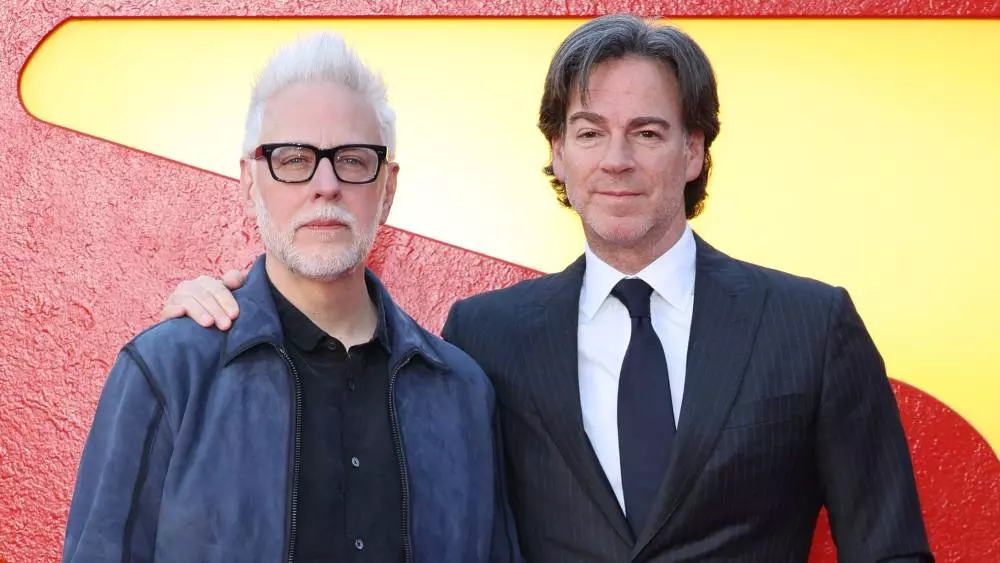
DC Studios Leadership Shake-Up: Gunn and Safran Depart After Disappointing Financials and Audience Engagement
ByTa-Nehisi Coates
A significant shift has occurred within DC Studios, as James Gunn and Peter Safran, who previously led the comic book film division, have been removed from their positions. This change comes approximately a year and a half after former Warner Bros. Discovery CEO David Zaslav had enthusiastically endorsed their ambitious decade-long strategy, following the theatrical debut of "Superman." Zaslav had initially expressed great confidence in their vision, citing a clear direction and strong momentum for DC's future endeavors, a sentiment that has evidently not been sustained.
The duo's departure, though a major shake-up, was not entirely unforeseen, despite assurances that they would remain integral to David Ellison's leadership team at Skydance post-acquisition of WBD. Under the new organizational structure, their roles would have been diminished, reporting to new Skydance Motion Picture Group chiefs rather than directly to the top executives. This executive reorganization represents another challenge for DC Studios, which has consistently struggled to compete effectively with the formidable Marvel Cinematic Universe from Disney. The tenure of Gunn and Safran, while aiming to revitalize key intellectual properties, ultimately faced mixed results, with several high-budget films and television series failing to capture sufficient audience interest to justify their substantial costs. Industry observers note a pattern of overspending on projects that didn't resonate with audiences, leading to financial losses.
Examining individual project performances reveals a complex picture of successes and failures. While Gunn's "Superman" demonstrated a respectable box office performance, earning $618 million against a $225 million budget, it did not spark the widespread, enduring excitement necessary for an interconnected cinematic universe. The subsequent film, "Supergirl," notably flopped, generating only $126 million globally against a $170 million budget, resulting in a significant financial loss. Even "Clayface," a more modestly budgeted body-horror thriller, while performing acceptably at $109 million against a $44 million budget, is unlikely to achieve profitability until considering future revenue streams. A common criticism among insiders pointed to the strategic decision to prioritize less-known characters over established, popular figures, contrasting with the immense success of films featuring marquee names like "Spider-Man: Brand New Day" and "Avengers: Endgame." The small-screen ventures also mirrored this inconsistency; while "The Penguin" a "Batman" spin-off greenlit before their leadership, achieved success, other projects like the second season of Gunn's "Peacemaker" and "Lanterns" failed to create a lasting cultural impact or secure renewals. Despite their reduced authority, Gunn and Safran will continue to be involved in select DC projects, including upcoming films and television series, signaling a partial continuation of their creative input within the evolving DC landscape, with the ultimate direction now resting with the new president and chief creative officer, Jeremy Latcham, whose experience in shaping the MCU brings a new hope for a return to foundational principles for DC.
The narrative of DC Studios under James Gunn and Peter Safran reflects the inherent risks and profound challenges in managing a major cinematic universe. Their journey underscores the critical importance of balancing artistic ambition with financial prudence and, most importantly, consistently captivating and engaging audiences. The industry is ever-evolving, and only those who can deeply understand and connect with their audience, while maintaining a clear, compelling creative vision, will truly thrive. The appointment of Jeremy Latcham signifies a fresh start, a pivot towards a future where DC hopes to not only entertain but to also re-establish a powerful and resonant connection with its dedicated fanbase, learning from past missteps to build a more sustainable and beloved cinematic legacy.
About the author
Ta-Nehisi Coates
Author and journalist whose work on culture, race, and history includes writing for Marvel's "Black Panther."