A Deep Dive into Nintendo Switch Sports Resort's Gameplay Experience
ByHideo Kojima
A recent exclusive preview of Nintendo Switch Sports Resort, conducted at gamescom '26, offered an early look into the much-anticipated title. This deep dive explored a variety of activities, from aerial adventures to competitive sports, providing valuable insights into the game's mechanics and overall appeal. The experience suggests a game well-suited for a broad audience, building upon the legacy of its predecessors.
Detailed Impressions of Nintendo Switch Sports Resort Activities
During the exclusive playtest, several of the game's diverse activities were put through their paces. The Prop Plane mode, set against the scenic backdrop of Wuhu Island, offered a sense of freedom, allowing players to navigate the expansive environment. While a time limit was present, hints from Nintendo representatives suggested the full game might offer untimed exploration, a feature eagerly anticipated for more uninhibited flight. The inclusion of collectible items added depth, transforming what could have been a monotonous flight into an engaging aerial scavenger hunt. However, the unique Joy-Con control scheme, mimicking a paper plane, proved somewhat cumbersome, leading to wrist strain and a desire for more conventional input.
Table Tennis delivered a familiar yet refined experience. It showcased enhanced realism compared to the original Wii Sports tennis, allowing for nuanced shots like slices and drives with responsive controls that closely replicated the sensation of a real match. Despite its technical improvements, the inherent nature of table tennis meant it didn't ignite overwhelming excitement.
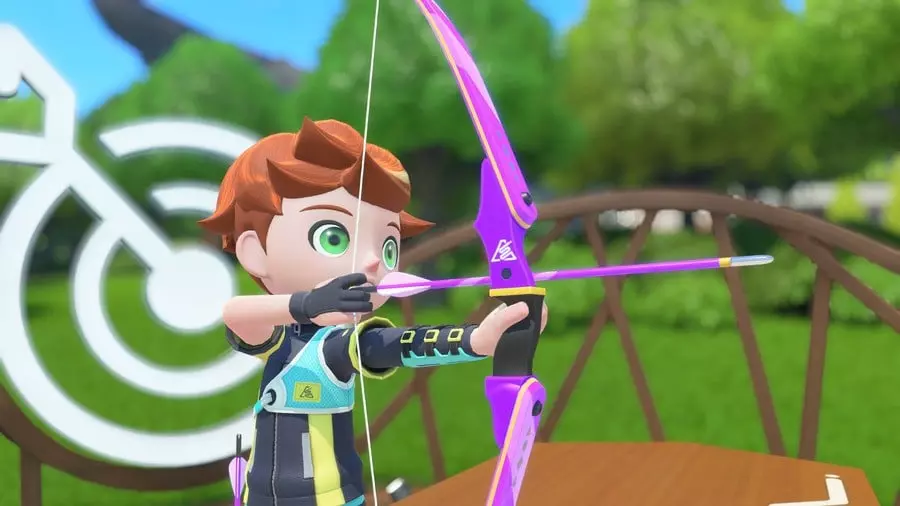
Archery emerged as a standout, brilliantly demonstrating the potential of motion controls. Unlike more frenetic activities, archery benefited from precise, deliberate movements, showcasing the accuracy and immersion motion controls can offer. A particularly engaging multi-player variant had participants simultaneously aiming at a shared, dynamically shifting target, introducing a strategic layer reminiscent of Mario Kart's competitive dynamics, where accurately landing an arrow on an opponent's segment could surprisingly yield points for them, adding a spicy competitive edge.
Thumb Wrestling, initially met with skepticism, unexpectedly proved to be one of the most tactical mini-games. Beyond the simple act of pinning, players could 'power up' their thumb by holding it down, increasing its size and making escapes more challenging for opponents. This clever mechanic transformed a potentially mundane concept into a surprisingly endearing and strategic challenge.
Skateboarding provided another free-roaming opportunity on Wuhu Island. Utilizing Joy-Con controls for propulsion, it offered a refreshingly different mode of traversal compared to the prop plane. Collecting skateboard wheels and viewing the island from a new perspective added to the enjoyment. The tease of grinding on rails, followed by the revelation that only specific rails were grindable, highlighted Nintendo's particular design philosophy, potentially aiming to avoid encouraging virtual vandalism.
Bowling largely mirrored its counterpart in the original Switch Sports, remaining a solid, enjoyable staple. Meanwhile, Boxing, despite the passage of two decades and advancements in technology, failed to fully impress. The controls lacked the responsiveness required for such a fast-paced sport, often defaulting to jabs even when hooks or uppercuts were intended. While this could be attributed to the player's short exposure, it suggested a gap in faithfully replicating real-world boxing movements.
Despite some minor control-related misgivings, the overall impression of Nintendo Switch Sports Resort is overwhelmingly positive. The game successfully caters to a casual audience, promising significant success, especially for those who cherished the original Wii Sports experience upon its release on October 22nd.
The preview of Nintendo Switch Sports Resort underscores the enduring appeal of accessible, motion-controlled gaming. While some control schemes might present a learning curve, the overall design philosophy prioritizes fun and engagement for a wide demographic. The game's success will likely hinge on its ability to offer both novel experiences and refined versions of beloved classics, captivating both long-time fans and new players seeking lighthearted, interactive entertainment. It reinforces the idea that sometimes, simpler, more intuitive gameplay can be profoundly effective.
About the author
Hideo Kojima
Auteur game designer known for the "Metal Gear" series, blending complex narratives with gameplay.