Early 'Peanuts' Comics: A Glimpse into Charles Schulz's Developing Genius
ByReiner Knizia
In the formative years of Charles Schulz's iconic "Peanuts" comic strip, a period spanning the 1950s, the characters underwent a fascinating evolution. While their visual representation was still in flux, appearing rounder and more childlike, the essence of their personalities and the strip's unique comedic timing were already beginning to shine through. This collection explores five pivotal early comics, demonstrating Schulz's inherent storytelling brilliance even as his artistic style matured. These initial works offer a compelling look at the origins of a cultural phenomenon, showcasing the enduring humor and relatable struggles that would define Charlie Brown and his friends for decades.
The Genesis of 'Peanuts': Iconic Moments from Charles Schulz's Early Comics
On October 2, 1950, the very first "Peanuts" comic strip made its debut, introducing readers to characters like Shermy and Patty, who would later recede into the background. This inaugural strip ingeniously set the stage for Charlie Brown's perpetually beleaguered existence. As Shermy feigned admiration for an approaching Charlie Brown, his true feelings were revealed with a surprising and humorous jab: "How I hate him!" This unexpected punchline, a masterful blend of surface sweetness and underlying cynicism, laid the groundwork for the strip's distinct comedic voice and Charlie Brown's role as a good-hearted, yet often maligned, protagonist.
Just a month later, on November 9, 1950, Schulz delved deeper into Charlie Brown's melancholic nature. In a conversation with Patty, Charlie Brown famously declared, "The future frightens me!" When Patty attempted to reassure him about his long life ahead, his poignant reply, "That's what frightens me!" perfectly encapsulated his inherent pessimism, a trait that would become central to his enduring appeal and relatability.
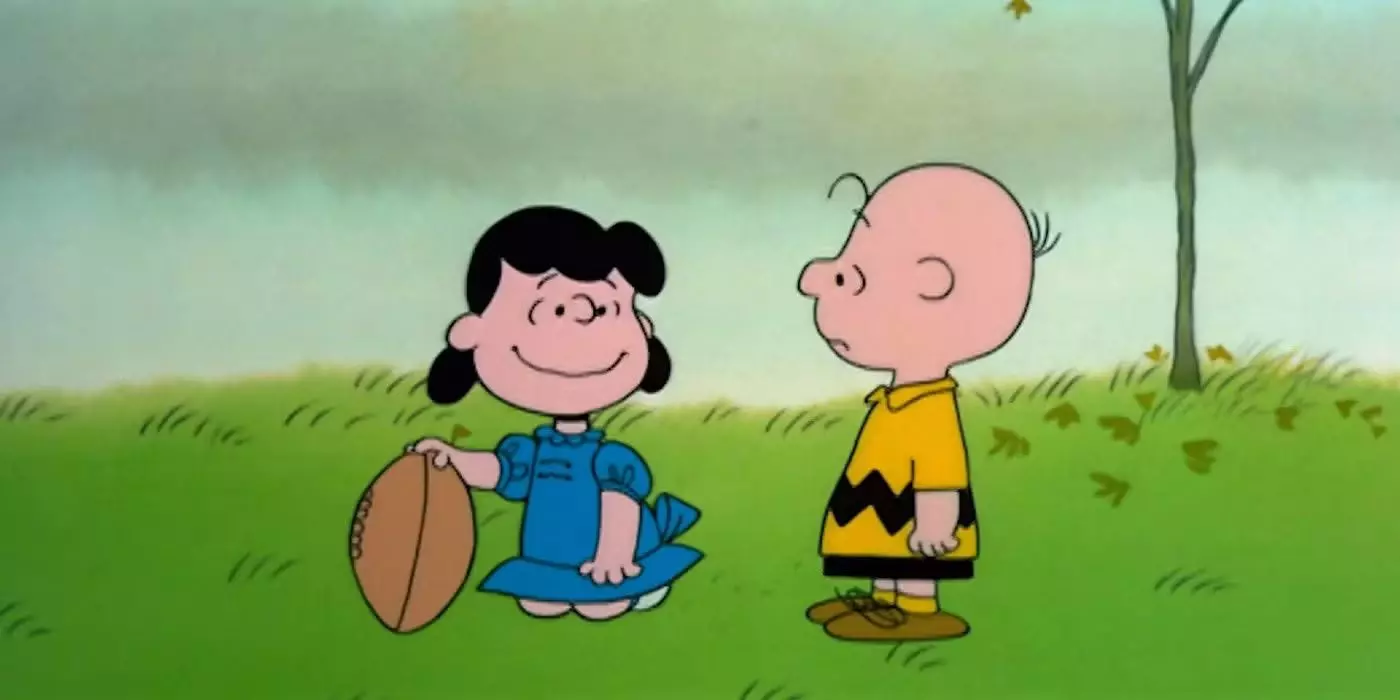
The recurring gag of Charlie Brown attempting to kick a football, only to have it pulled away at the last moment, first appeared on November 14, 1951. While it was Violet, not the more familiar Lucy, who initially removed the ball out of fear, this early iteration contained the spark of what would become one of "Peanuts"' most beloved and agonizingly funny running jokes. This foundational moment, though slightly different in motivation from Lucy's later cruel intentions, clearly demonstrated Schulz's early understanding of physical comedy and character-driven humor.
Even during the festive season, Charlie Brown's plight continued, as illustrated in a Christmas Day Sunday strip from December 25, 1955. Here, Charlie Brown sought donations to buy Snoopy a gift, only for Patty and Violet to secretly mock his generosity behind his back. This comic subtly highlighted the theme of Charlie Brown's unappreciated efforts, a motif that would resonate throughout the strip's run, solidifying his status as an underdog.
By December 31, 1959, at the close of the decade, the characters had begun to more closely resemble their recognizable forms. In this New Year's Eve strip, Lucy's sharp-tongued insults towards Charlie Brown, delivered early in the morning, underscored her characteristic wit and his perpetual misfortune. Her declaration, "You have so many faults it takes a whole day to list them!" served as a brilliant comedic summation of their dynamic and Schulz's genius in crafting enduring characters and timeless humor.
Reflecting on these early "Peanuts" strips offers a profound insight into the evolution of a cultural phenomenon. It underscores that genius, even in its nascent stages, possesses an unmistakable quality. Schulz's ability to imbue simple line drawings with such complex emotions and universal truths, even before his characters achieved their definitive appearance, is truly remarkable. These comics remind us that true creativity often begins with subtle sparks, which, through consistent dedication and artistic vision, grow into something truly extraordinary and enduring. They also highlight the power of character development, showing how foundational traits can be established early on, ultimately defining beloved figures in the popular imagination.
About the author
Reiner Knizia
Prolific and award-winning board game designer with a PhD in mathematics, known for elegant game mechanics.