Elastin: The Next Frontier in Skincare Beyond Collagen
ByRuth E. Carter
For many years, collagen has been the undisputed star of the beauty world, celebrated for its role in maintaining youthful skin. We've seen it everywhere—in topical serums, oral supplements, and various cosmetic procedures like injections and laser treatments, all aimed at boosting its production. However, as consumers become more informed about the intricate science of skin aging, attention is gradually shifting towards other vital components of skin architecture. Among these, elastin, a protein often overshadowed by collagen, is now poised to become the next major focus in the beauty industry. Experts suggest that understanding and targeting elastin is crucial for a comprehensive approach to skin health, as it works in tandem with collagen to provide the skin's structural integrity and resilience.
The word 'elastin' frequently appears alongside 'collagen' in beauty discussions, reflecting their complementary roles in forming the skin's foundational structure. Collagen primarily offers structural support, akin to a scaffolding, giving the skin its firmness. Elastin, on the other hand, grants the skin its flexibility, enabling it to stretch and return to its original state, much like a rubber band. This elasticity is becoming increasingly significant, especially with trends like rapid weight loss from GLP-1 medications, which often result in facial volume changes and increased skin laxity. Consequently, there's a growing demand for products and treatments that address skin firmness and sagging, propelling elastin into the spotlight.
So, why has elastin remained a secondary topic for so long? The answer lies partly in biology. Collagen constitutes a substantial 70-80% of the dermis's dry weight, while elastin makes up a mere 2-4%. Naturally, early cosmetic marketing gravitated towards collagen's abundance, making it an easier subject for study, product claims, and stimulation. Unlike collagen, which is more readily stimulated as its levels decline with age, elastin is considerably more challenging to replenish. This complexity has also made elastin a tougher nut to crack for aesthetic medicine. While collagen offers a clear message—support collagen for firmer skin—elastin's role is more nuanced; simply increasing its production doesn't guarantee restored elasticity. The process is intricate, involving the creation of tropoelastin, elastin's building block, and its subsequent assembly into a functional elastic fiber network. With age, these fibers degrade, and the body's ability to rebuild them diminishes, making the restoration of skin's natural bounce a complex scientific challenge.
Despite the scientific hurdles, this complexity presents a significant opportunity for the beauty industry. As consumers seek deeper understanding of aging mechanisms, elastin offers brands and practitioners a new, potentially lucrative avenue beyond collagen. Some brands are already incorporating elastin into their marketing and product claims. The key challenge is translating this emerging science into tangible improvements in skin elasticity and communicating these benefits clearly, avoiding the trap of turning a complex biological process into another fleeting anti-aging buzzword. This growing interest in elastin appears to be driven by both cultural trends and scientific advancements. 'Collagen' has been a reliable keyword for driving traffic and purchases, and as its awareness matures, the focus naturally shifts to the next crucial protein. This shift is also fueled by consumers' continuous desire for novelty and innovation in skincare. Clinically, new formulations and delivery systems are making it possible to target this previously hard-to-reach protein. Furthermore, the popularity of injectables and in-clinic treatments like lasers and microneedling has increased consumer awareness of the skin's underlying architecture, underscoring the importance of working with the skin's scaffolding for significant surface impact.
Leading experts, such as Dr. Alan Widgerow from Galderma and Alastin, advocate for a holistic understanding of the extracellular matrix (ECM)—the network of proteins, including collagen, elastin, and hyaluronic acid, that provides skin structure. The goal is to educate consumers on how these components interact, moving beyond a focus on individual ingredients. Alastin, for instance, collaborates with clinics to provide credible education and product recommendations based on complex skin physiology.
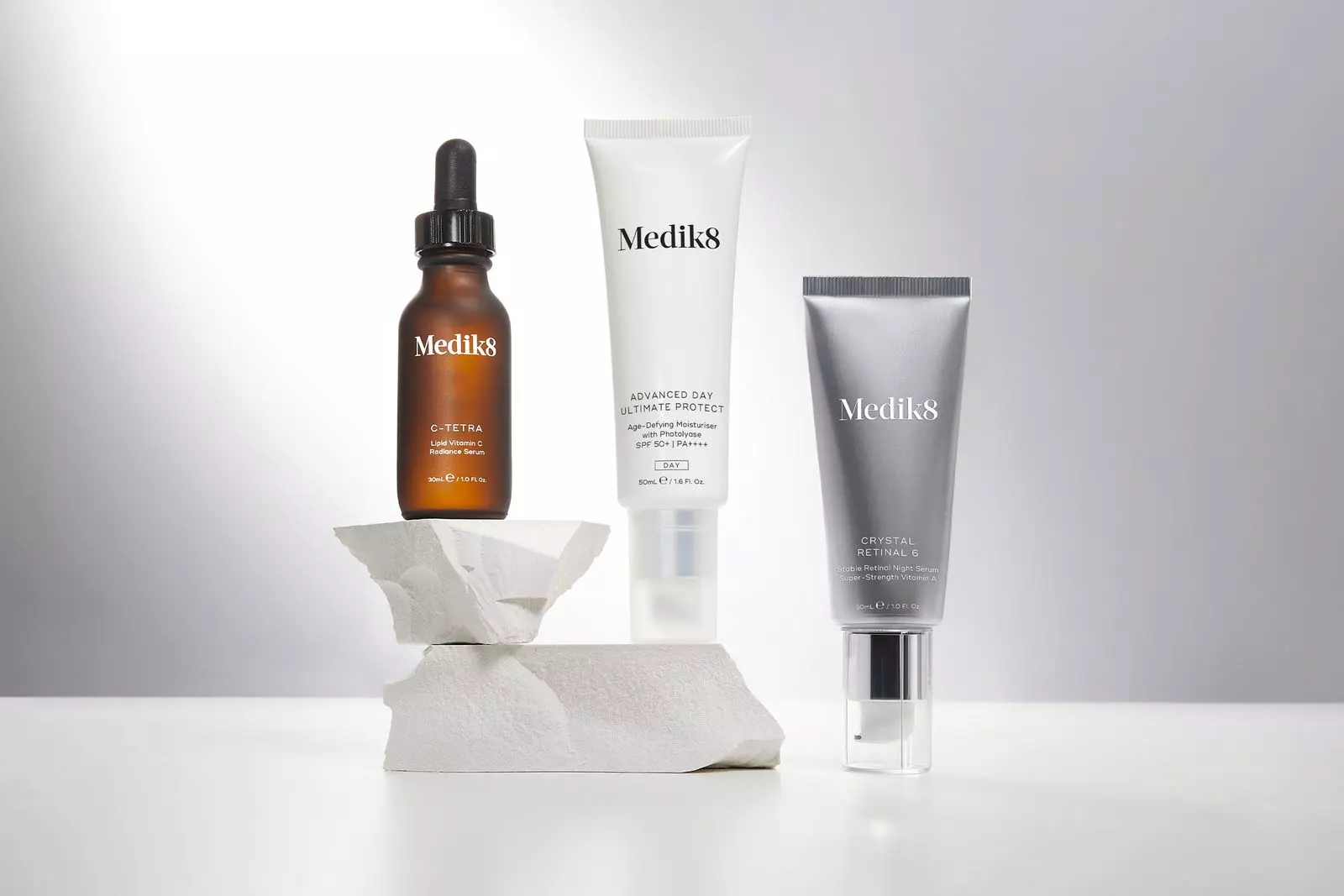
Innovations in skincare are evolving beyond simply adding elastin to formulas, as its large molecules cannot penetrate the skin to stimulate new production. Instead, brands are developing formulations that support the broader ECM. Products like Medik8 Liquid Peptides Advanced MP and Alastin Restorative Skin Complex utilize peptides to target both elastin and collagen production. Alastin's TriHex Technology, for example, aims to remove damaged matrix material while stimulating new collagen and elastin. These advancements also explore how topical products can enhance in-clinic procedures, with studies showing improved post-treatment results when certain skincare is used alongside injectables. Medik8 employs a three-pronged approach: protecting existing elastin with sunscreen and antioxidants, supporting cellular renewal with retinaldehyde, and stimulating new production with growth factors and MiniProtein technology, alongside ingredients like carnosine to prevent damage from sugar binding.
However, protecting existing fibers and stimulating new protein production are distinct from rebuilding a functional elastic network. Many believe that a genuine breakthrough in elastin synthesis, ensuring proper organization within the skin, is more likely to emerge from aesthetic medicine than conventional skincare. The acquisition of Elastagen by Allergan, a pharmaceutical giant, signals impending innovation in this area. In-clinic treatments, such as fractional laser resurfacing, radiofrequency microneedling, and ultrasound lifting, are already showing encouraging evidence of influencing elastin. While these treatments improve the appearance of aging, the focus is shifting towards regenerating healthy elastic fibers. Emerging areas of interest include injectable tropoelastin, gene therapies, and regenerative biomaterials, all aimed at rebuilding damaged structures. The ultimate goal is to develop products and treatments that not only improve skin's appearance but genuinely enhance its function, leading to measurable improvements in elasticity and resilience backed by robust clinical evidence.
About the author
Ruth E. Carter
Oscar-winning costume designer for films like "Black Panther," authoring works on the intersection of fashion, culture, and history.