Electric Crossover Showdown: Tesla Model Y Dominates as Toyota bZ Skyrockets
ByBrock Yates
Explore the dynamic shifts in the US electric vehicle market, focusing on the contrasting performance of leading electric crossovers: the enduring dominance of the Tesla Model Y, the surprising surge of the Toyota bZ, and the challenges faced by the Hyundai Ioniq 5.
Electric Crossovers: Navigating a Shifting Market
A Challenging Period for Electric Vehicle Sales in the United States
Throughout the initial three quarters of this year, the adoption of electric vehicles in the US has witnessed a substantial contraction, with sales plummeting by 30%. This downturn can be attributed to several elements, including reduced consumer demand, the impending discontinuation of federal tax credits in 2025, and a growing consumer preference for more economically viable hybrid models. Nevertheless, a select group of electric vehicles continues to demonstrate robust sales performance.
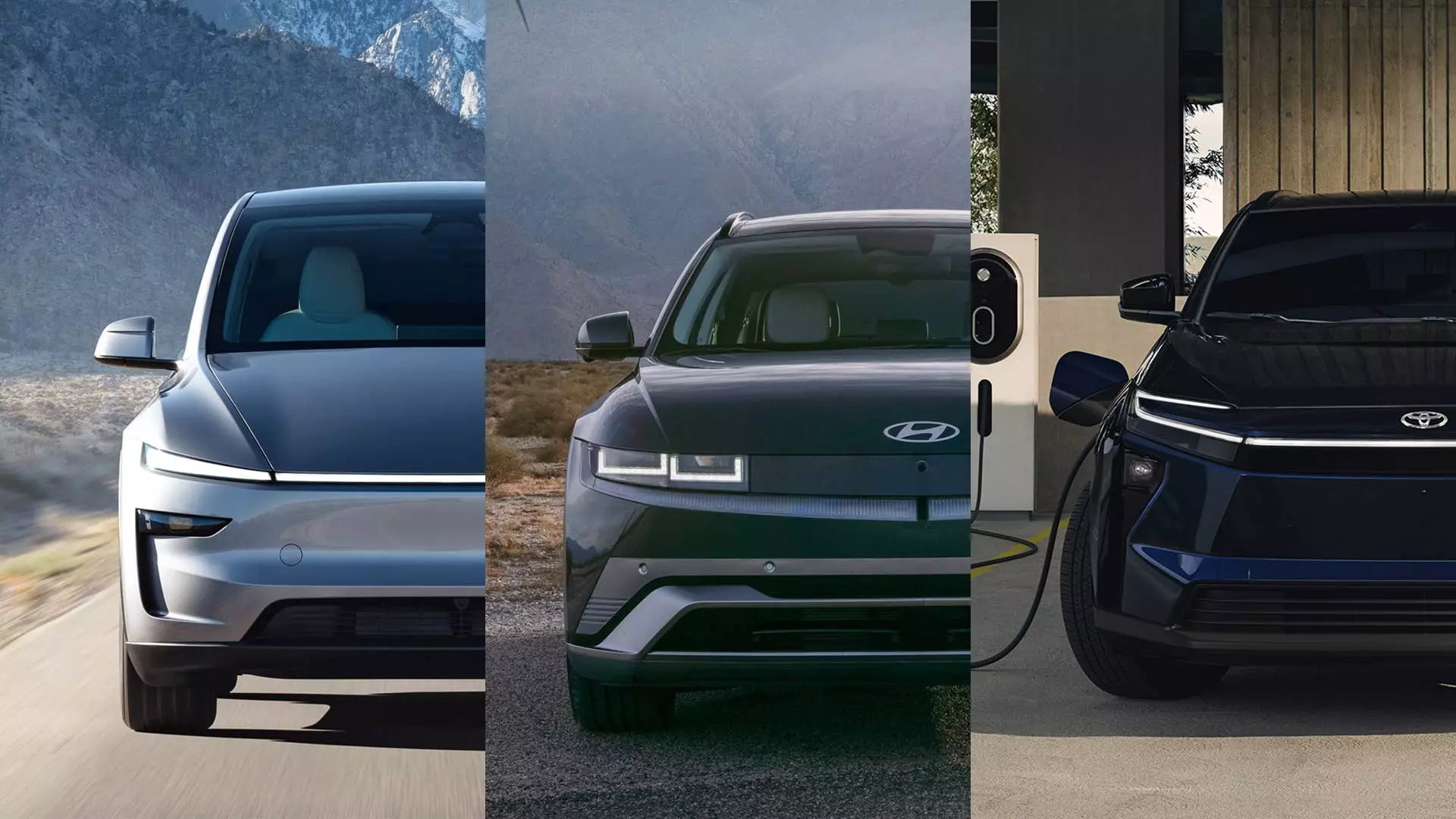
The Tesla Model Y consistently holds its position as the top-selling electric vehicle in the American market. Following closely are the Model 3 and the Hyundai Ioniq 5. Notably, the Toyota bZ has made a significant leap, surpassing numerous other electric vehicles to secure the fourth position in sales. A comparative analysis of these three models reveals notable changes in sales trends since the previous year.
Detailed Sales Performance of Key Electric Crossovers
Data from Cox Automotive's latest EV sales report indicates that the Model Y's sales have remained largely stable this year, experiencing a minor decrease of merely 1%. Despite this slight dip, its lead remains unchallenged, with the Model 3 trailing significantly at 106,962 units sold year-to-date. In contrast, the Hyundai Ioniq 5 has faced a considerable sales decline, registering a 24.3% drop from last year, despite the implementation of substantial price reductions. Its third-quarter sales alone saw a sharp decrease of 52.8%. Meanwhile, the Toyota bZ stands out with an impressive 103.4% increase in sales, positioning it to potentially become the leading non-Tesla EV in the country, thanks to numerous enhancements in its 2026 model, including extended range, refined aesthetics, and increased power output.
The Unpredictable Nature of the Electric Vehicle Market
Unlike the more stable sales patterns observed in gasoline and hybrid vehicles, the electric vehicle sector is characterized by its inherent volatility. While Tesla maintains a consistent presence at the forefront of the sales charts, even after phasing out its larger Model X and Model S, the landscape beneath it has undergone dramatic transformations. Rivian, for instance, has ascended from the tenth position to second place within a single year, partly due to the introduction of its mainstream R2 model. Conversely, several models that performed well in 2025, such as the Chevrolet Equinox EV, Ford Mustang Mach-E, Nissan Leaf, and Volkswagen ID.4, have experienced significant sales declines in 2026.
Automakers Adapt to Evolving Electric Vehicle Demands
Automakers are grappling with the unpredictability of EV demand, often resorting to discontinuing certain EV models or prematurely launching refreshed versions, as seen with Volkswagen's ID.4 and ID. Tiguan. Electric vehicles constituted only 10% of US car sales in 2025, a stark contrast to China's 53% share. In this turbulent environment, Toyota and Subaru are the only traditional brands to have achieved significant growth in their EV sales this year, presenting a considerable challenge for their competitors to keep pace.
About the author
Brock Yates
Legendary automotive journalist who created the Cannonball Run and wrote for Car and Driver.