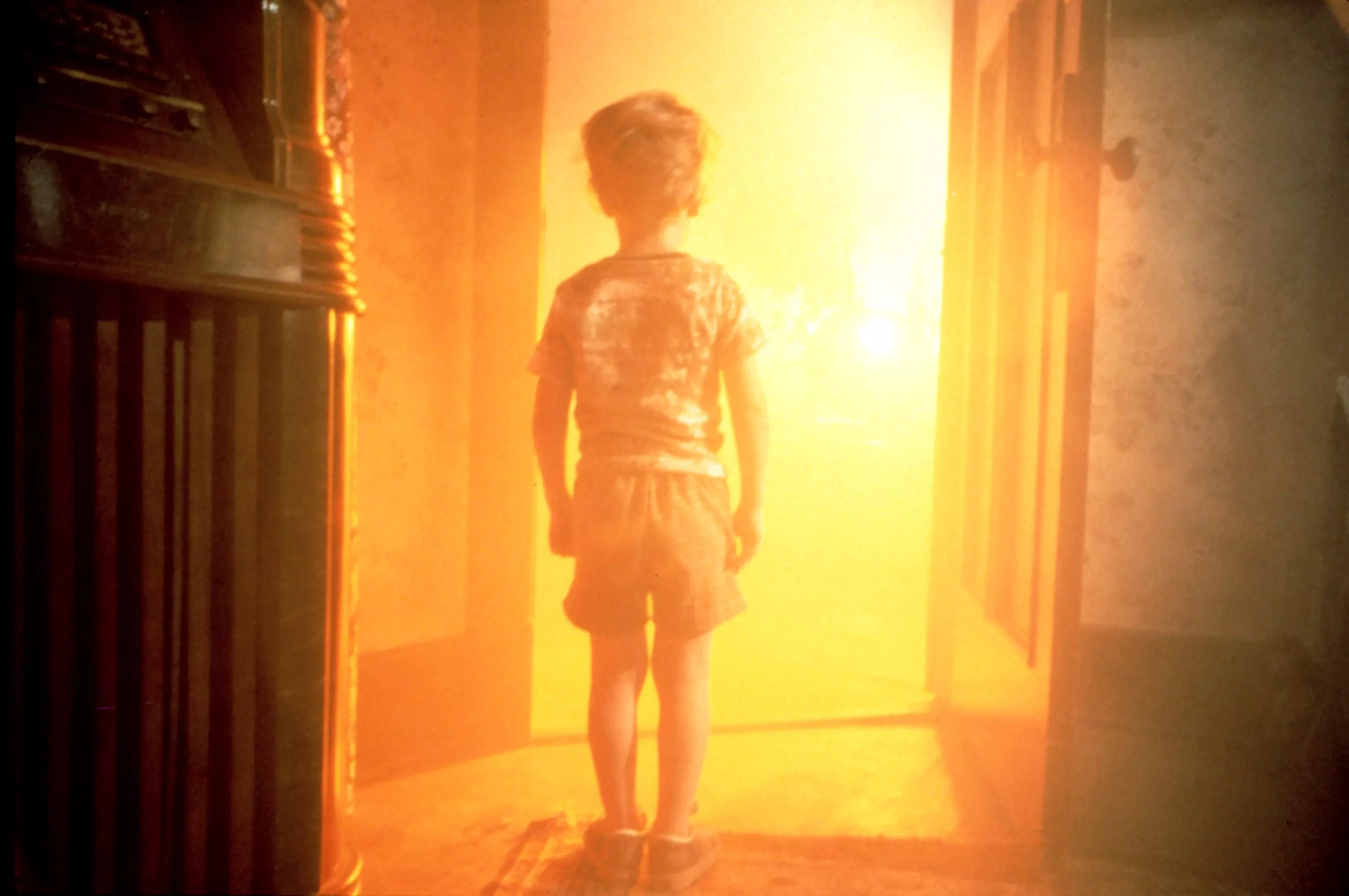
The Enduring Impact of 'Close Encounters of the Third Kind' on Sci-Fi Cinema
BySid Meier
Steven Spielberg, a visionary filmmaker, has consistently pushed cinematic boundaries throughout his illustrious career, profoundly impacting various genres and the broader landscape of moviemaking. While some of his creations, like 'E.T.', have become instant cultural touchstones, others, despite their groundbreaking nature, might not have received the recognition they truly deserve. Among these is 'Close Encounters of the Third Kind', a film that, upon re-evaluation, emerges as a significant precursor to the alien conspiracy thrillers that captivated audiences in the decades that followed.
This movie, released in 1977, was Spielberg's second major success, following 'Jaws'. Its narrative centers on the mysterious re-emergence of lost aircraft and the profound psychological impact of UFO sightings on an ordinary man, Roy Neary. The film delves into his escalating obsession, which strains his personal life, and his compulsive creation of mountain models—an unwitting connection to a larger extraterrestrial mystery. The Director's Cut, currently accessible on YouTube, offers a unique opportunity to revisit this influential work, celebrating its enduring legacy as it approaches its 50th anniversary.
The Classification of Close Encounters
The film's title, 'Close Encounters of the Third Kind', is directly derived from J. Allen Hynek's 1972 book, 'The UFO Experience: A Scientific Inquiry'. Hynek, who also served as a scientific consultant for the movie, established a hierarchical system for classifying UFO sightings. This scale ranged from basic observations, such as unusual lights in the sky, to the most profound interactions, including direct contact with extraterrestrial beings. The 'third kind' on Hynek's scale specifically denotes an encounter with an 'animated entity,' which aligns with what is now more commonly referred to as 'first contact'.
In the cinematic narrative, the story commences in 1977 with the inexplicable reappearance of vanished aircraft in the California desert, setting the stage for a global phenomenon of UFO sightings. Roy Neary's life takes an extraordinary turn when he experiences a close encounter during a power outage, leaving him with a partial burn on his face. This incident ignites an intense preoccupation with UFOs, leading him to meticulously craft models of a particular mountain. Unbeknownst to him, this peculiar hobby is an unconscious response to a burgeoning conspiracy, linking his individual experience to a much grander, unfolding mystery involving alien presence.
The Protagonist's Journey into Obsession and the Film's Enduring Relevance
The film effectively portrays Roy Neary's gradual descent into an all-consuming obsession, which, although initially perplexing to both himself and his family, resonates with the audience who are privy to the larger unfolding mystery. This depiction of psychological disintegration, as Roy grapples with his inexplicable urges and the growing distance from his loved ones, masterfully builds tension and empathy. His isolation, surrounded by news clippings and his handmade models, foreshadows the archetypal 'conspiracy board' scenes prevalent in later pop culture, illustrating a character type who becomes consumed by a singular, overwhelming conviction.
'Close Encounters of the Third Kind', despite its enduring status as a science fiction classic, may have been somewhat overshadowed by Spielberg's subsequent, more spectacular works in the genre, such as 'E.T.'. However, its unique blend of human drama, scientific inquiry, and extraterrestrial mystery sets it apart. The film's nuanced exploration of a man's struggle to comprehend and communicate his extraordinary experiences makes it more than just a sci-fi thriller; it's a profound family drama intertwined with a fantastical element. Recognizing this depth allows viewers to appreciate its pioneering influence on subsequent alien-themed narratives and its crucial role as an underrated cornerstone of science fiction cinema over the past five decades.
About the author
Sid Meier
Pioneering game designer known for the "Civilization" series and his philosophy on game design.