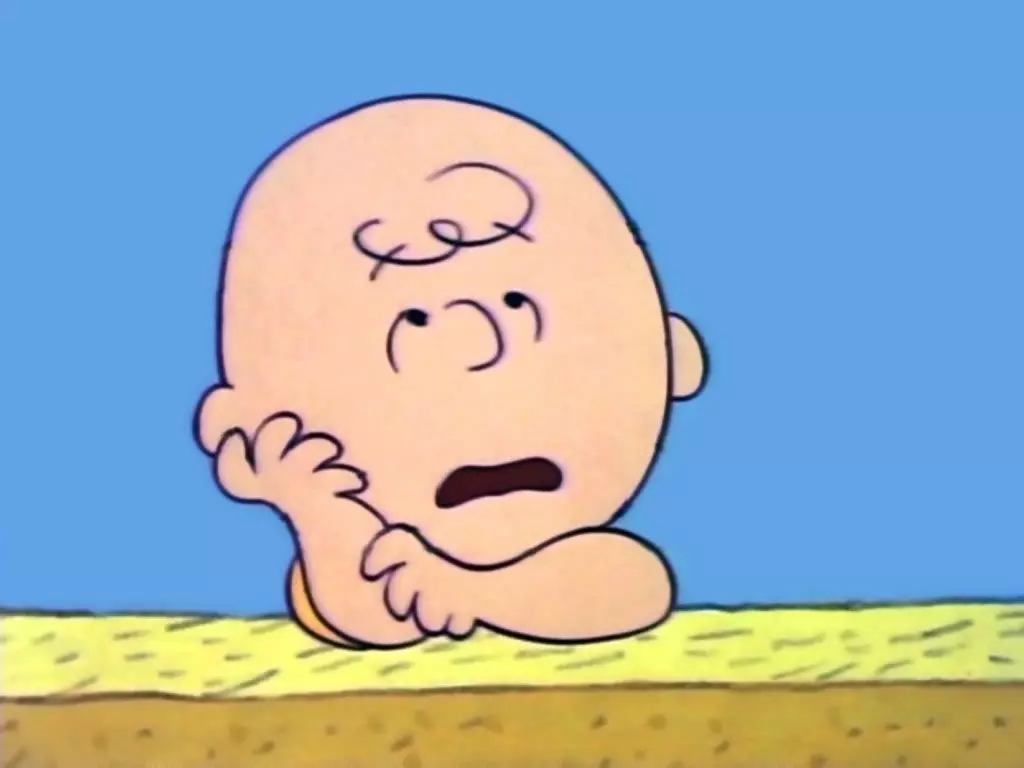
Within the gentle world of Charles Schulz's Peanuts, a surprising recurring adversary emerged in the form of the Kite-Eating Tree. Unlike the usual antagonists found in the comic, such as Lucy Van Pelt or the pervasive sense of misfortune that often accompanies Charlie Brown, this particular arboreal foe represented a uniquely malevolent, albeit humorous, presence. Despite his consistent bad luck, Charlie Brown's dedication to kite-flying was unwavering, a pursuit that inevitably led to his persistent, one-sided rivalry with the tree. The inspiration for this quirky character came from Schulz's own observations: he noticed how kites, once snagged in branches, would gradually vanish over time due to weather and wildlife. He humorously concluded that the tree must be actively devouring them, thus birthing the iconic Kite-Eating Tree. Its first explicit appearance in March 1965 marked the beginning of a recurring comedic element that would span three decades.
Over its long tenure in the comic strip, the Kite-Eating Tree became central to several memorable and often surreal storylines. In many instances, the tree's actions were passive, yet on more than one occasion, it was depicted as actively consuming its "prey." One notable arc involved Lucy's impulsive act in January 1969, when, frustrated by Schroeder's musical devotion, she hurled his toy piano into the nearest tree. Unfortunately for Schroeder, it was the Kite-Eating Tree, which readily broadened its diet, swiftly consuming the instrument despite a heroic rescue attempt by Snoopy, forcing Schroeder to mail-order a replacement. A more extensive and surreal storyline unfolded in 1977 when Charlie Brown, in an unusual display of defiance, retaliated against the tree by "biting" a piece from its side. This audacious act led to a comical letter from the Environmental Protection Agency, prompting Charlie Brown to flee home, embarking on a journey that included sleeping in a cardboard box and briefly coaching a pee-wee baseball team, before eventually returning home when the charges were dropped, and the tree was reported to have fallen.
Despite occasional "demise" and diminished activity, the Kite-Eating Tree's mythic presence continued to linger in the Peanuts universe. Even after its supposed fall, the tree made future appearances, though often serving as more of a running gag than an active participant. Its final appearance occurred in 1995, when Charlie Brown's attempt to instruct Rerun in the art of kite-flying predictably concluded with another kite disaster involving the infamous tree. While Charlie Brown continued his often-fruitless kite-flying endeavors until March 1999, the tree itself had permanently receded from the visual narrative. Nevertheless, the idea of the Kite-Eating Tree as an eternal, watchful entity still endures, perhaps quietly contemplating the changing times and the apparent decline of kite-flying among contemporary youth.
The narrative of Charlie Brown and the Kite-Eating Tree serves as a gentle reminder that life often presents us with persistent, seemingly insurmountable challenges, much like an immovable tree consuming our efforts. Yet, through these humorous struggles, we find the resilience to persevere, the creativity to imagine even the inanimate as an adversary, and the enduring spirit to continue pursuing our passions, no matter how many kites are lost. It underscores the beauty in facing adversity with a hopeful, albeit sometimes beleaguered, heart, ultimately teaching us to embrace life's peculiar obstacles with a smil
About the author
Richard Garfield
Mathematician and game designer who created "Magic: The Gathering," revolutionizing collectible games.