The Evolution of Beauty Travel Retail: From Discounts to Experiences
ByNaomi Campbell
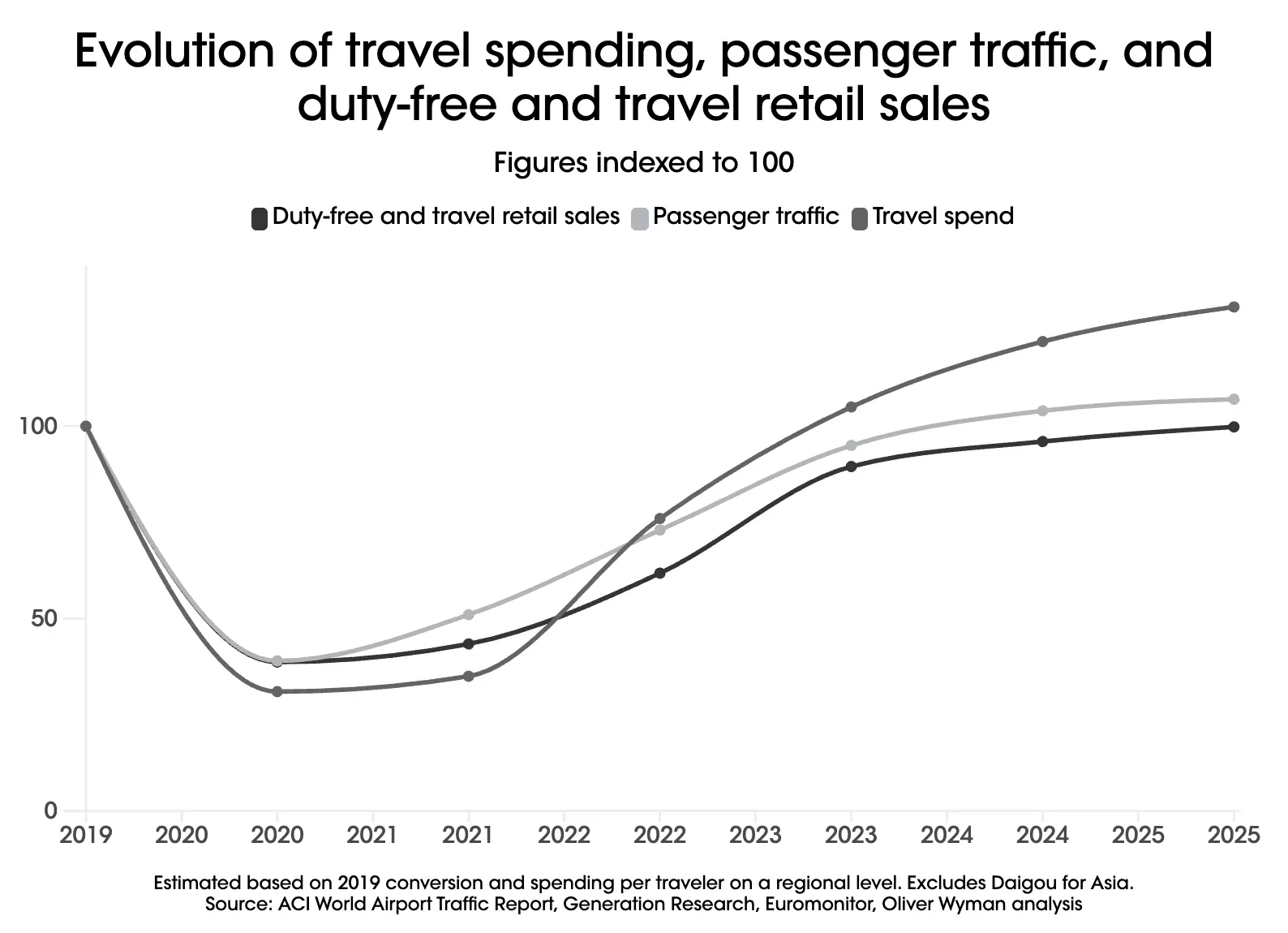
The global travel retail sector, particularly within the beauty segment, faces a critical juncture. Despite an unprecedented surge in international travel, the beauty market in this unique retail environment is struggling to match the pace of passenger growth. Historically reliant on duty-free advantages and a captive audience, the traditional sales model is now under severe strain. Consumers, armed with more information and diverse purchasing options, no longer perceive airport shops as offering superior value, leading to a significant revenue gap estimated at $5 billion since 2023. This challenge necessitates a profound re-evaluation of strategies by retailers and brands to captivate a new generation of travelers and reignite spending.
This transformation is evident in shifting regional performances and evolving consumer demographics. Asia-Pacific, once the powerhouse of beauty travel retail, is experiencing a downturn, largely due to changes in China's market dynamics, including stricter regulations on resellers and increased domestic competition. Conversely, Europe and the Americas are showing modest growth, while the Middle East and Africa face disruptions. The rise of Millennial and Gen Z travelers, who are highly digital-savvy and prioritize authentic experiences over mere discounts, further complicates the landscape. These younger consumers leverage technology for product discovery and price comparison long before reaching the airport, often bypassing traditional duty-free offerings. The industry's path forward lies in understanding these nuanced behaviors and delivering innovative, engaging retail experiences that transcend transactional exchanges.
The Ascent of Experiential Fragrance Retail
In the transforming landscape of travel retail, fragrance has emerged as a beacon of resilience and innovation. While other beauty categories like skincare and makeup have seen contractions, fragrance sales recorded a notable increase, highlighting its distinct appeal. This growth underscores the unique experiential nature of fragrances, which lend themselves well to physical discovery, personalized consultations, and immersive sampling opportunities. Retailers are increasingly recognizing this potential, dedicating more space and resources to create engaging fragrance environments that draw travelers in. These tailored experiences, ranging from dedicated niche perfume sections to interactive olfactive tables, aim to transform transient passengers into active shoppers, ultimately benefiting the wider beauty offerings.
The strategic shift towards prioritizing fragrance is shaping how travel retail environments are designed and curated. By positioning fragrance as a central anchor, retailers can leverage its allure to attract customers, encouraging them to explore adjacent beauty categories. This approach moves beyond simply expanding shelf space, focusing instead on creating interactive and memorable moments. Furthermore, the evolving preferences of fragrance consumers, who seek more complex, individual, and experimental scents, are opening doors for niche and artisanal brands to thrive alongside established luxury houses. Exclusive product launches and bespoke activations, like those demonstrating successful pre-market introductions, showcase travel retail's potential to generate anticipation and serve as a crucial platform for product discovery and brand building.
Beyond Discounts: Crafting Unique Value in Airport Shopping
As the effectiveness of traditional duty-free discounts wanes, airport retailers are tasked with redefining their value proposition to entice modern travelers. The challenge lies in offering compelling reasons for consumers to shop in airports when identical products are readily available through a multitude of online and offline channels. The answer lies in curating unique, localized, and experience-driven retail models that cannot be easily replicated elsewhere. This involves a fundamental shift from a transactional mindset to one focused on discovery, personalization, and exceptional service. Australian beauty retailer Mecca’s debut at Sydney International Airport exemplifies this new approach, featuring a Beauty Lounge, a travel-specific Mini Mart, and tailored services designed around the traveler's pre-flight journey, integrating curated brands and personalized engagement.
Established operators are also embracing this paradigm shift, moving towards more collaborative and data-informed strategies with brands. The focus is on developing exclusive offerings, bespoke activations, and personalized services that elevate the airport shopping experience beyond mere price advantages. This collaborative model, extending from unique fragrance creations to terminal-wide holiday campaigns, aims to foster brand affinity and long-term customer engagement. By leveraging passenger insights across integrated travel ecosystems, retailers can create targeted experiences that resonate with specific customer groups, measuring success not just by immediate sales but also by the lasting impression and loyalty generated. The ultimate aspiration is to transform airports into destinations where shopping is an enjoyable, sought-after activity, rather than a mere stopover.
About the author
Naomi Campbell
Iconic supermodel who has authored books on modeling and style, and advocates for diversity in fashion.