Exploring the Parallels: 'Raya and the Last Dragon' and 'Avatar: Seven Havens'
ByShigeru Miyamoto
This analysis delves into the striking thematic and visual resemblances between Disney's animated feature, 'Raya and the Last Dragon,' and the series 'Avatar: Seven Havens.' Both narratives depict a determined young protagonist traversing a desolate, fractured landscape, seeking to restore what has been lost. The core message in both works revolves around the idea that true healing and societal reconstruction emerge not from solitary quests, but from the challenging, yet essential, act of forging trust and cooperation among disparate factions.
A Detailed Look at Shared Narratives: From Kumandra's Divisions to Harshlands' Hope
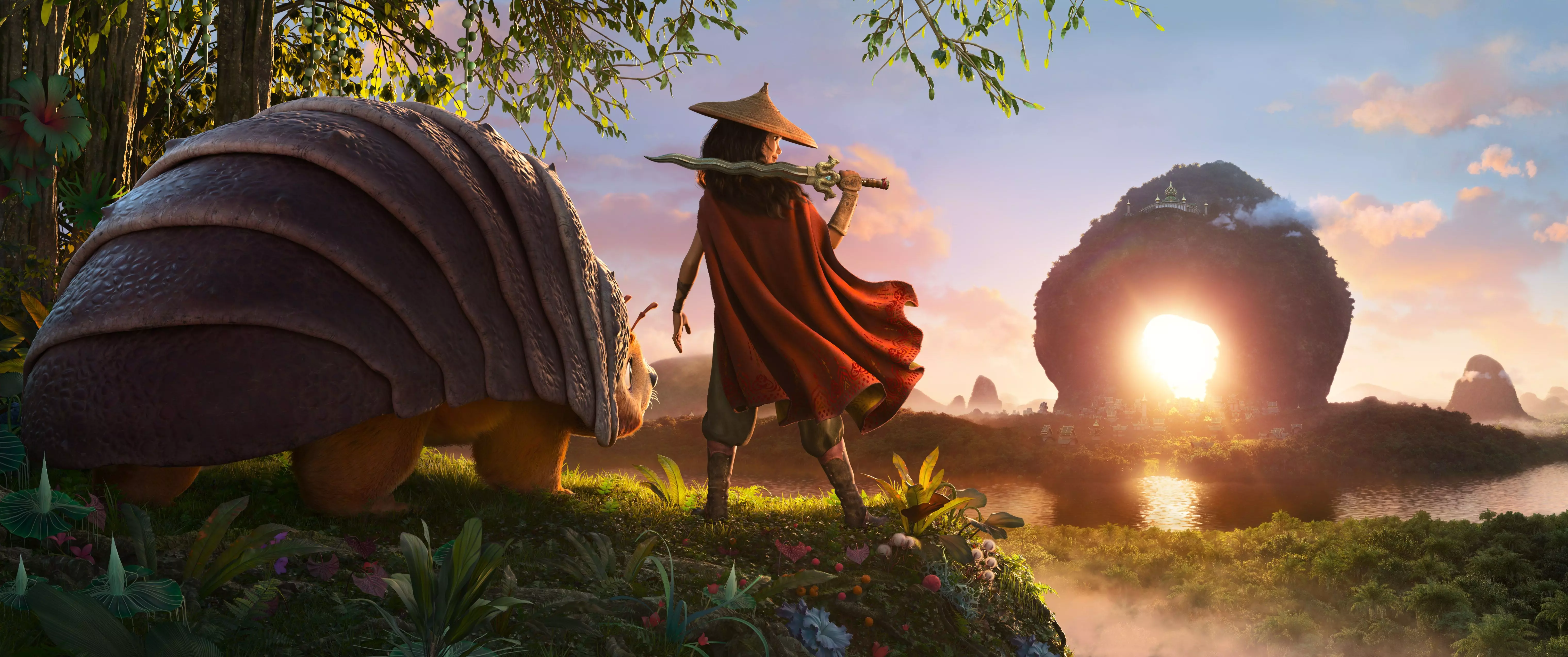
The parallels between the two animated sagas are undeniable, beginning with their opening scenes. In both 'Raya and the Last Dragon' and the initial trailer for 'Avatar: Seven Havens,' a young female hero is depicted journeying across an expansive, devastated desert. Raya (voiced by Kelly Marie Tran) navigates her world atop Tuk Tuk, a distinctive bear-like creature capable of rolling into a ball, while Pavi in 'Seven Havens' rides her unique cat-monkey companion, Geet, through the Harshlands. These visual similarities establish an immediate connection for viewers, hinting at deeper thematic resonance.
In 'Raya and the Last Dragon,' the fictional land of Kumandra once flourished in harmony with benevolent dragons. However, the arrival of the Druun, malevolent storm spirits that petrify all living beings, shattered this peace. The dragons' ultimate sacrifice left behind a powerful gem, saving humanity but leading to the fragmentation of Kumandra into five distinct tribes: Heart, Fang, Spine, Talon, and Tail. Centuries later, Raya, the steadfast daughter of Chief Benja (Daniel Dae Kim) from the Heart tribe, trains diligently to safeguard the gem. A pivotal attempt by Benja to unite the tribes is tragically undermined by Namaari (Gemma Chan) of the Fang tribe, leading to a catastrophic struggle over the gem. Its subsequent fragmentation unleashes the Druun once more, plunging Kumandra into a six-year apocalypse.
Raya embarks on a perilous journey to locate Sisu (Awkwafina), the last surviving dragon, and reassemble the scattered pieces of the gem, hoping to once again repel the Druun. This quest takes her across the diverse regions of Kumandra, where she encounters various individuals who have adapted to a life of self-reliance. Throughout her travels, Raya gradually learns a crucial lesson: the restoration of her world demands more than just her individual strength. Sisu consistently advocates for the inherent trustworthiness of people, challenging Raya's ingrained skepticism. Their combined efforts highlight that Kumandra's wholeness depends on overcoming deep-seated fear and mutual distrust among its people, demonstrating that true victory lies in collective action and shared belief.
'Avatar: Seven Havens' echoes this profound theme of mending a fractured world through cooperation. Its universe, also scarred by cataclysm, features isolated communities grappling with relentless storms. The latest episodes of 'Seven Havens,' released on October 23, reinforce the idea that dismantling the barriers between these fragmented societal pockets is paramount to healing the world. Both narratives, despite their fantastical settings, offer a powerful commentary on the necessity of unity in the face of adversity. While 'Raya and the Last Dragon' stands as a complete and engaging fantasy adventure suitable for all ages, its significance is amplified when viewed alongside 'Seven Havens,' as both works compellingly argue for the transformative power of trust and communal effort.
A Timeless Message: The Power of Unity in a Fragmented World
The narratives of 'Raya and the Last Dragon' and 'Avatar: Seven Havens' provide a profound and timely insight into the human condition. They remind us that in times of crisis and division, the most potent force for change is not individual heroism, but the courage to extend trust and collaborate with others, even those we might initially perceive as adversaries. These stories beautifully illustrate that true resilience lies in our capacity for empathy and collective action, demonstrating that a fragmented world can only be made whole when its inhabitants choose to bridge their divides and work together towards a common future.
About the author
Shigeru Miyamoto
Legendary game designer at Nintendo, creator of Mario, Zelda, and Donkey Kong.