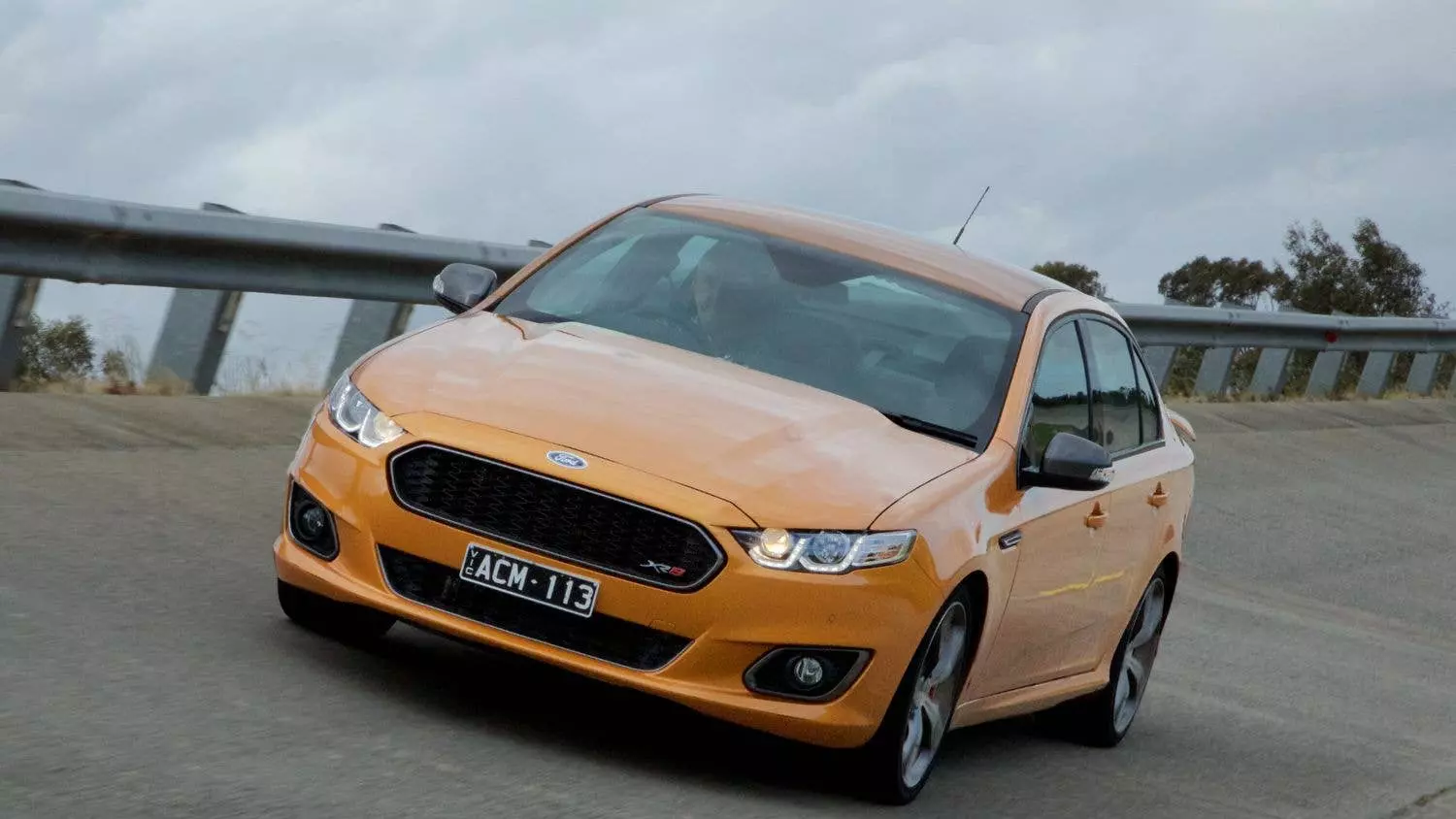
The Ford Falcon: Australia's Unsung Four-Door Muscle Car
ByAkira Maruta
The genesis of the iconic Ford Mustang is intricately linked to the Ford Falcon, a relationship often overlooked in automotive history. In the 1960s, the Falcon served as the foundational platform for the Mustang, enabling its economical production and widespread accessibility. This strategic use of an existing chassis was crucial for the Mustang's survival, especially given the complex dynamics within Ford's leadership at the time. Had the Falcon not been readily available, the Mustang's path to becoming a cultural phenomenon might have been entirely different, possibly never reaching its legendary status.
While the Mustang forged its own legacy in America, the Falcon's narrative took a distinct turn in Australia, adapting to the country's unique demands. Initially, the American-designed Falcon struggled with Australia's challenging terrain, necessitating robust modifications by 1962. This adaptation marked the beginning of a divergence, as Ford of Australia began tailoring the Falcon to local preferences. By the second generation in 1966, the 'Mustang-bred Falcon' emerged, ironically acknowledging its American counterpart's origins while developing its own powerful identity, notably by integrating V8 engines. This evolution led to the creation of high-performance variants like the GT-HO, featuring potent Windsor and Cleveland V8s, culminating in the nearly 400hp GT-HO Phase III in the early 1970s. These powerful sedans, despite government scrutiny during the 'Supercar Scare,' essentially fulfilled the concept of a four-door Mustang that America never officially received.
The Falcon's journey continued through subsequent generations, largely independent of American models by the third generation in 1972. Despite global oil crises and regulatory pressures, the Australian Falcon maintained its V8 prowess through much of the 1970s, outperforming its American Mustang II contemporary. A brief hiatus in V8 production during the mid-1980s saw the rise of fuel-injected inline-six engines, which later gained significant performance credibility. The return of V8 options in the 1990s, coupled with advanced inline-six turbos, solidified the Falcon's reputation for performance. Later models, like the sixth-generation AU, achieved cult status for their durability and improved independent rear suspension, while the BA generation introduced the revered Barra straight-six engine. Ultimately, the Falcon's discontinuation in 2016 marked the end of an era, leaving behind a rich legacy of innovation and performance that showcased the potential of a rear-wheel-drive, V8 or turbo inline-six sedan, a type of vehicle that could have found a broader global audience had its development not been confined to Oceania.
The story of the Ford Falcon in Australia is a powerful narrative of resilience, adaptation, and the pursuit of automotive excellence. It demonstrates how a vehicle, initially conceived for one purpose, can evolve into something uniquely suited to its environment, exceeding expectations and carving out its own distinct heritage. The Falcon's journey, particularly its transformation into a high-performance, four-door machine, serves as an inspiring example of how innovation can thrive under specific conditions, leaving a lasting impact on those who experienced it and a compelling 'what if' for the global automotive landscape. It reminds us that greatness can emerge from unexpected places, pushing boundaries and redefining possibilities.
About the author
Akira Maruta
Fictional representative of journalists deeply knowledgeable about JDM (Japanese Domestic Market) tuning and technology.