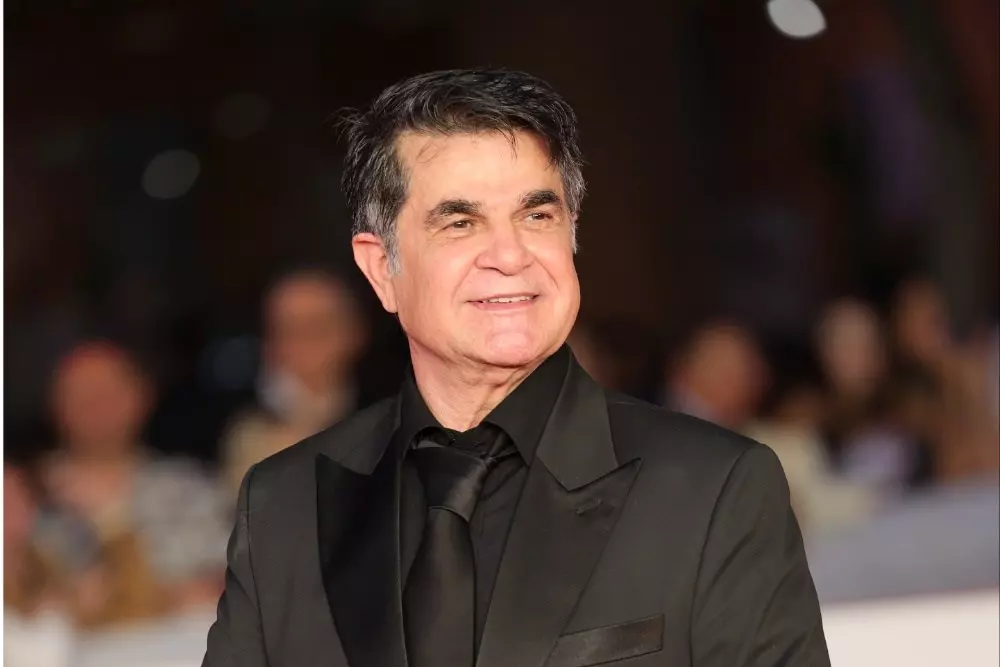
Jafar Panahi Sentenced to Over Five Years in Prison, Assets Frozen by Tehran Court
ByJohn Lasseter
Iranian filmmaker Jafar Panahi, a recipient of the prestigious Palme d'Or, has been handed an additional five-year and one-month prison sentence by a Tehran Revolutionary Court. This new ruling follows a prior one-year conviction and encompasses the freezing of his financial assets, a two-year prohibition on social media engagement, and a two-year travel restriction. The exact nature of the charges leading to this latest verdict has not been disclosed.
Panahi's legal representative, Mostafa Nili, informed the Emtedad News Agency, an online reformist media outlet in Iran, that the court issued the sentence in absentia. The lawyer clarified that while the implementation of both the current and previous sentences is subject to discretion, the court also mandated the confiscation of Panahi's assets. Despite the court's assertion that Panahi was residing outside Iran, he had in fact returned to the country on March 30, 2026, shortly after his film, "It Was Just an Accident," was nominated for Best International Feature Film at the 98th Academy Awards as France's official submission.
Continued Legal Troubles and Undeterred Spirit
Jafar Panahi's ongoing legal battles with Iranian authorities highlight a persistent struggle between artistic expression and state control. His unwavering commitment to filmmaking, despite severe restrictions, has made him a symbol of resilience within the global cinema community. The new sentence, imposed in absentia, underscores the challenging environment faced by artists in Iran who dare to challenge established norms or portray realities that the government deems unfavorable. The specifics of the new charges remain veiled, adding to the ambiguity and concern surrounding his case.
This latest judicial action is not an isolated incident in Panahi's career. For over two decades, he has experienced frequent conflicts with Iranian officials. In 2010, the internationally acclaimed director, celebrated for works such as “The Circle” and “Taxi,” was prohibited from directing films, engaging with the media, and traveling internationally. Despite these severe constraints, he continued to produce films clandestinely. His 2022 arrest, linked to protests by other filmmakers, resulted in a seven-month detention. The travel ban was temporarily lifted in April 2023, allowing him to attend the Cannes Film Festival for the premiere of "It Was Just an Accident." This film, which explores the profound emotional impact of incarceration on former prisoners, draws from his own experiences. Even with a looming one-year prison sentence in Iran and an increasingly tense political climate, Panahi chose to return, stating his intrinsic need to be in his homeland. As he famously told Variety, "I am the kind of person who needs to be in his country. I need to breathe there and work there. And even if they want to go ahead with that prison sentence, they can go ahead. Nothing will change my mind about going back."
The Broader Implications of Panahi's Sentencing
The recent sentencing of Jafar Panahi carries significant implications beyond his personal plight, serving as a stark reminder of the limitations on artistic freedom and dissent in Iran. The freezing of his assets and the dual ban on social media and international travel further intensify the state's efforts to silence critical voices and control public discourse. This judicial escalation sends a chilling message to other artists and intellectuals, reinforcing the risks associated with expressing views that diverge from official narratives. The international film community has consistently rallied in support of Panahi, viewing his persecution as an attack on fundamental human rights and artistic liberty.
The circumstances surrounding this new ruling, particularly its issuance in absentia and the lack of clear charges, raise serious questions about due process and legal transparency within Iran's judicial system. Despite the Iranian court's claim that Panahi was living abroad, his decision to return to Iran, knowing the risks, speaks volumes about his profound connection to his country and his artistic mission. His continued resilience in creating cinema under oppressive conditions has garnered widespread admiration and solidarity from human rights organizations and fellow filmmakers worldwide. This ongoing saga underscores the broader struggle for freedom of expression in many parts of the world, making Panahi's case a poignant symbol for artists facing similar challenges.
About the author
John Lasseter
Former chief creative officer of Pixar, whose principles of storytelling have shaped modern animation.