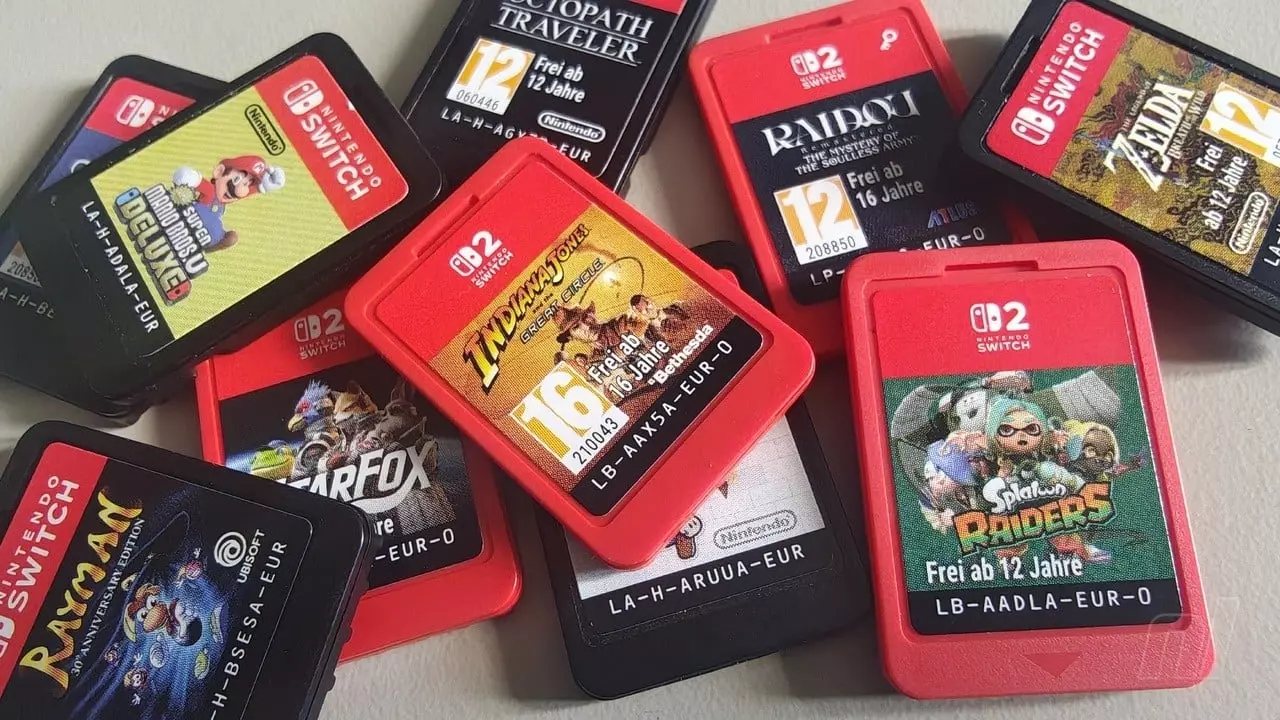
Leading ROM Producer Macronix Ceases Production, Prompting Shift in Nintendo's Cartridge Manufacturing
BySid Meier
Macronix, a prominent manufacturer of ROM chips crucial for Nintendo's physical game cartridges, has declared its intention to discontinue all ROM production. This significant announcement was brought to light by industry analyst David Gibson, following a review of Macronix's recent financial disclosures. The data indicated that ROM products constituted a mere 5% of the company's total revenue in the third quarter of 2026, marking a substantial year-over-year decrease of 39%.
Consequently, Macronix will redirect its efforts and resources towards the production of NOR and eMMC memory chips. Moving forward, the company will no longer itemize ROM sales separately in its financial reports. While Gibson emphasizes that Nintendo maintains relationships with other suppliers for cartridge manufacturing, this shift by Macronix could nonetheless hasten the industry's progression toward digital game sales, including the adoption of game-key cards. Digital game sales already represent a significant portion of Nintendo's overall revenue, exceeding 60% in Q4 2026 and Q1 2027, though these figures can fluctuate based on major new game releases. The upcoming financial report from Nintendo, expected this week, is anticipated to shed more light on their response and future strategies, potentially addressing these industry changes in their usual Q&A session.
For the immediate future, it appears to be business as usual for Nintendo. However, this development sparks considerable interest regarding its long-term impact on the production of physical game cartridges and the potential acceleration of the digital transition. An update to this situation indicates conflicting information regarding Macronix's supply for Switch 2 specific ROMs. The original headline referencing 'Switch 1 & 2' has been adjusted, and further investigation is underway to clarify the precise scope of this production halt.
This evolving landscape underscores the dynamic nature of the video game industry, where technological advancements and shifts in consumer preference continuously reshape business models. The gradual move towards digital distribution, while offering convenience, also prompts important discussions about game ownership, long-term accessibility, and the preservation of physical media. Industry players and consumers alike must adapt to these changes, embracing innovation while also advocating for robust solutions that safeguard consumer interests and the rich history of gaming.
About the author
Sid Meier
Pioneering game designer known for the "Civilization" series and his philosophy on game design.