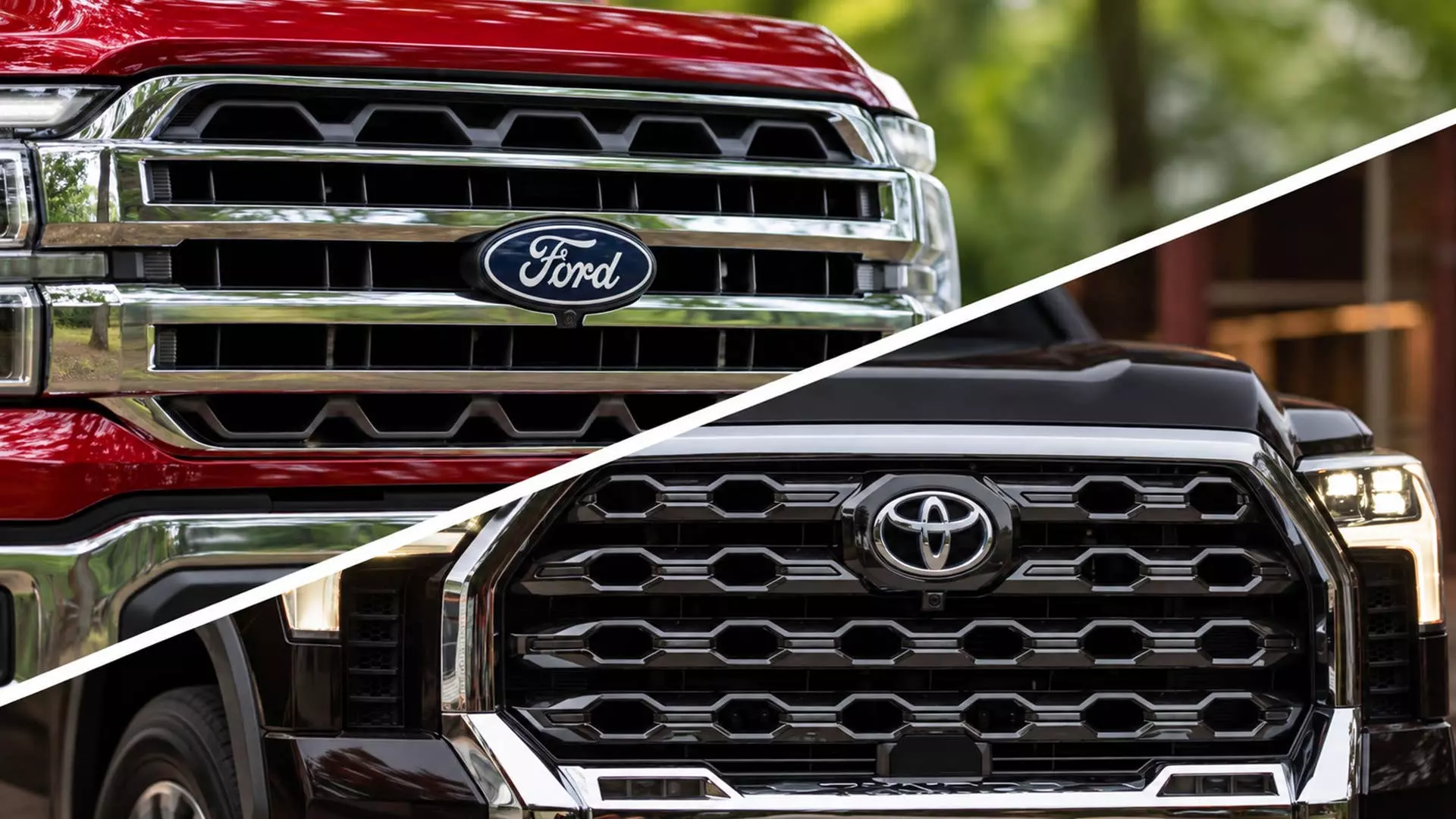
Luxury Truck Showdown: Ford F-150 King Ranch vs. Toyota Tundra 1794 Edition
ByBrock Yates
In the evolving landscape of pickup trucks, a segment has emerged catering to buyers seeking the robustness of a truck combined with the sophistication and amenities typically found in high-end sedans or SUVs. This article scrutinizes two prominent contenders in this luxury truck category: the Ford F-150 King Ranch and the Toyota Tundra 1794 Edition. Both models are crafted to deliver a premium experience, distinguished by their lavish interiors, advanced technology, and powerful performance, all wrapped in a distinctive Western ranch aesthetic. The objective is to determine which of these similarly priced, upscale pickups offers a more compelling proposition to the discerning buyer.
These two trucks occupy elevated positions within their respective model ranges. The F-150 King Ranch stands just below Ford's top-tier Platinum and Raptor trims, while the Tundra 1794 Edition is positioned above the foundational SR5 and Limited variants, though still beneath the TRD Pro and Capstone. When examining their initial investment, the Toyota Tundra 1794 Edition presents a slightly more economical entry point, being approximately $1,445 less than the Ford F-150 King Ranch, a difference that widens to over $2,000 when accounting for destination charges. Furthermore, the Tundra generally holds its value more effectively over a five-year period, suggesting a better long-term financial outlook for owners. This financial advantage positions the Tundra as a strong value contender from the outset.
Regarding external design and dimensions, both pickups exude a commanding presence, characteristic of full-size trucks. They each sport imposing silhouettes, enhanced by brightwork and upscale finishes that underscore their premium status. Both the King Ranch and 1794 Edition are exclusively offered in Crew Cab configurations, known as SuperCrew for Ford and CrewMax for Toyota, and are available with a choice of two bed sizes. The Toyota Tundra slightly surpasses the Ford F-150 in overall length and weight, indicating a marginally larger physical footprint. Distinctive aesthetic elements differentiate them further: the F-150 King Ranch boasts a two-tone paint scheme, 20-inch chrome-like PVD wheels, and chrome accents on its side mirrors and grille surround, while the Tundra 1794 Edition features elegant 20-inch machined-finish alloy wheels.
Inside the cabin, both vehicles elevate the pickup experience with spacious and meticulously appointed interiors. The F-150 King Ranch treats occupants to leather-trimmed, power-adjustable front seats, distinguished by their unique Java color scheme and detailed stitching. A Mesa leather-wrapped steering wheel and genuine wood inserts contribute to a distinctly high-end ambiance. The Tundra 1794 Edition counters with an equally inviting interior, featuring Saddle Tan leather upholstery that extends to the door panels and dashboard, complemented by attractive American walnut wood-grain accents. In terms of amenities, both trucks are generously equipped with features such as heated and ventilated front and rear seats, power-adjustable front seating, heated power-adjustable steering wheels, dual-zone automatic climate control, and wireless phone charging. The Tundra offers slightly larger digital displays, including a 14-inch touchscreen and a 12.3-inch digital driver's display, compared to the F-150's 12-inch counterparts. Additionally, the Tundra features a 12-speaker JBL sound system and a panoramic power roof, while the F-150 comes with an 8-speaker B&O system and a twin-panel moonroof. Both provide optional heads-up displays, but the Tundra gains an edge with a standard surround-view camera system over the F-150's rearview camera.
Under the hood, the two trucks showcase closely matched performance capabilities. Both come standard with a turbocharged V6 engine, with an optional hybrid variant available for enhanced efficiency and power. The non-hybrid F-150 slightly outperforms the Tundra in horsepower, while the Tundra Hybrid boasts greater horsepower and torque than its Ford equivalent. A significant difference lies in towing capacity, where the F-150 maintains a notable lead, capable of towing over 2,000 pounds more than the Tundra. The Ford hybrid also demonstrates superior fuel efficiency. In their hybrid forms, both trucks deliver impressive acceleration, with the F-150 PowerBoost hybrid achieving 60 mph in approximately five seconds, just slightly faster than the Tundra's 5.6 seconds. While both provide a comfortable ride, neither quite matches the ride refinement of the Ram 1500. A minor critique for the Tundra's 10-speed transmission is its occasional sluggishness in downshifting, but overall, both trucks are suitable for daily use, with their large dimensions being the primary challenge in confined spaces.
When assessing reliability, both models receive strong accolades from JD Power, with the 2026 F-150 scoring 87/100 and the Tundra scoring 82/100. However, it's crucial to note specific reliability concerns. The 2026 F-150 has faced several recalls, including one for a potentially leaking or detaching fuel tank. While the 2026 Tundra has not experienced recalls, its non-hybrid V6 engine has been implicated in past recalls due to potential engine failure caused by machining debris from the production process, leading to issues like rough running and knocking noises. This represents a serious reliability concern for the Tundra. Despite the Tundra's lower initial cost and better resale value, allowing for optional upgrades like load-leveling air suspension or the Tow Tech Package, the F-150's advantage in towing, performance, and hybrid efficiency, coupled with fewer direct engine reliability issues in its current iteration, makes it a slightly more appealing choice.
Ultimately, the choice between the Ford F-150 King Ranch and the Toyota Tundra 1794 Edition is a nuanced one. Both represent modern full-size pickups that expertly blend rugged utility with luxurious comfort and advanced features. The hybrid versions of both trucks stand out for their dynamic performance. Despite the Tundra's financial advantages and appealing optional features, the Ford F-150, particularly its hybrid model, edges out its competitor due to its superior towing capability, overall performance, and better hybrid efficiency, presenting a more complete and dependable package for the luxury truck market.
About the author
Brock Yates
Legendary automotive journalist who created the Cannonball Run and wrote for Car and Driver.