LVMH Faces Q3 Fashion Sales Decline Amidst Weakened Chinese Demand
ByDiane von Fürstenberg
LVMH has reported a challenging third quarter, with its pivotal fashion and leather goods division experiencing a notable 5% downturn in revenue, settling at €8.24 billion. This decline, which exceeded analysts' expectations, is primarily linked to a significant cooling of consumer spending within the Chinese market. Despite this sector-specific setback, the luxury conglomerate managed to post a slight overall sales increase of 1% to €18.5 billion for the quarter, aligning closely with market forecasts. The company is actively implementing brand-level strategies to counteract these headwinds and foster improved performance moving forward.
The third-quarter results mark a departure from the positive trajectory observed in the second quarter, where the fashion and leather goods division had returned to 1% growth after a prolonged period of decline. This shift signals a more difficult operating environment, particularly due to the weakening Chinese consumer sentiment. According to LVMH CFO Cécile Cabanis, the deterioration of the "feel-good" factor among Chinese consumers at the beginning of the quarter, compounded by ongoing geopolitical tensions in the Middle East, presented significant challenges. Cabanis emphasized the importance of "self-help" initiatives across their brands to navigate these turbulent conditions, expressing optimism about the progress being made.
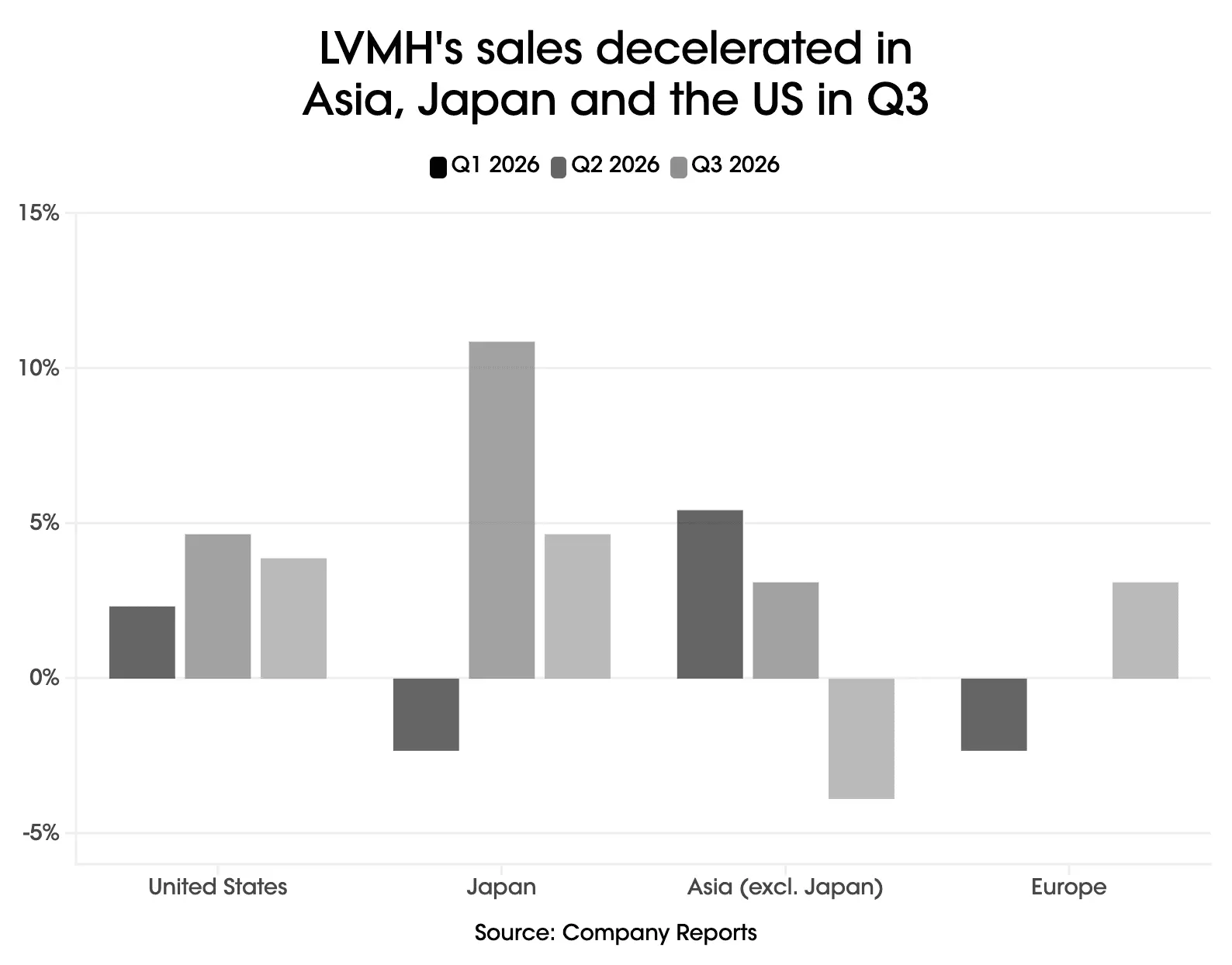
Geographically, LVMH's performance was mixed. Sales in Asia, excluding Japan, dropped by 5%, while the US market demonstrated resilience with a 5% increase. Europe saw a 4% rise, and Japan led with a 6% growth. Delving into individual brand performances, Louis Vuitton's Q3 sales were slightly below the divisional average, and Dior remained flat. However, brands like Loro Piana and Rimowa stood out as strong performers, enjoying robust growth. Celine also showed significant improvement, rapidly building momentum, particularly in the US market. The company does not typically disclose brand-specific sales figures, but these insights offer a glimpse into the varied fortunes within the LVMH portfolio.
Further impacting Louis Vuitton's performance was a legal dispute with Chinese tea brand Molly Tea, which resulted in a $1.5 million payment to Louis Vuitton for trademark infringement. While the precise impact of the subsequent social media backlash is hard to quantify, Cabanis acknowledged its negative effect, especially early in the quarter. Additionally, a temporary issue with a shipping partner caused a slight drag on quarterly growth, though this has since been resolved. Despite these challenges, there remains confidence in the strategic direction of key brands. For instance, new creative directions at Dior, particularly under Jonathan Anderson, are yielding positive results, with strong consumer appetite observed in women's ready-to-wear.
Celine's performance in the US was particularly strong, reporting double-digit sales growth for the quarter, bolstered by robust footwear sales and the success of its Soft Triomphe handbag. The brand is now viewed as a crucial growth driver for the group. Other divisions also contributed to LVMH's overall sales. Selective retailing, including Sephora, saw an 8% increase, while perfumes and cosmetics grew by 1%. Watches and jewelry recorded a 6% rise, matching the growth seen in wines and spirits. These results from LVMH, often considered a bellwether for the luxury industry, set the tone for the broader sector's third-quarter earnings, with other major players like Kering and Hermès anticipating slower growth figures.
The third quarter proved to be a mixed bag for LVMH, with strong regional performances in the US, Europe, and Japan somewhat offsetting the downturn in the crucial Chinese market. The fashion and leather goods division faced considerable headwinds, but targeted brand initiatives and strategic adjustments are underway to reignite growth. Despite the challenges posed by external factors, the company remains focused on enhancing the performance of its diverse portfolio, leveraging successful product categories and burgeoning brands to maintain its leadership in the global luxury market.
About the author
Diane von Fürstenberg
Fashion designer and author, best known for the wrap dress and her writings on style and female empowerment.