Marc Jacobs' Enduring Influence on Fashion and Culture
ByRuth E. Carter
This article explores the enduring legacy and contemporary resurgence of fashion designer Marc Jacobs, highlighting his significant impact across different design eras and his sustained relevance in popular culture and the vintage market. It delves into the reasons behind his enduring appeal, from his diverse design aesthetics to the powerful role of nostalgia in reintroducing his work to new generations.
Marc Jacobs: A Timeless Visionary in the Realm of Style
The Resurgence of a Fashion Icon: Marc Jacobs' Unwavering Appeal
At The Vintage Project, a renowned Beverly Hills boutique curated by Sarah Jordan Buss, a singular name consistently surfaces in conversations among fashion enthusiasts: Marc Jacobs. While the luxury pre-owned market has recently spotlighted designers like Pucci and Roberto Cavalli, the current focus on Jacobs is notably distinct. Unlike past trends that centered on specific periods or singular 'It' items, the renewed interest in Jacobs' creations spans his entire illustrious career, demonstrating a comprehensive appreciation for his vast body of work.
Exploring Marc Jacobs' Diverse Design Tapestry: From Grunge to Louis Vuitton
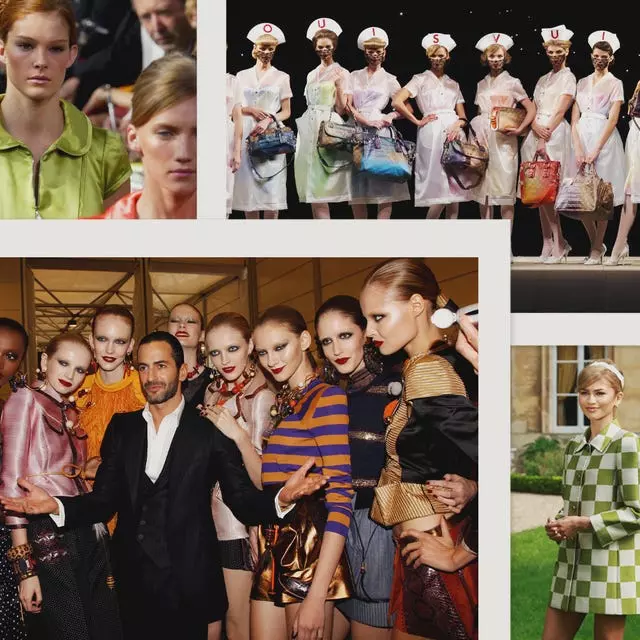
The widespread admiration for Marc Jacobs encompasses pivotal moments throughout his professional journey. This includes his groundbreaking grunge collection for Perry Ellis, which achieved viral status long before the advent of the internet. It also highlights his transformative 16-year tenure as the inaugural ready-to-wear designer for Louis Vuitton from 1997 to 2013, during which he redefined the brand's aesthetic. Moreover, his extensive contributions to his eponymous lines have generated such a prolific output that they even inspired a memorable internet meme, underscoring his pervasive influence on contemporary style.
Celebrity Endorsements and Red-Carpet Revivals: Jacobs' Enduring Influence
Recent events have vividly showcased Marc Jacobs' continued impact on high fashion. Bella Hadid, for instance, turned heads at the Cannes Film Festival in a sophisticated, silky ensemble from Louis Vuitton's spring/summer 2003 collection, a design by Jacobs. Odessa A'Zion, known for her distinctive self-styling, chose a relaxed Marc Jacobs fall/winter 2018 suit for a film premiere. Lexie Minetree sported a vibrant hot-pink spring/summer 2001 design, previously worn by Reese Witherspoon, illustrating the cyclical nature of fashion. Additionally, Zendaya championed a striking checkerboard Louis Vuitton spring/summer 2013 creation by Jacobs for a movie promotion, while Cynthia Erivo donned an Elphaba-green fall/winter 2011 piece from his namesake collection. These high-profile appearances underscore the timelessness and broad appeal of Jacobs' designs, consistently bringing his archival pieces back into the contemporary spotlight.
The Power of Nostalgia: Reintroducing Marc Jacobs to New Generations
Beyond the glamour of celebrity endorsements, a significant driver of what shoppers at The Vintage Project refer to as "Marcmania" is the potent force of nostalgia. For millennials and Gen Z, Marc Jacobs was instrumental in shaping the visual identity of the Y2K era. As Jordan Buss points out, his designs were ubiquitous on popular television shows like Gossip Girl, Gilmore Girls, and The O.C., where characters were frequently seen adorned in his creations. This exposure ingrained his aesthetic into the collective fashion consciousness of a generation. Today, as these shows are revisited by new audiences, Jacobs' early 2000s designs are being discovered and appreciated anew, ensuring his continued relevance across generations.
Challenging Quiet Luxury: The Relatability of Jacobs' Aesthetic
A key aspect attracting new admirers to Marc Jacobs' creations is their distinct contrast to the prevailing trend of "quiet luxury," a movement that many consumers have recently begun to question. Jordan Buss characterizes Jacobs as a master of "personality dressing," citing his innovative use of vibrant colors, bold prints, and immediately recognizable silhouettes. Historically, Jacobs' runway presentations featured models with deliberately unkempt hair, avant-garde makeup, and artfully layered garments. This deliberately imperfect aesthetic resonates powerfully in an era that is pushing back against overly polished looks, embracing a more authentic and relatable style. Buss emphasizes that Jacobs' designs celebrate a certain disheveled elegance, making them feel genuinely human and accessible.
A Year of Milestones: Expanding Influence and Personal Connection
This past year has been particularly momentous for Marc Jacobs. His company recently entered a new phase with its acquisition by WHP Global and G-III Apparel Group. Sofia Coppola's intimate documentary, Marc by Sofia, offering a unique glimpse into his life, premiered in March and is now available for streaming. Additionally, Jacobs successfully relaunched his beauty line in June, further expanding his brand's reach. His engaging and often humorous presence on social media, characterized by his #gratefulnothateful hashtag, has also cultivated a dedicated following. Through posts showcasing his nail art, reading recommendations, and personal reflections on sobriety, Jacobs fosters a genuine connection with his audience, further cementing his cultural footprint.
The Enduring Icon: The Louis Vuitton Murakami Bag and "Pure Unadulterated Joy"
If there is one item that perfectly encapsulates the current wave of Marc Jacobs nostalgia, it is undoubtedly the Louis Vuitton Murakami bag. This iconic accessory, which the fashion house re-released last year, remains highly sought after. Jordan Buss highlights its appeal by noting that it stands in direct opposition to the concept of quiet luxury, describing it as an item that "goes with everything because it is everything." Lauren Pyes echoes this sentiment, observing that we are living in an era driven by nostalgia, where people are drawn to experiences that evoke happiness and genuine enjoyment, untainted by algorithmic pushes or influencer endorsements. She eloquently summarizes Jacobs' extensive body of work as "pure unadulterated joy," a phrase he himself used to describe his spring/summer 2020 collection, capturing the essence of his lasting impact.
About the author
Ruth E. Carter
Oscar-winning costume designer for films like "Black Panther," authoring works on the intersection of fashion, culture, and history.