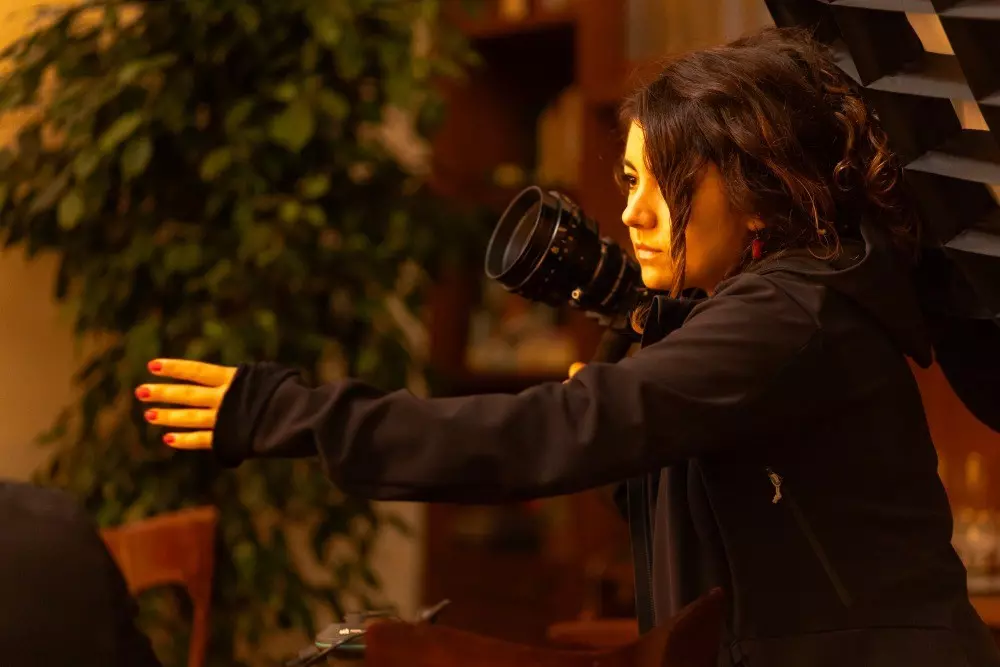
Margherita Ferrari on Her Directorial Debut 'Föa — Once Upon a Future' and Paolo Sorrentino's Mentorship
ByStephen King
Emerging Italian filmmaker Margherita Ferrari is presenting her first feature, 'Föa – Once Upon a Future,' at the Busan International Film Festival. This innovative coming-of-age story is notable not only for Ferrari's fresh narrative approach but also for being the debut production of acclaimed director Paolo Sorrentino. The film is set against the backdrop of the tumultuous G8 summit in Genoa in July 2001, a period marked by intense conflicts between protestors and law enforcement. 'Once Upon a Future' centers on Nicole, an 18-year-old expectant mother who provides refuge to three protestors, offering a unique, fable-like perspective on a pivotal moment in the anti-globalization movement.
Sorrentino has expressed his profound connection to the project, stating that 'Föa' addresses historical wounds that remain unhealed, with Ferrari transforming the memory of Genoa into an intimate, dreamlike reflection where the past re-examines the future. The film, featuring rising stars Gaia Ravina, Clara Tramontano, Iker Urgoiti, and Gabriele Falsetta, was co-produced by Sorrentino's Numero 10, alongside The Apartment and PiperFilm, with PiperPlay handling global distribution. Ferrari revealed that the film originated from her graduation project at Rome's Centro Sperimentale film school and evolved into a full-length feature with Sorrentino's support. She shared that her childhood experience of the G8 events, specifically being confined indoors in Genoa due to the chaos, deeply influenced the film's themes of isolation and collective powerlessness. This personal connection, coupled with a sense of disillusionment about individual impact on global events, inspired her to craft a story that, while set in the past, directly addresses contemporary issues and future prospects.
The film's title, 'Föa – Once Upon a Future,' uses the Genoese term for 'story' or 'fable,' highlighting its narrative choice to merge historical events with a fictional tale. This approach allows the film to use invention and metaphor to convey truths about reality, exploring the emotional and subconscious effects of historical trauma. Ferrari hopes the film encourages audiences to envision a more positive future, much like traditional fairy tales offer a sense of relief and possibility. She lauded Sorrentino's subtle yet impactful involvement, noting his respect for her artistic vision during both the writing and editing phases, while maintaining a non-intrusive presence on set. This collaborative experience, she believes, was instrumental in her growth as a director and in bringing her unique story to the screen.
This film serves as a poignant reminder that even amidst historical trauma and personal disillusionment, art can offer a powerful lens through which to re-examine the past, understand the present, and bravely imagine a better tomorrow. It underscores the importance of nurturing new voices and perspectives in storytelling, proving that through creative expression, we can find hope and inspire change, even when facing seemingly insurmountable challenges.
About the author
Stephen King
Prolific author of horror and suspense, who also writes extensively on the craft of writing and pop culture.