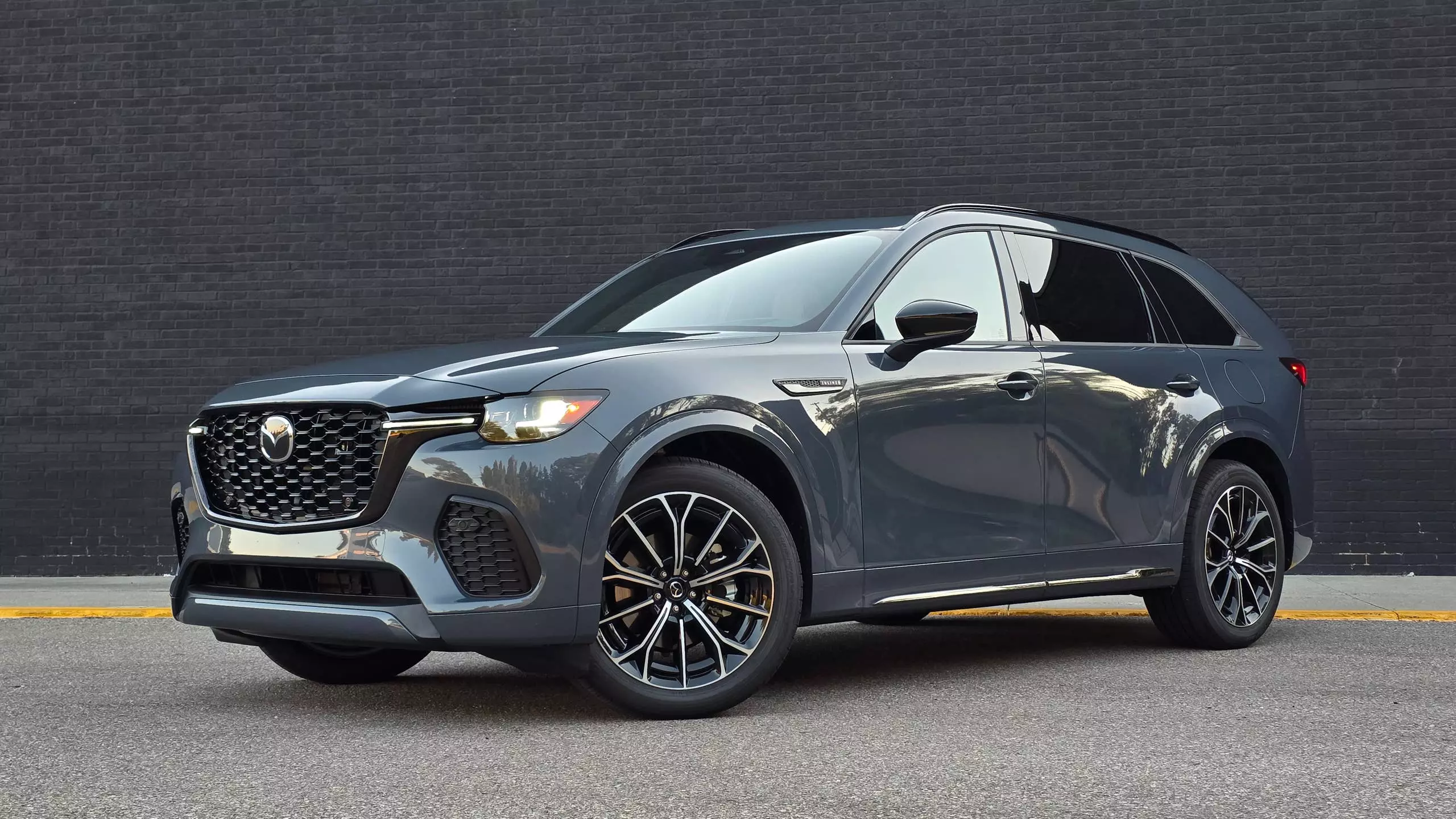
This article examines the unexpected sales revival of the Mazda CX-70, a two-row SUV that Mazda has decided to discontinue. Despite its planned exit, the CX-70 recorded a significant sales surge, prompting a closer look at its market performance and Mazda's overall sales strategy.
CX-70's Unexpected Rebound: A Farewell Surge
Mazda's Strategic Shift: The Curious Case of the CX-70 and CX-90
From their inception, Mazda's decision to simultaneously market the two-row CX-70 and three-row CX-90, which are almost identical in most aspects except seating capacity, generated considerable debate. Many critics viewed the CX-70 as an unnecessary duplication within Mazda's SUV portfolio. Despite this, Mazda persisted with its dual-model approach for several years. However, a recent strategic pivot saw the company decide to cease production of the CX-70, opting instead to offer a two-row variant of the CX-90. This move was generally perceived as a logical consolidation. Curiously, this announcement coincided with an unexpected and substantial increase in sales for the soon-to-be-discontinued CX-70, creating an intriguing market anomaly.
A Sudden Rise: The CX-70's Unexpected Sales Performance in October
In a surprising turn of events, the Mazda CX-70 experienced an astonishing 296% year-over-year increase in sales last month, dwarfing the performance of other Mazda models. This significant surge translated to 1,358 units sold in October, bringing its year-to-date sales for 2026 to an impressive 11,044 units. This October performance builds on a previously strong September, which saw a 96.7% sales increase. Such robust growth late in its lifecycle is particularly noteworthy for a vehicle that many industry observers had written off as superfluous in Mazda's lineup.
The CX-70's Enduring Appeal: Performance and Practicality
The perceived value proposition of the CX-70 has long been a point of confusion for consumers, primarily because the CX-90, offering an additional row of seating, was available at a comparable price. While not every buyer requires seven seats, the flexibility of having that option with the CX-90 often made it a more attractive choice. Nevertheless, the CX-70 shares the same powertrain options as its larger sibling, featuring a potent 3.3-liter turbocharged inline-six engine available in 280 or 340 horsepower configurations, or a 2.5-liter four-cylinder plug-in hybrid producing 323 horsepower. True to Mazda's reputation, the CX-70 delivers a superior driving experience compared to many competitors and boasts a refined, feature-rich interior, contributing to its unexpected late-stage appeal.
Mazda's Broader Success: A Stellar October Across the Lineup
Beyond the surprising performance of the CX-70, Mazda celebrated an exceptionally strong sales month across its entire U.S. lineup in October. The automaker sold a total of 31,446 vehicles, marking a 25% increase and securing its position as the second-best October sales performance in the company's history. Several models contributed to this success: the standard, non-hybrid Mazda CX-90 achieved its best October sales ever, while the non-hybrid CX-50 recorded its second-best October. The Mazda 3, renowned for being one of the few vehicles in its segment still offering a manual transmission, also performed exceptionally well, seeing a 145% increase in sales across its hatchback and sedan variants despite its age. Only the CX-30 and CX-50 experienced marginal year-over-year declines, indicating a generally robust market performance for Mazda.
The Future Outlook: Navigating Market Trends and Strategic Evolution
While Mazda can take satisfaction in the CX-70's recent sales uptick, the decision to discontinue the model remains firm. The CX-70's sales, though surging, still trail significantly behind the CX-90, which maintains a lead of nearly 30,000 units for the year. This disparity reinforces the view that offering two such similar models was a strategy that ultimately led to consumer confusion. Moving forward, the critical factor for Mazda's growth will be the anticipated major enhancements to its vehicle designs, interiors, and powertrains. Mazda is still striving to reach its global target of 200,000 SUV sales and currently lags behind major competitors such as Hyundai, Kia, and Toyota in the SUV market. These upcoming product innovations will be crucial in solidifying Mazda's competitive standing and achieving its long-term sales objectives.
About the author
Michele Acquaragia
Fictional representative of the passionate journalists covering high-performance supercars and Italian design.