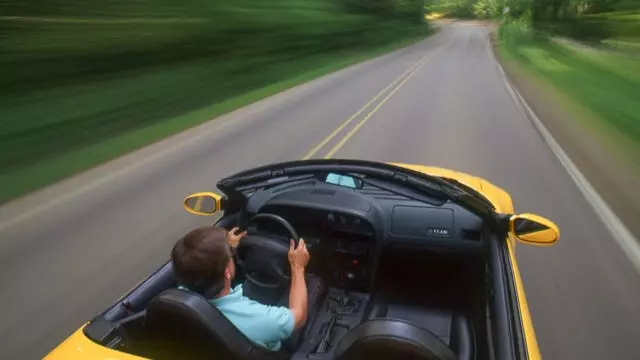
The Revolutionary 1992 Lotus Elan: A Blend of Tradition and Innovation
ByLarry Chen
The 1992 Lotus Elan redefined expectations for the iconic British marque, successfully integrating a front-wheel-drive configuration and an outsourced engine while preserving the brand's renowned driving dynamics. This two-seater convertible, first featured in the August 1991 issue of Car and Driver, stood out for its audacious styling, surprising comfort, and a driving experience that blended traditional Lotus exhilaration with modern reliability. Despite its deviations from Lotus orthodoxy, the Elan proved to be a highly capable and engaging vehicle, holding its own against formidable competitors in the luxury sports car segment.
The Reimagined Lotus Elan: A Deep Dive into a New Era
In the early 1990s, the automotive landscape witnessed a significant shift with the introduction of the 1992 Lotus Elan, a car that bravely departed from the manufacturer's established rear-wheel-drive tradition. Hailing from Hethel, Norfolk, England, Lotus engineers made the pivotal decision to equip the Elan with a front-wheel-drive system, a move designed to enhance all-weather traction and handling versatility. Powering this innovative design was a robust Isuzu-sourced, turbocharged and intercooled 1.6-liter four-cylinder engine, generating 162 horsepower at 6600 rpm and 148 pound-feet of torque at 4200 rpm, paired with an Isuzu five-speed manual transaxle. This strategic partnership with Isuzu not only promised impressive performance but also aimed to bolster the vehicle's reliability, a factor not always synonymous with earlier Lotus models.
Externally, the Elan maintained the dramatic aesthetic expected of a Lotus, boasting a sleek, low-slung profile and a wide, assertive stance that belied its compact 152.2-inch length. Its drop-away nose, sweptback windshield, and integrated rear wing collectively projected an image of inherent speed. The interior, though a strict two-seater, offered an unexpectedly generous amount of space for a Lotus, featuring leather seats, power amenities, and a high-quality Sony audio system, prioritizing driver comfort without sacrificing the quintessential sporty feel. Controls were thoughtfully arranged, providing an intuitive and refined tactile experience, though some drivers noted minor visibility issues with the gauges and an inability to perceive the car's extremities from the driver's seat.
On the road, the Elan exhibited exceptional driving manners, starting and running smoothly without the temperament often associated with exotic sports cars. Its acceleration from 0 to 60 mph in 6.4 seconds and a top speed of 131 mph cemented its performance credentials. The specially developed Goodyear Eagle GS-D tires contributed to its outstanding roadholding, achieving 0.86 g on the skidpad. Despite its front-heavy weight distribution, the Elan displayed remarkable balance and minimal torque steer, delivering a handling experience that rivaled the best rear-wheel-drive cars. For the U.S. market, Lotus specifically fine-tuned the suspension and added structural bracing to improve ride quality and body rigidity, making the Elan as enjoyable during leisurely drives as it was during high-speed maneuvers. Priced at $40,989, with only metallic paint as an option, the 1992 Elan was positioned as a premium, limited-production exotic car, with only about 1000 units slated for import to the U.S. that year. This exclusivity, combined with its unique blend of innovation and classic Lotus charm, ensured its desirability among discerning buyers.
The 1992 Lotus Elan stands as a testament to embracing change while honoring legacy. Its integration of a front-wheel-drive system and an outsourced engine initially raised eyebrows among purists, yet it ultimately proved that innovation, when executed thoughtfully, can elevate a brand to new heights. The Elan's remarkable balance of performance, handling, and surprising practicality, particularly in its interior comfort, offers a valuable lesson: true automotive excellence lies not just in adherence to tradition, but in the intelligent evolution of core principles. It reminds us that sometimes, breaking a few rules leads to creating something truly exceptional and memorable.
About the author
Larry Chen
Renowned automotive photographer and journalist specializing in drift and car culture.