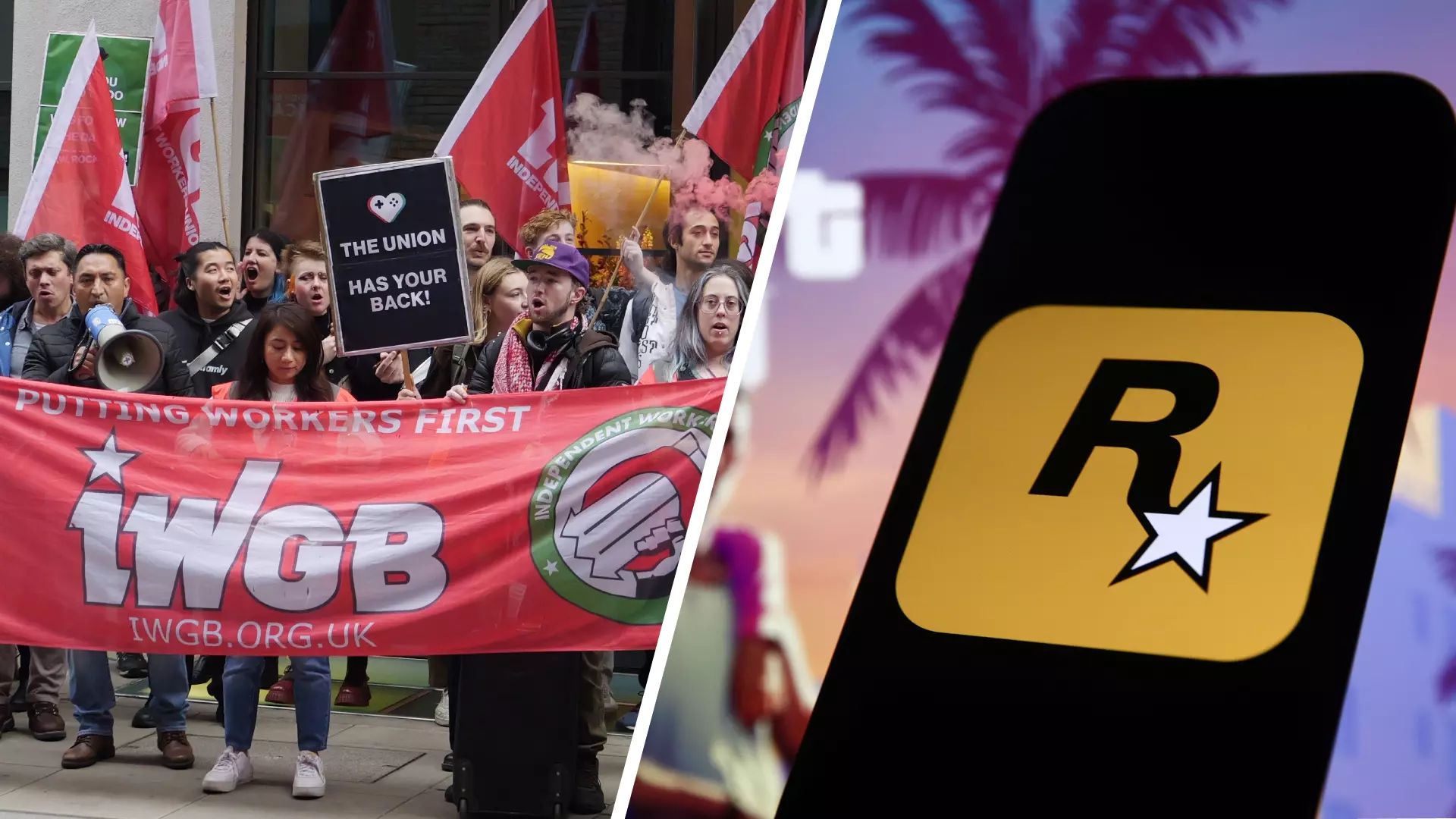
In a significant development within the gaming industry, employees at Rockstar Games have rejected an agreement that would have formally recognized the IWGB Game Workers Union. This decision followed a comprehensive two-week voting period, coinciding with the highly anticipated release of their latest title, Grand Theft Auto 6. The ballot saw a substantial 75% of participating staff vote against the recognition, with only a quarter in favor. Despite this outcome, which means the union will not gain formal collective bargaining rights, the Independent Workers' Union of Great Britain (IWGB) has affirmed its dedication to continuing its advocacy and organizational efforts among Rockstar's workforce. The union views the vote not as a defeat, but as a catalyst for deeper dialogue and understanding regarding worker representation and employment conditions within the company.
The vote's conclusion saw 1,544 individuals participate, achieving an impressive turnout exceeding 93%. While the existing Rockstar Game Workers Union, a branch of the IWGB, will maintain its presence, the lack of formal recognition means it won't compel the company to engage in regular meetings for collective negotiations or other official labor discussions. This distinction is crucial, as it impacts the union's ability to directly influence workplace policies and conditions through established channels.
IWGB representatives, responding to the results, emphasized that this moment should not discourage those striving for improved workplace equity. Instead, they urged supporters within Rockstar to intensify their commitment to fostering a fairer environment across the sector. They acknowledged the need to further educate and earn the trust of more colleagues who may be unfamiliar with the principles and benefits of unionization. The voting process itself, though not leading to recognition, successfully introduced topics like employment terms and collective power to a wider audience within the studio, prompting new conversations about employee welfare.
From the company's perspective, Jennifer Kolbe, head of publishing at Rockstar, expressed immense pride in the team and the collaborative culture cultivated, particularly in light of Grand Theft Auto 6's successful launch. She articulated that the vote's outcome reinforced the company's belief in direct employee relationships and open communication. Rockstar maintains that its current approach fosters innovation and strength, and they are eager to build upon these achievements.
The backdrop to this unionization effort includes a contentious period for Rockstar. In October 2025, the company faced considerable criticism after terminating over 30 employees, many of whom were reportedly part of a private union discussion group. While the IWGB characterized these actions as a severe instance of "union busting," Rockstar countered by stating the dismissals were due to employees disclosing confidential details about upcoming, unannounced projects. This unresolved dispute is currently under review by an employment tribunal, with final arguments having been presented recently.
The recent decision by Rockstar Games employees to decline formal union recognition underscores the complex landscape of labor relations in the video game industry. Although the immediate goal of official representation was not met, the dialogue initiated by the union's formation and the subsequent vote serves as a foundational step. It encourages continued engagement on critical issues like employment standards and worker advocacy, highlighting the ongoing evolution of workplace dynamics in a rapidly changing sector.
About the author
Shigeru Miyamoto
Legendary game designer at Nintendo, creator of Mario, Zelda, and Donkey Kong.