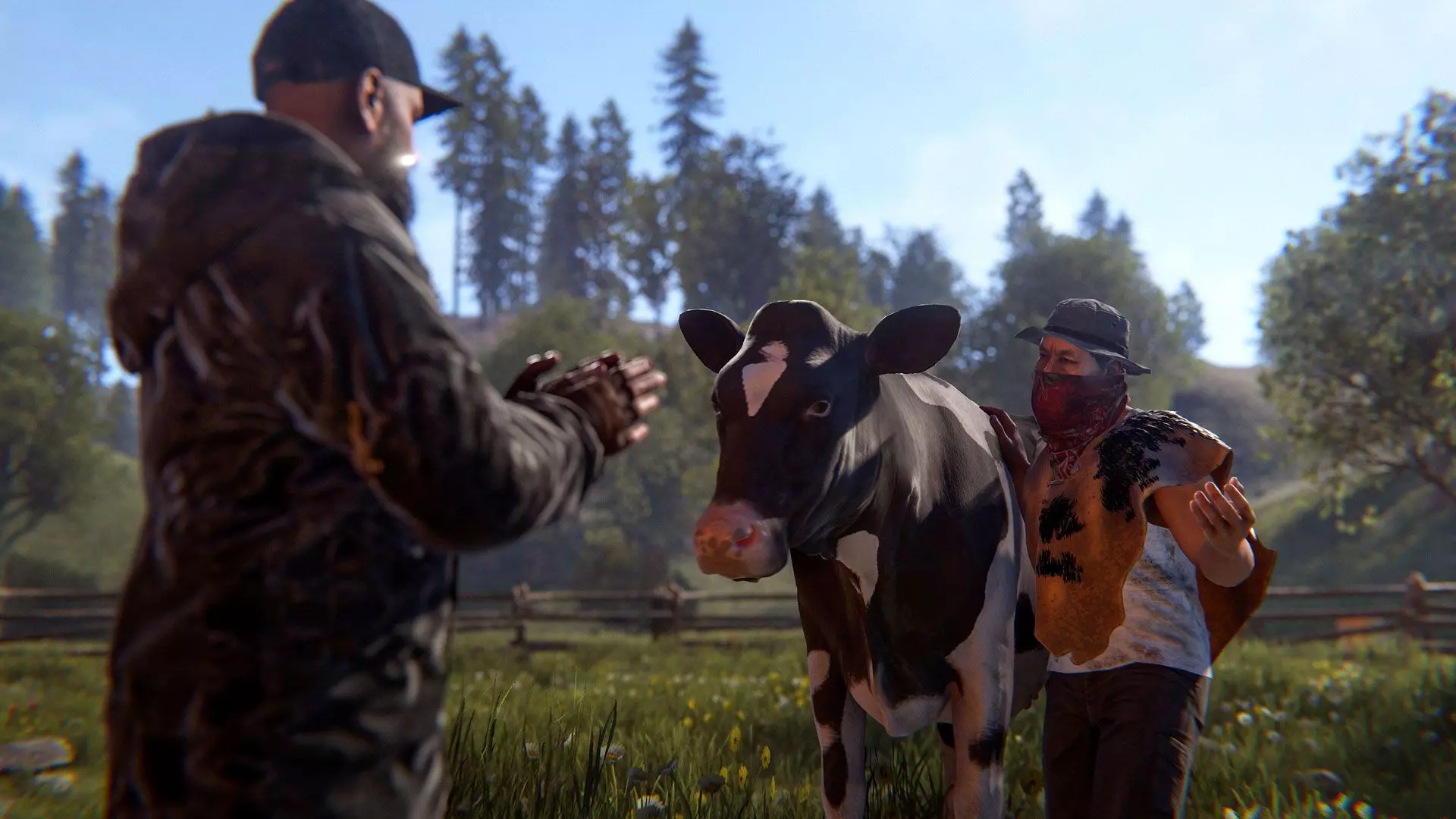
Rust Introduces Livestock Update, Transforming Players into Farmers
ByJane McGonigal
Rust's highly anticipated livestock update has officially launched, inviting players to dive into the world of farming. This significant expansion centers around sheep and cows, tasking players with acquiring tools like shears and milk buckets. These animals are crucial for producing milk, wool, and dung, resources that will prove invaluable in every game cycle.
The recent update to Rust fundamentally transforms the player experience by introducing a detailed livestock system, allowing players to assume the role of a farmer. This update integrates animal husbandry directly into the survival mechanics, providing new avenues for resource generation and strategic gameplay. Players can now not only hunt animals for basic materials but also engage in breeding them to sustain a productive farm. This shift encourages a more settled and resource-management-focused playstyle, adding depth to the existing survival elements.
Embracing the Agricultural Lifestyle in Rust
The livestock update in Rust brings extensive new possibilities for interacting with sheep and cows. Beyond simply hunting them for meat, bones, leather, and animal fat, players can now construct farms using new fence and gate blueprints. This enables them to breed animals specifically for dung, milk, and wool, each serving distinct purposes within the game's economy and crafting system.
Dung, a pre-existing resource, is now central to fertilizer production, boosting crop growth and offering a valuable commodity for trade. Milk can be consumed directly or processed into cream and skimmed milk, enhancing the effects of various recipes. Wool, on the other hand, can be sold to vendors at Stables, who offer varying prices for livestock and their products. Animal breeding mechanics are intricate, featuring a genetic system similar to plants, where offspring inherit traits from their parents. Well-bred animals are more efficient producers and command higher prices. Furthermore, players can now convert animal byproducts, including spoiled meat, into low-grade fuel using the new biofuel generator, adding an innovative layer to resource management.
New Wildlife, Cosmetics, and Economic Dynamics
Beyond the farming mechanics, the update also enriches Rust's environment with new decorative wildlife. Depending on the biome, players might encounter frogs, turtles, jellyfish, crabs, and squirrels, enhancing the game's ecological diversity and visual appeal. These additions contribute to a more immersive world, making exploration more engaging.
The update also introduces a new cosmetic DLC: the Plague Doctor Hazmat Suit skin, perfectly timed for October's spooky atmosphere. Available on Steam for $9.99, this skin offers players a unique way to customize their in-game appearance. The economic aspect of the livestock update is significant, as players can now derive substantial value from animal products and well-bred animals. The dynamic vendor offers for wool and livestock introduce a trading mini-game, where players can strategize their sales to maximize profit. The ability to convert animal waste into fuel underscores a survival-oriented resource loop, showcasing a unique blend of farming and resourcefulness not typically found in other farming simulation games, further solidifying Rust's distinctive gameplay.
About the author
Jane McGonigal
Game designer and author who writes about using games to improve real life and solve problems.