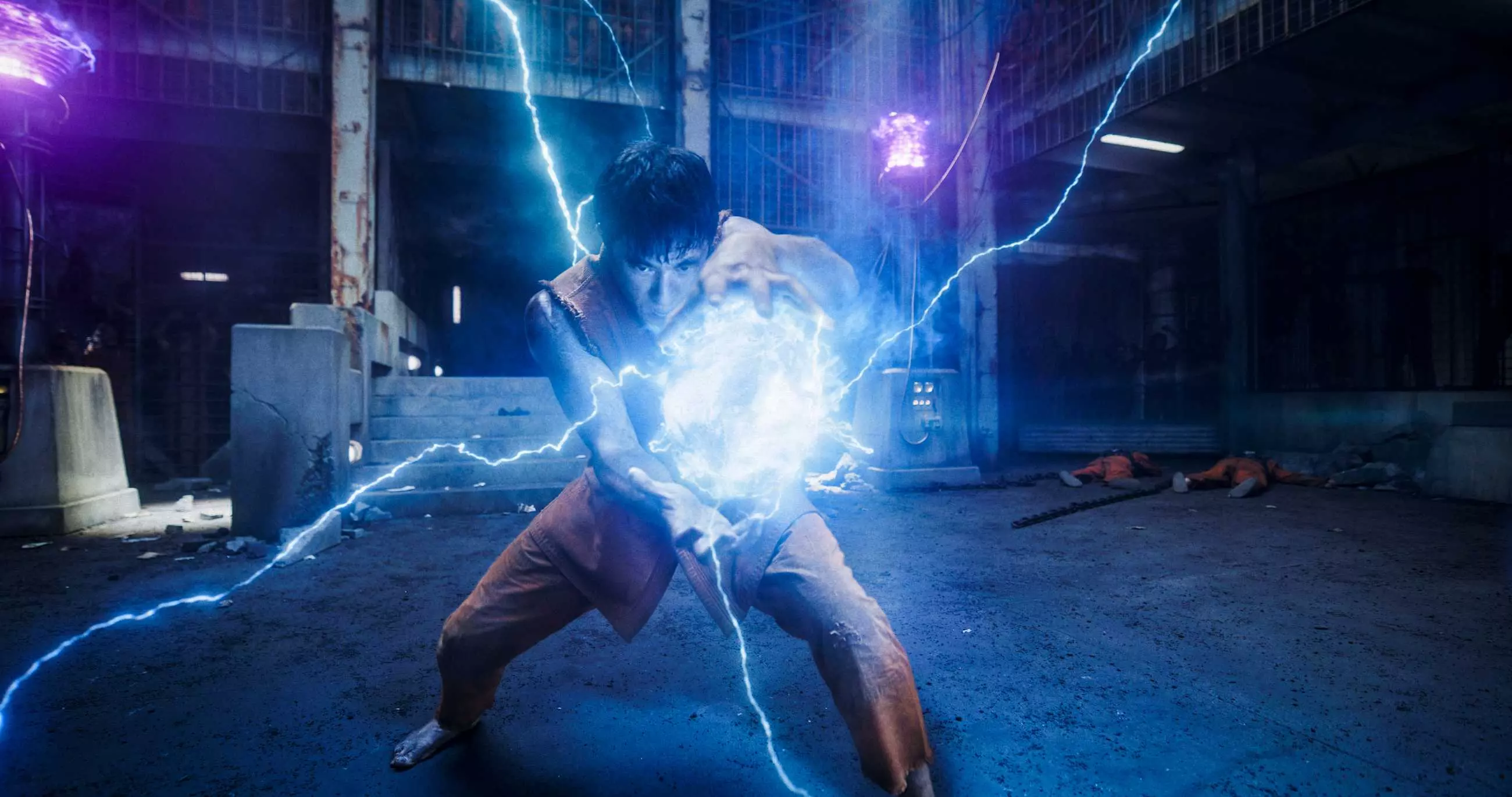
“Street Fighter” Movie Review: A Disjointed Adaptation
ByShigeru Miyamoto
This analysis delves into the recent cinematic adaptation of the "Street Fighter" video game franchise, highlighting its strengths and numerous weaknesses. The film attempts to translate the beloved fighting game into a compelling narrative but is ultimately hampered by inconsistent direction and a struggle to define its own identity.
A Disappointing Adaptation: Unfulfilled Potential on the Big Screen
The Bizarre Brilliance of M. Bison's Portrayal
From the opening scene, actor David Dastmalchian captivates with his portrayal of the antagonist, M. Bison. His over-the-top, almost theatrical performance injects a unique brand of dark humor and camp into the film, providing a rare moment of genuine entertainment. Unfortunately, this standout performance only serves to underscore the lack of similar energy from the rest of the cast and the film's overall direction.
A Conflicted Narrative: Serious Intentions Amidst Camp
The film's core struggle lies in its identity. Director Kitao Sakurai appears undecided on whether to embrace the inherent campiness of the "Street Fighter" universe or to pursue a more serious dramatic narrative. This internal conflict results in a jarring viewing experience, where moments of intended gravitas clash with surprisingly silly character designs and comedic elements. The story, focusing on the strained relationship between Ryu (Andrew Koji) and Ken (Noah Centineo), aims for emotional depth but often feels superficial due to this tonal inconsistency.
The Brotherhood's Unexplored Depths
The decision to place Ken, often considered the secondary protagonist in the games, at the center of the emotional arc is a promising concept. Exploring his vulnerabilities and insecurities could have added a fresh dimension to the well-known lore. However, the film fails to dedicate sufficient time to this crucial character development. The emotional beats between Ken and Ryu are rushed and lack the necessary build-up, making their eventual reconciliation feel unearned and hollow.
Chun-Li's Misplaced Seriousness
Callina Liang's performance as Interpol agent Chun-Li further emphasizes the film's tonal issues. Her earnest and dramatic approach contrasts sharply with Dastmalchian's flamboyant villain, creating a sense that these characters belong to entirely different productions. While her physical presence is undeniable, her serious demeanor feels out of sync with the movie's sporadic attempts at camp.
Editing Flaws and Inconsistent Direction
A significant portion of the film suffers from poor editing and a lack of clear directorial vision. Frequent, jarring close-ups of characters yelling or reacting to emphasize scenes suggest a desperate attempt to compensate for incomplete storytelling. Moreover, background extras often appear undirected, resembling generic video game NPCs rather than contributing to a cohesive cinematic environment. This contributes to a disjointed and ultimately unsatisfying experience.
Action Sequences: Visceral but Uninspired
While the combat scenes are visually impactful, featuring brutal blows and flying debris, they largely fail to capture the iconic essence of the "Street Fighter" franchise. The signature finishing moves, complex combos, and energy blasts that define the game are mostly absent, replaced by generic punching and kicking. The fights, though entertaining on a surface level, lack the strategic depth and spectacular flair expected from a "Street Fighter" adaptation, feeling more like casual brawls than high-level competitive matches.
An Abrupt End and Unwarranted Sequel Tease
The film's extended runtime, coupled with its failure to deliver a satisfying conclusion, marks its biggest misstep. What could have been a tighter, more focused story at 90 minutes drags on for two hours before abruptly ending mid-scene. This abruptness leaves audiences bewildered and suggests a production that either ran out of resources or ideas. A post-credits scene attempts to set up a sequel, but given the film's numerous shortcomings, it feels more like a desperate plea than an exciting promise. The hope is for a complete reboot or an adaptation of a different fighting game, as this iteration feels beyond redemption.
About the author
Shigeru Miyamoto
Legendary game designer at Nintendo, creator of Mario, Zelda, and Donkey Kong.