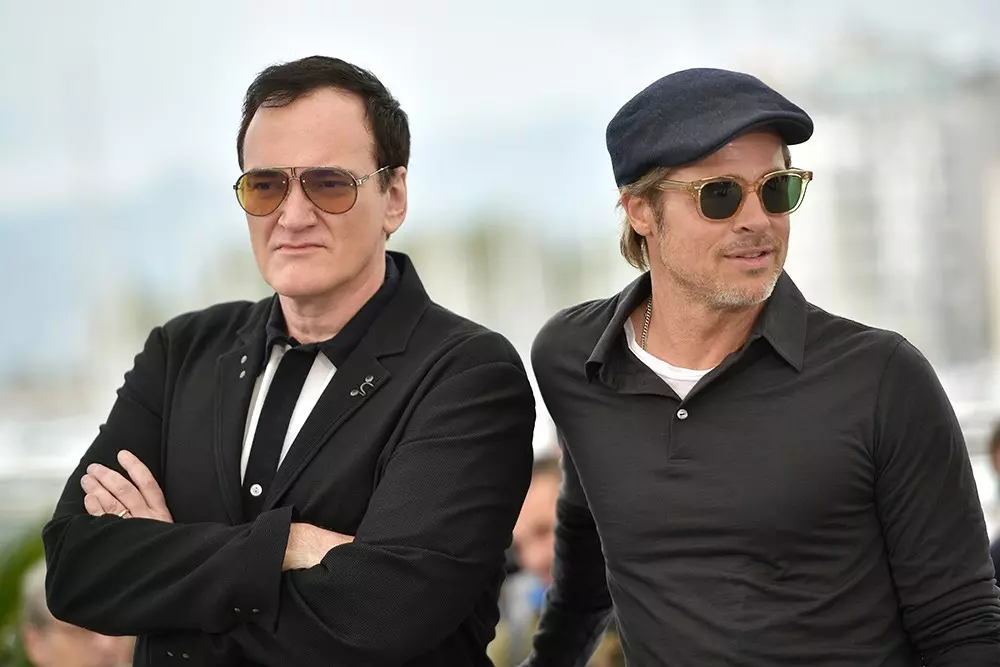
Tarantino's Regret: Not Directing Cliff Booth's Sequel for Brad Pitt
ByChimamanda Ngozi Adichie
Quentin Tarantino reflects on his decision to pass on directing a sequel centered on Brad Pitt's iconic character, Cliff Booth, from "Once Upon a Time in Hollywood," a role for which Pitt received critical acclaim.
The Unfulfilled Vision: Tarantino's Acknowledged Disappointment
Tarantino's Hesitation to Direct the Sequel
Quentin Tarantino has openly shared his internal conflict regarding his decision to step aside from directing the follow-up to "Once Upon a Time in Hollywood," particularly concerning the character of Cliff Booth. He confided in Empire magazine that his primary concern was disappointing Brad Pitt, who brilliantly embodied the Hollywood stuntman and secured an Academy Award for his performance in the 2019 cinematic creation. Pitt was apparently very keen on exploring the character's narrative further.
The Genesis of "The Further Mis-Adventures of Cliff Booth"
Despite crafting the screenplay for what would eventually become "The Further Mis-Adventures of Cliff Booth," a film slated for IMAX release, Tarantino made it clear that this project would not serve as his tenth and final directorial effort. This decision paved the way for another acclaimed filmmaker to take the helm, much to the surprise and delight of Tarantino himself.
David Fincher Takes the Reins
When the possibility arose that David Fincher, known for his collaborations with Pitt on films like "Seven" and "Fight Club," might be interested in directing the sequel, Tarantino was reportedly taken aback. He expressed his astonishment and immediate encouragement for Fincher to consider the project. Tarantino humorously described his initial interactions with Fincher as akin to a delicate courtship, wary of appearing overly enthusiastic and potentially jeopardizing the collaboration.
A Screenwriter's Validation
Tarantino emphasized the immense respect he gained from Fincher's involvement. He noted that while he is recognized for his screenwriting, he often feels perceived primarily as a director who writes for his own projects. Fincher's dedication of over a year and a half to adapt Tarantino's material was a profound validation for him as a writer, underscoring the quality of the script itself.
Booth's Evolution: From 1969 to 1977
While "Once Upon a Time in Hollywood" was set in the vibrant year of 1969, its successor, "The Further Mis-Adventures of Cliff Booth," transports audiences to 1977. In this new chapter, Cliff Booth transitions into a role as a studio fixer in the bustling landscape of Hollywood. Fincher recounted Pitt's deep understanding of the character, noting that Pitt's familiarity with Booth's essence often surpassed his own. This dynamic created an interesting collaborative tension where Pitt's intimate knowledge of the character served as a strong foundation amidst new narrative explorations.
About the author
Chimamanda Ngozi Adichie
Acclaimed novelist ("Americanah") whose essays and talks offer sharp critiques of culture and feminism.