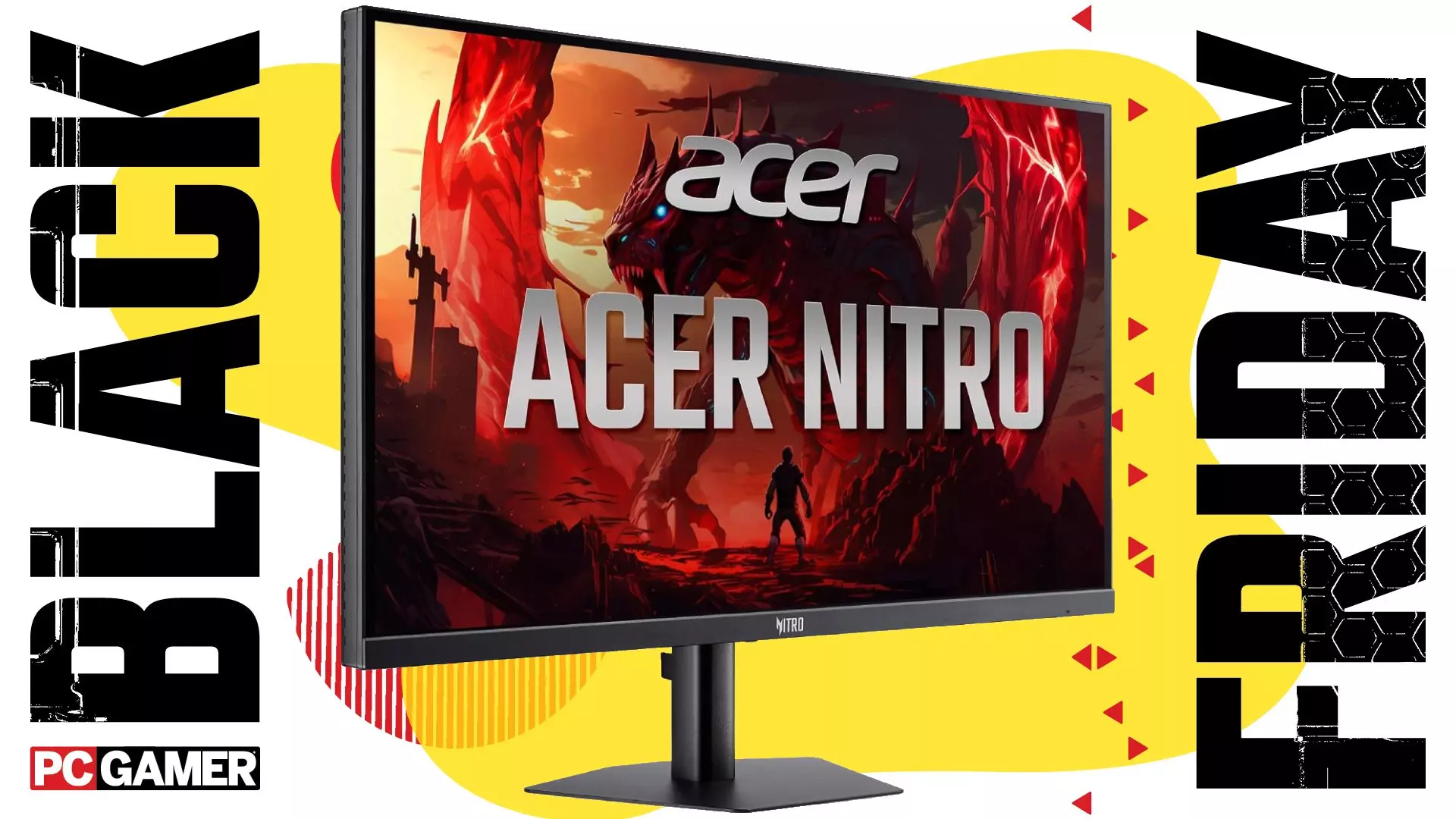
Unbeatable Value: Acer's 1440p Mini-LED Gaming Monitor at an Incredible Price Point
ByMark Rosewater
This monitor, the Acer Nitro MG275U X2biippx, stands out as an unprecedented offering in the gaming display market, particularly given its aggressive pricing during promotional events. Priced remarkably low at under $200, this 27-inch, 1440p mini-LED display challenges the perception that high-end features are exclusively tied to premium costs. Its key specifications are genuinely impressive: 1,152 local dimming zones for superior contrast control, HDR1000 certification for exceptional peak brightness, a fluid 210Hz refresh rate, and an ultra-fast 0.5ms response time. These attributes collectively position it as a formidable contender against more expensive display technologies, particularly OLED panels, by delivering a high-quality visual experience that was previously inaccessible at this budget.
Historically, mini-LED technology has faced scrutiny for issues like blooming and halo effects, while OLED has been lauded for its perfect blacks. However, modern mini-LED implementations, exemplified by this Acer model, have significantly mitigated these shortcomings. When compared to entry-level OLEDs that may offer ideal black levels but often struggle with full-screen brightness, the Acer Nitro MG275U X2biippx's ability to achieve searingly high HDR brightness makes it a compelling choice for certain gaming scenarios. The value proposition becomes undeniable when considering its performance-to-price ratio, making this monitor a standout deal that encourages a re-evaluation of display technology preferences for budget-conscious enthusiasts.
Exceptional Mini-LED Performance at an Unprecedented Price
The Acer Nitro MG275U X2biippx redefines expectations for budget-friendly gaming displays by integrating advanced specifications typically found in higher-tier models. This 27-inch monitor delivers a sharp 1440p resolution, ensuring detailed visuals across various applications and games. A significant highlight is its 210Hz refresh rate and an incredibly low 0.5ms response time (VRG), which collectively promise an exceptionally smooth and responsive gaming experience, critical for competitive titles where every millisecond counts. Further enhancing its visual fidelity are 1,152 independent local dimming zones, providing precise control over illumination for deeper blacks and brighter highlights. Coupled with HDR1000 certification, this monitor delivers stunning dynamic range and vibrant color reproduction, presenting a premium visual package that belies its remarkably affordable sub-$200 price tag, especially during major sales like Black Friday. This combination positions it as an outstanding opportunity for gamers seeking high-performance features without a prohibitive investment.
Delving deeper into its capabilities, the Acer Nitro MG275U X2biippx's expansive array of 1,152 local dimming zones empowers the display to achieve intricate light and shadow control, vastly improving contrast ratios and bringing scenes to life with remarkable depth. The HDR1000 standard guarantees a peak brightness of 1000 nits, allowing for intensely bright highlights and a truly immersive high dynamic range viewing experience, which can make a noticeable difference in visually rich games and media. The integration of an IPS panel ensures broad viewing angles and accurate color representation, crucial for both gaming and creative work. For fast-paced gaming, the rapid 210Hz refresh rate paired with the ultra-quick 0.5ms Visual Response Boost (VRB) effectively eliminates motion blur and ghosting, resulting in crystal-clear on-screen action. This synergistic blend of high resolution, exceptional contrast, vivid brightness, and fluid motion performance makes the Acer Nitro MG275U X2biippx an undeniably compelling choice, proving that cutting-edge display technology is becoming increasingly accessible.
Rethinking Display Choices: Mini-LED's Compelling Case Against OLED
For a long time, OLED technology has reigned supreme in display debates, largely due to its pixel-perfect black levels and infinite contrast ratios. However, the emergence of aggressively priced mini-LED monitors, such as the Acer Nitro MG275U X2biippx, forces a re-evaluation of this hierarchy. While entry-level OLED panels might offer impeccable dark scenes, they frequently fall short in terms of overall and peak brightness, often maxing out around 400 nits for HDR content. This Acer mini-LED, conversely, proudly boasts HDR1000 certification, indicating its capability to reach a searing 1000 nits of peak brightness. This distinction is crucial for content that leverages bright highlights, where the Acer can deliver a more impactful and vibrant visual punch, challenging the notion that OLED is universally superior. The substantial price difference between this mini-LED and many OLED options fundamentally alters the value equation, making it a surprisingly strong contender, especially for those prioritizing a bright and impactful visual experience over absolute black depth.
The current market landscape sees many advanced OLED displays retaining a substantial price premium, making them inaccessible for many consumers. The Acer Nitro MG275U X2biippx presents a powerful counter-argument by offering a highly competitive mini-LED experience at a fraction of the cost. Although some older mini-LEDs were criticized for noticeable halo effects around bright objects on dark backgrounds, contemporary advancements, like the 1,152 dimming zones in this Acer model, have substantially refined the backlight control, minimizing these artifacts to a great extent and delivering a more uniform illumination. For gamers and users who prioritize exceptional brightness and vibrant HDR performance in well-lit scenes, this mini-LED monitor offers a practical and surprisingly high-fidelity alternative, providing a dynamic visual pop that lesser displays cannot match. It underscores a shifting paradigm where affordability, coupled with impressive performance, allows mini-LED to stand as a legitimate and compelling choice against even acclaimed OLED technology. This model demonstrates that with careful engineering and strategic pricing, mini-LED can not only compete but also offer a distinct advantage in specific use cases, ultimately broadening the options for consumers seeking top-tier visual experiences within a sensible budget and forcing a re-evaluation of previous display technology assumptions.
About the author
Mark Rosewater
Head designer for "Magic: The Gathering" and author of long-running insights on game design.