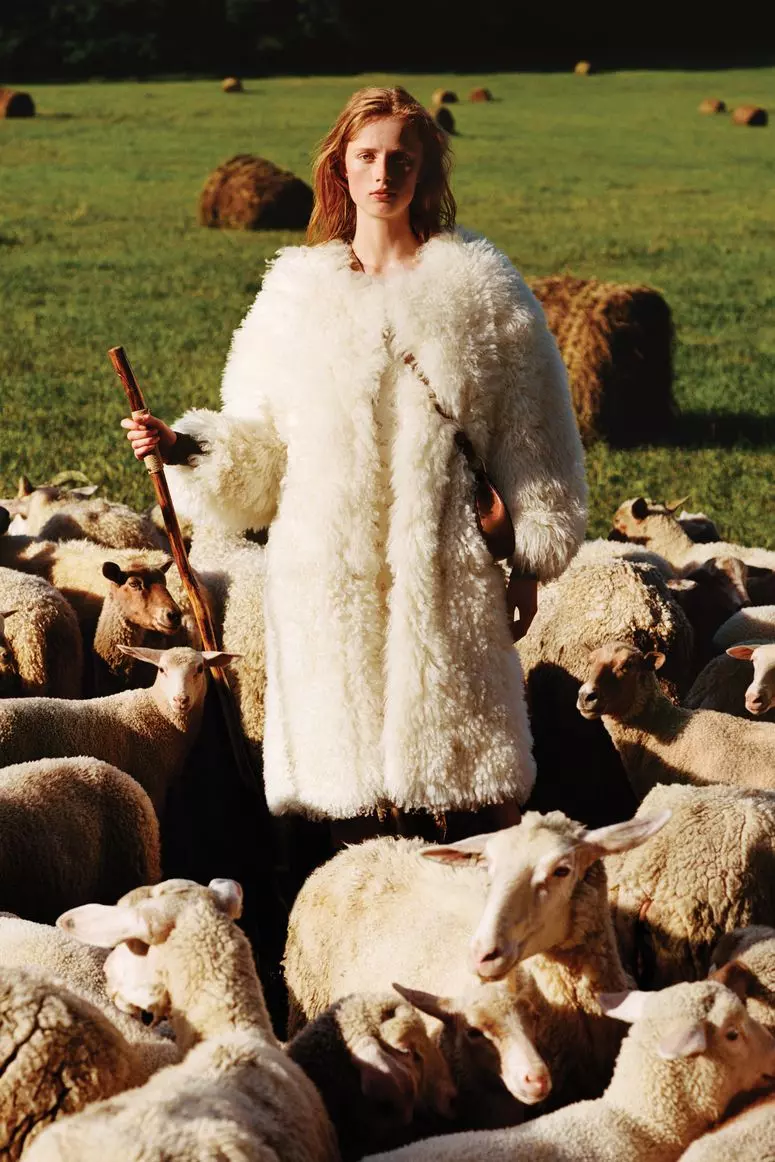
Unraveling the Ethical Threads of Wool in Fashion: A Documentary Insight
ByGloria Vanderbilt
Recent demonstrations by animal rights activists from PETA at prominent fashion events, including those for Cos in New York and H&M in London, have reignited the debate surrounding wool's place in the fashion industry. Chanting slogans such as “Wool is bloody cruel” and “Sheep beaten and bloodied for wool, don’t buy it,” protestors have challenged the perception of wool as a benign and sustainable material. While such activism at fashion weeks is not unprecedented, the call for wool's complete removal from the supply chain has puzzled many, given its historical use as a natural fiber that typically does not necessitate an animal's demise, unlike fur.
The Complex Relationship Between Fashion and Wool: A Deeper Look
In an era where consumers are increasingly seeking out natural, polyester-free alternatives, wool, with its inherent properties of temperature regulation, moisture wicking, and odor resistance, often appears to be an ideal, enduring choice. However, a closer examination reveals ethical challenges in its production, particularly practices like mulesing. To navigate this intricate landscape, a selection of five compelling documentaries offers various perspectives on the fashion industry's engagement with wool. These films invite viewers to explore the journey towards more ethical and sustainable practices, guided by designers and activists committed to change.
Farm to Fashion: A Journey Towards Sustainable Fiber Production
The documentary Farm to Fashion chronicles New York-based designers Donna Karan and Mimi Prober's visit to Isabella Rossellini’s farm on Long Island. Here, they gain insights into sustainable fiber production, tracing wool's path from upstate New York farms to the glamorous runways of Manhattan. Rossellini's farm, home to heritage sheep breeds, produces blankets, ponchos, and apparel from their yarn. The film champions wool as a renewable resource, emphasizing its potential for ethical farming, local economic support, job creation, and biodiversity. While acknowledging wool's environmental footprint, it positions wool as a regenerative alternative to synthetic fabrics derived from fossil fuels, underscoring that true sustainability prioritizes transparency over unattainable perfection.
The Value of British Wool: Tracing the Ethics of Traceability
The Value of British Wool features knitwear designer and researcher Nicci James's year-long exploration into the unique properties of rare, UK-native wool yarns like Shetland, Welsh Mule, and Lincoln Longwool. This short film meticulously documents the entire process, from fleece sourcing to garment creation, featuring farmers, processors, spinning mills, and manufacturers. James highlights the rich cultural heritage of wool, noting, “Everyone I meet has a story to tell me about wool.” For her, ethical and sustainable wool production hinges on supply chain traceability. She articulates, “Each piece I make brings an opportunity to learn about the landscape wool comes from, the skilled hands that transform fiber to yarn and how design brings all these elements together through making.”
Slay: Unveiling the Hidden Costs of Animal Skins in Fashion
From the creators of renowned documentaries Cowspiracy and What the Health, Slay is a global investigation into the transformation of animal skins into fashion items. Filmmaker Rebecca Loviconi, a self-professed fashion enthusiast, travels to factories worldwide—including India, Italy, Brazil, China, the US, France, and Australia—to examine the production of leather, fur, and wool. Loviconi's findings reveal concerning practices: “Animals are exploited for wool in a system that requires mutilation. Even for merino wool, practices such as tail docking and mulesing can be performed without pain relief.” She proposes a shift away from continuous new production, advocating instead for the utilization and upcycling of existing wool to reduce reliance on newly produced animal-derived fibers.
Willow and Claude: Advocating for Plant-Based Alternatives
The short film Willow and Claude, produced by Collective Fashion Justice, tells the story of two lambs rescued by Emma Håkansson in Australia in 2021. The documentary uses their narrative to argue against treating animals as commodities. Håkansson cautions against merely replacing one problem with another, such as swapping wool for synthetic fibers. She champions plant-based, recycled, and other bio-fibers, emphasizing the need for fully traceable supply chains that ensure fair wages for all involved. Accompanying the film was a proof-of-concept knitwear collection made from raw, sustainably grown cotton, spun into high-quality yarn for sweaters and scarves. Håkansson collaborated with plant-based farmers to grow cotton through holistic land management, reducing water usage and fostering biodiversity without harming animals.
Fashion Reimagined: The Quest for Ethical Wool
Fashion Reimagined documents Amy Powney’s journey, raised by activist parents in rural England, as she grapples with the environmental impact of her role in the fashion industry. After winning the BFC/Vogue Designer Fashion Fund in 2017, Powney launched No Frills, a transparent, sustainable sub-label. Filmmaker Becky Hutner's 2022 documentary follows Powney's mission to create a sustainable collection, from the field to the finished garment, with ethical wool sourcing being a central focus. Powney discovered that South American sheep do not suffer from fly strike, thus mulesing is not practiced by wool farmers there. She partnered with wool supplier Pedro Otegui to source soft, cruelty-free wool. Powney advocates for a balanced perspective on wool production, noting that shearing is often necessary regardless, and condemning wool without context could inadvertently promote inferior fabrics like polyester. She stresses the importance of promoting accurate and balanced information.
These documentaries collectively highlight the multifaceted nature of wool production in fashion. They underscore the importance of consumer awareness, industry transparency, and the potential for innovative, ethical approaches. As we move forward, fostering a sustainable fashion ecosystem will require continued dialogue, informed choices, and a commitment to practices that honor both animal welfare and environmental stewardship.
About the author
Gloria Vanderbilt
Fashion designer, artist, and author, known for jeans and writing about style and her extraordinary life.