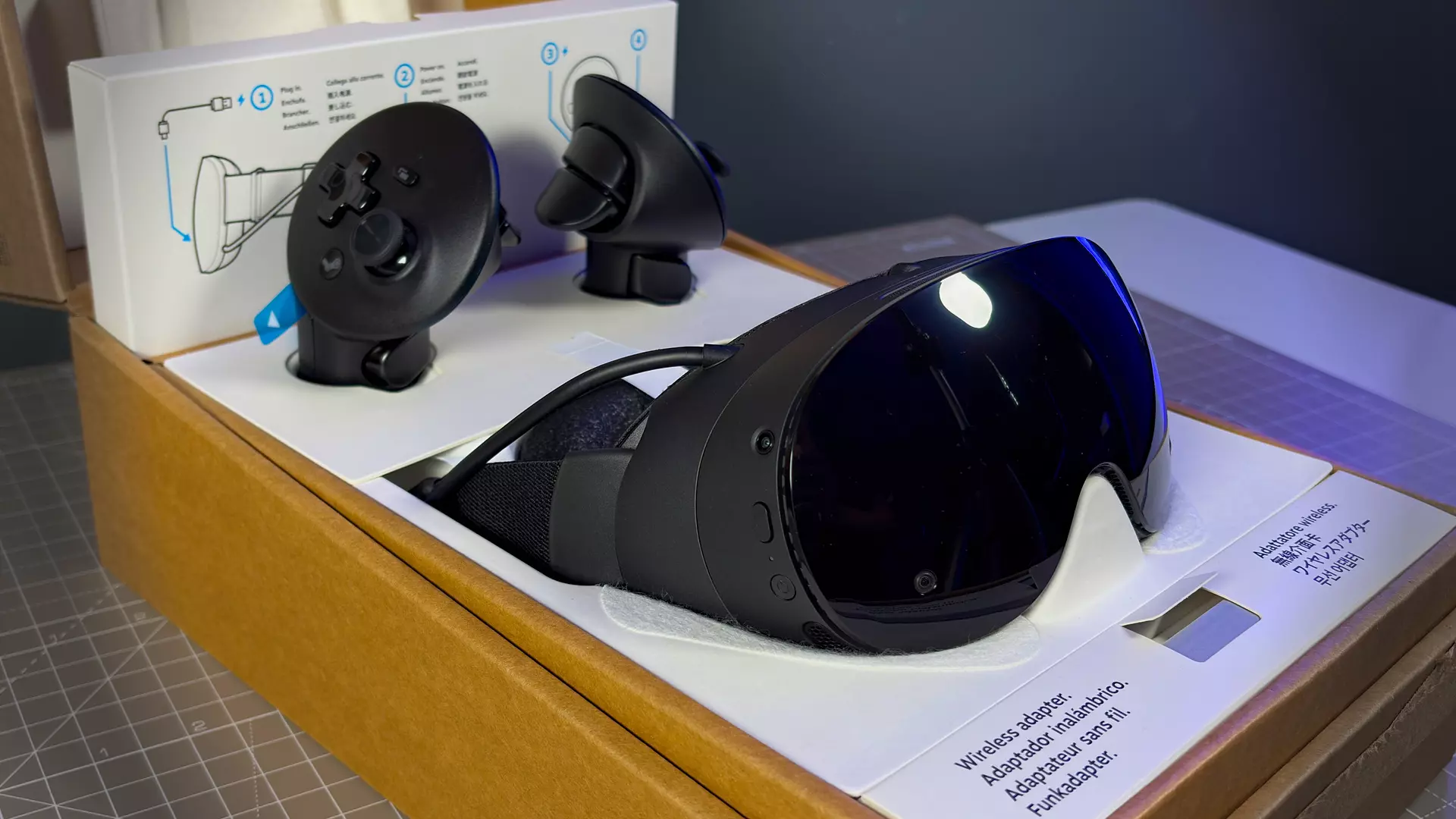
Valve's Steam Frame VR Headset: Price Hike Due to Memory Crisis
ByReiner Knizia
Valve's long-anticipated virtual reality headset, the Steam Frame, has officially launched, much to the excitement of the VR community. However, its debut comes with a higher-than-expected price tag, a direct consequence of the global memory component shortage. Despite the increased cost, Valve maintains that the Steam Frame offers a compelling and high-performance VR experience, emphasizing the importance of delivering new hardware and experiences to consumers even amidst challenging market conditions.
After years of eager anticipation and numerous discussions, the Steam Frame is now available for purchase, with immediate shipments to customers. The pricing structure for the headset, which includes VR controllers, is as follows:
Additionally, an Ergonomic Accessories Kit, comprising hand straps for controllers, a head strap, and an extended light blocker, can be acquired for an extra $49 USD / $69 CAD / €59 EUR / £49 GBP / $89 AUD / 229 PLN.
During an interview with Valve engineers Joy Lyons (hardware) and Jeremy Selan (software) shortly before the launch, the memory crisis was a central topic of discussion. Lyons revealed that Valve initially aimed for a more modest price point, but the volatile nature of the RAM market forced a reevaluation. She explained, "We set out to design this hardware with one particular price in mind, but we've made choices to make sure that we're making a product that is choiceful, that people can purchase, they can upgrade with different features later. But we wanted to make sure we had a base product with really great performance. Then that price target shifted due to the ongoing RAM crisis around the world." Lyons also acknowledged the difficulty in forecasting future component costs, stating, "We don't know what pricing is in the future. We try to monitor these things, but we're certainly very aware of it."
Selan, who previously demonstrated the Steam Frame's features, echoed Lyons' sentiments regarding the price increase. He expressed disappointment that the headset couldn't be launched at its original target price, lamenting, "I wish we could have shipped it at the price that we were at last year." He emphasized that despite the cost adjustments, the Steam Frame remains an exceptional device, offering an incredible user experience. However, the higher price positions the Steam Frame at a disadvantage compared to competitors like the Meta Quest 3, which retails for around $600, even after its own price increase attributed to memory costs.
A key differentiator contributing to the Steam Frame's higher cost is its robust memory configuration, featuring 16 GB of LPDDR5X RAM, double the 8 GB of LPDDR5 found in the Quest 3. Valve engineers defended this decision, highlighting the importance of maintaining a high-performance baseline. Selan elaborated on the trade-offs, stating, "We looked at the Steam Frame pre-launch a few years ago, we said we can access this huge fraction of the same catalog [as the Steam Deck], or we can slice a major component off it and make sure that'll never run, if we do a lower limit. Now, granted, the trade-offs and cost and performance were a little different at that time, but even in hindsight, having a single target where we know what this generation will be capable of running is great, and we're very happy with that."
Moreover, Meta's ability to consistently invest billions into its Reality Labs division, which oversees the Meta Quest line, provides a competitive edge that few companies, including Valve, can match. While Valve is financially sound, Meta's willingness to incur significant losses in pursuit of market dominance allows it to offer more aggressive pricing. Ultimately, consumers face the difficult decision of whether the Steam Frame's superior features justify its substantially higher price point compared to its rivals.
The launch of the Steam Frame marks a significant moment for virtual reality enthusiasts, yet it underscores the ongoing challenges within the technology supply chain. Despite the memory crisis forcing a price adjustment, Valve remains committed to delivering a premium VR experience. The device's advanced specifications and the company's dedication to its platform aim to justify its cost, appealing to users seeking top-tier performance and immersive gameplay.
About the author
Reiner Knizia
Prolific and award-winning board game designer with a PhD in mathematics, known for elegant game mechanics.