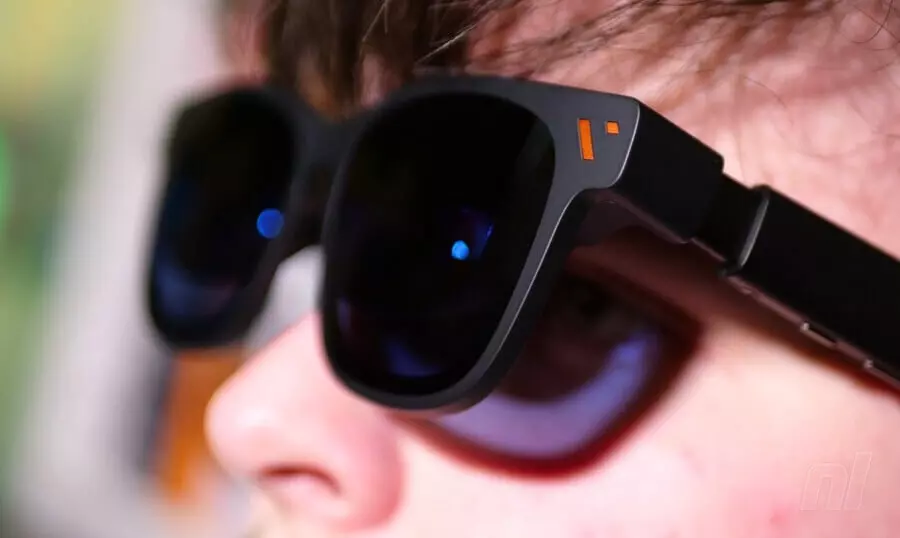
Viture Pro 2 XR Glasses: A Budget-Friendly Large Screen Experience for Gamers
ByMark Rosewater
While the concept of extended reality (XR) glasses once seemed like a passing trend, this technology has matured significantly, carving out a substantial niche in the consumer market. Modern XR eyewear provides a comfortable fit due to their lighter construction, and the internal micro-displays now boast impressive brightness and clarity. This advancement allows them to genuinely deliver a wide-screen viewing experience without the substantial investment typically associated with high-end televisions.
Despite being a more economical choice than a massive display, many advanced XR glasses remain somewhat costly. For instance, the Viture Beast XR model, previously reviewed, retailed for $550, a price that didn't even cover the essential mobile dock needed for console connectivity. Addressing this, Viture has introduced the Pro 2 XR glasses, priced at a more affordable $299. These glasses were tested alongside Viture's redesigned Mobile Dock Mini, a notable improvement over its predecessor.
The Pro 2 glasses, though positioned as an entry-level option, come with remarkable specifications. Viture states they provide a virtual 'screen size' equivalent to 146 inches, a display dimension that would cost considerably more in a physical television. These are Viture's slimmest glasses to date, incorporating 'UltraClarity 3.0' technology for a crisp image that minimizes eye strain during prolonged use. The dual Sony Micro-OLED panels offer a maximum brightness of 1,600 nits, a 50-degree field of view, and a 120Hz refresh rate. A particularly user-friendly feature is the independent 0 to -5.0D diopter adjustment dials on each screen, allowing for personalized vision correction.
Though the Viture Pro 2 XR glasses don't replicate the aesthetic of standard eyewear due to their outward protrusion, their lightweight design ensures wearer comfort. A USB-C cable extends from the right arm for connecting to a video source, while a rocker switch and a secondary button on the left arm control volume and brightness. The integrated speakers, located on the upper side of each arm, offer satisfactory audio quality, though dedicated headphones would provide a more robust sound. The visual performance is consistently excellent; even at 50% brightness, the image quality is superb, despite the fixed screen position. This makes the glasses a compelling option, particularly given their price point, with an optional smartphone app unlocking additional functionalities like 3D image conversion. Importantly, the glasses integrate seamlessly with devices like the Switch 2.
The Mobile Dock Mini marks a significant upgrade from the original Mobile Dock, which was bulkier and required a clip for attachment to the Switch 2. The new mini version, with its 10,000 mAh internal battery, can charge your console, power the glasses, and enable the Switch 2’s docked mode. However, it forgoes the HDMI input of the earlier model, limiting its compatibility with HDMI-enabled devices. Its compact size makes it more portable, although connecting it to a console now involves a magnetic sticker rather than a clip. While some users might prefer the clip, the smaller form factor allows the dock to be placed conveniently next to the console. Furthermore, the Mobile Dock Mini features a removable USB-C dongle that can be directly inserted into the Switch 2’s USB-C port, similar to the Genki Bluetooth adapter for the original Switch. When connected to a power source, this eliminates the need for the larger dock, albeit tethering the user to a wall outlet. For indoor use, this tethering presents a minor inconvenience.
The Viture Pro 2 XR glasses represent an excellent path to experiencing large-screen content without the expense of a physical television. Even with their 'entry-level' classification, the glasses alone cost $300, increasing to $400 when bundled with the Mobile Dock Mini. Whether they are a worthwhile investment largely depends on individual circumstances. For those with limited access to a main television, such as in busy households, these glasses provide an invaluable means to enjoy immersive entertainment. They transform personal viewing into a grand spectacle, projecting a virtual screen directly before one's eyes, ensuring that no one misses out on their favorite content, regardless of their living situation. This innovation fosters inclusivity and personal freedom in media consumption.
About the author
Mark Rosewater
Head designer for "Magic: The Gathering" and author of long-running insights on game design.