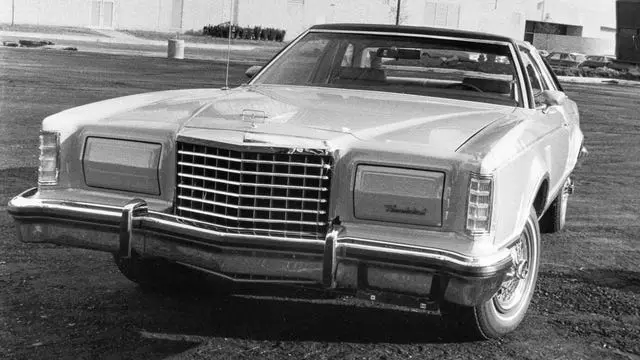
The 1977 Ford Thunderbird: A Shift Towards Accessibility and Performance
ByHenry Ford
The 1977 Ford Thunderbird represented a pivotal change in the model's history, moving from an exclusive luxury car to a more widely available, "popularly priced" vehicle. This strategic repositioning was achieved through a substantial price cut of $2,727, a bold move designed to attract a larger segment of the American car-buying public. The redesign also focused on making the Thunderbird more agile and efficient, shedding weight and size while maintaining its distinctive aesthetic.
This reorientation meant a departure from the Thunderbird's past as Ford's ultimate status symbol. Since its introduction in 1954 as a sporty two-seater and its subsequent evolution into a four-passenger coupe, the Thunderbird name had always been synonymous with Ford's pinnacle of design and engineering. However, market demands led Ford to adapt, transforming the Thunderbird into a competitive offering in the popular price segment, aiming to reclaim market share from rivals like the Chevrolet Monte Carlo.
Evolution of an Icon: Design and Efficiency
The 1977 Thunderbird underwent a significant transformation, shedding its former opulence for a more streamlined and efficient design. This redesign resulted in a vehicle that was considerably lighter and more compact than its predecessor, with a reduced wheelbase and overall length. The shift in dimensions contributed to a noticeable improvement in the car's agility and responsiveness on the road. The exterior styling was also updated, featuring a taut, linear shape and distinctive elements like the broad B-pillar, which echoed classic Ford designs while offering enhanced rear visibility. This blend of classic inspiration and modern efficiency allowed the Thunderbird to redefine its identity while retaining its iconic status.
The aesthetic changes were complemented by a focus on practicality and performance. The thinner roof pillars and narrower front pillars improved the driver's field of vision, marrying fashion with function in a way that garnered praise. Under the hood, the Thunderbird offered a range of engine options, catering to diverse driving preferences and regional regulations, all paired with automatic transmissions for ease of use. The standard "stabul" suspension, enhanced by optional handling packages, provided a disciplined and composed ride, allowing for confident navigation through various road conditions. This thoughtful integration of design and engineering ensured the 1977 Thunderbird delivered a more engaging and refined driving experience, making it a compelling choice in its new market segment.
Interior Refinement and Enhanced Driving Dynamics
The interior of the 1977 Thunderbird reflected a new philosophy, moving away from excessive padding and opulent finishes towards a more functional and spacious cabin. The design prioritized efficiency, ensuring ample room for up to six adults without compromising on comfort. Thoughtful touches, such as molded door panels that minimized intrusion into shoulder space and recessed areas in the rear seat, maximized interior volume. The flat roofline extending rearward ensured generous headroom for all passengers, including taller individuals, while the reconfigured instrument panel provided extra knee room for front occupants, making the cabin feel more open and accommodating.
Beyond its spaciousness, the interior also featured familiar Ford design cues, like woodgrain trim and a horizontal-bar steering wheel, subtly blending tradition with modernity. The dashboard was equipped with a clear array of four round dials, including a speedometer and a day-date clock, providing essential information to the driver. The driving dynamics were markedly improved over the previous model, offering a more active and agile feel. The "stabul" suspension, featuring coil springs, trailing links, and front and rear anti-roll bars, provided a controlled and responsive ride. The optional handling suspension further enhanced this, delivering tighter body roll control and a sense of discipline that allowed the Thunderbird to navigate turns with precision, transforming it into a vehicle that was not just for relaxed touring but also for spirited driving.
About the author
Henry Ford
Industrialist and founder of Ford Motor Company, whose autobiography outlines the creation of the automotive era.