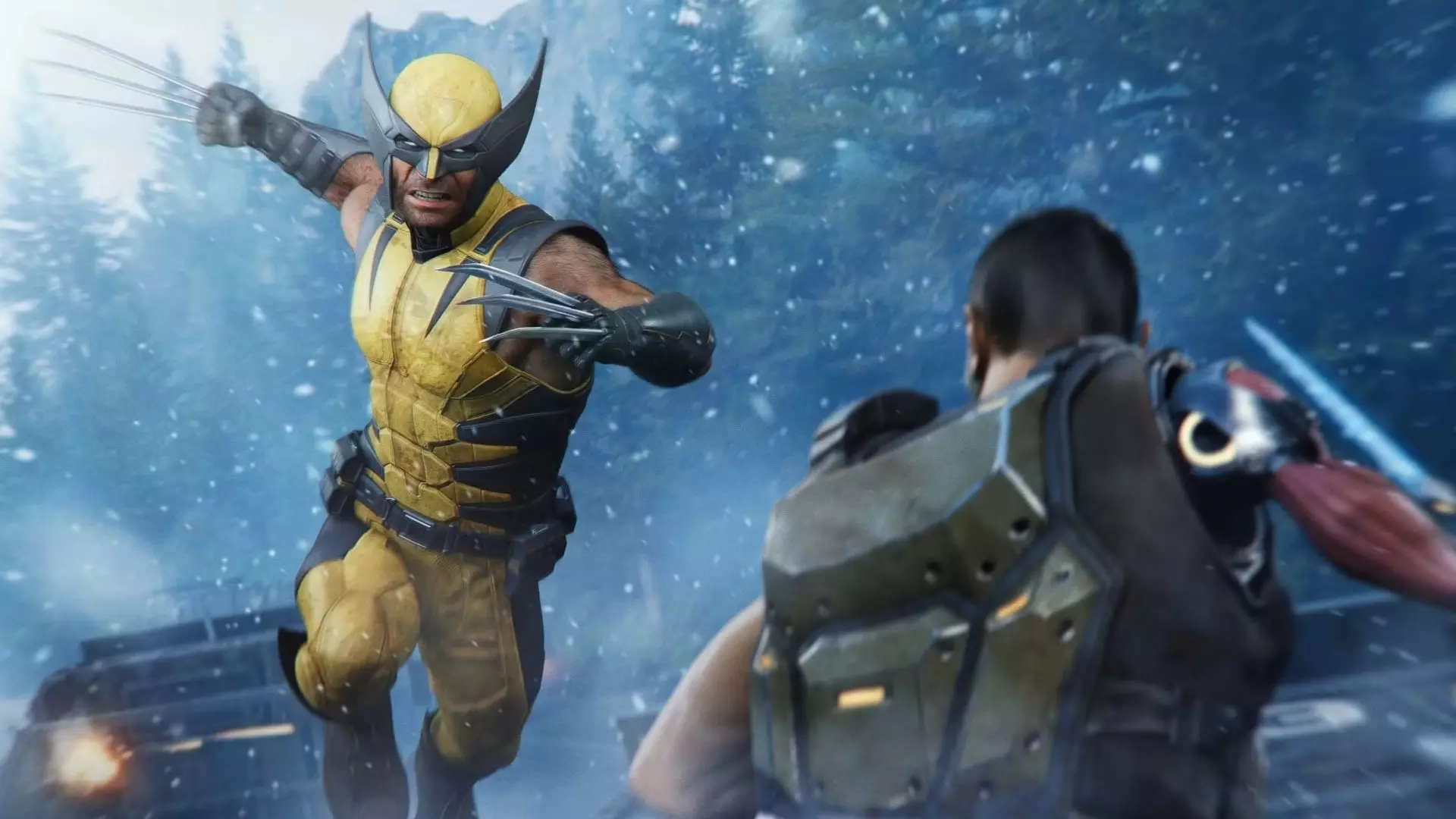
In a surprising turn of events, 'Marvel's Wolverine' has defied its initially derided online reputation and achieved remarkable commercial success. Despite becoming a subject of widespread ridicule on social media for its controversial 'scent trail' UI and perceived uninspired chase sequences, the game has proven to be a financial triumph. Data released by industry analytics firm Circana confirms that 'Marvel's Wolverine' claimed the top spot as the best-selling game in the United States for September, encompassing both physical and digital sales. This impressive performance is particularly noteworthy for a console exclusive that had already garnered a somewhat infamous public image.
The month of September was exceptionally competitive for game releases, with eight of the top ten bestsellers launching within that period. Prominent sports titles maintained their usual strong performance, with 'NBA 2K27' securing second place, 'EA Sports FC 27' ranking third, and 'Madden NFL 27' at tenth. Other notable entries included the console exclusive 'Fire Emblem: Fortune’s Weave' at fourth, followed by 'The Blood of Dawnwalker,' 'Wardogs,' 'Onimusha: Way of the Sword,' 'Halloween: The Game,' and 'Ace Combat 8.' Beyond U.S. borders, 'Wolverine' also demonstrated strong performance in Europe, coming in second only to 'EA Sports FC 27' in the PlayStation Store figures. Analysis from Ampere Analysis further highlights the game's robust physical sales, with approximately 35% of its total units sold being disc-based. This trend presents a direct challenge to Sony's current strategy, which aims to phase out disc production for PlayStation games by 2028, suggesting a continued consumer demand for physical media. Overall, 'Wolverine' is estimated to have sold around 2.35 million copies in September alone.
'Marvel's Wolverine' experienced significant backlash primarily due to several converging factors. Following years of anticipation, the game received moderate reviews, with critics frequently pointing out its repetitive nature, shallow gameplay mechanics, and underdeveloped narrative. While it wasn't universally condemned and some praised its visual spectacle, it failed to achieve the high acclaim typically associated with Sony's flagship first-party titles. Additionally, the game inadvertently became entangled in the broader controversy surrounding Sony's decision to discontinue support for physical discs. Its promotional cycle coincided with Sony's unpopular announcement, leading to a wave of discontent from physical media advocates who expressed their dissatisfaction across various PlayStation-related content, including 'Wolverine' trailers. Perhaps the most significant reason for its public drubbing was its susceptibility to becoming viral, trend-driven content. The game inadvertently showcased several design elements that have become increasingly unpopular among players, such as overly explicit navigation cues like scent trails and an excessive emphasis on cinematic presentation at the expense of engaging gameplay.
The commercial success of 'Marvel's Wolverine' underscores a compelling narrative about consumer behavior in the gaming industry: initial critical and social media reception does not always dictate market performance. It highlights the power of brand recognition and the enduring appeal of established franchises, even when specific game design choices draw criticism. Furthermore, the strong sales of physical copies serve as a testament to the continued value and preference many gamers hold for tangible game ownership. This unexpected triumph encourages a broader reflection on the evolving dynamics between player expectations, critical discourse, and the ultimate measure of a game's impact in the marketplace, reminding us that success can manifest in various forms, often defying conventional wisdom.
About the author
Jane McGonigal
Game designer and author who writes about using games to improve real life and solve problems.