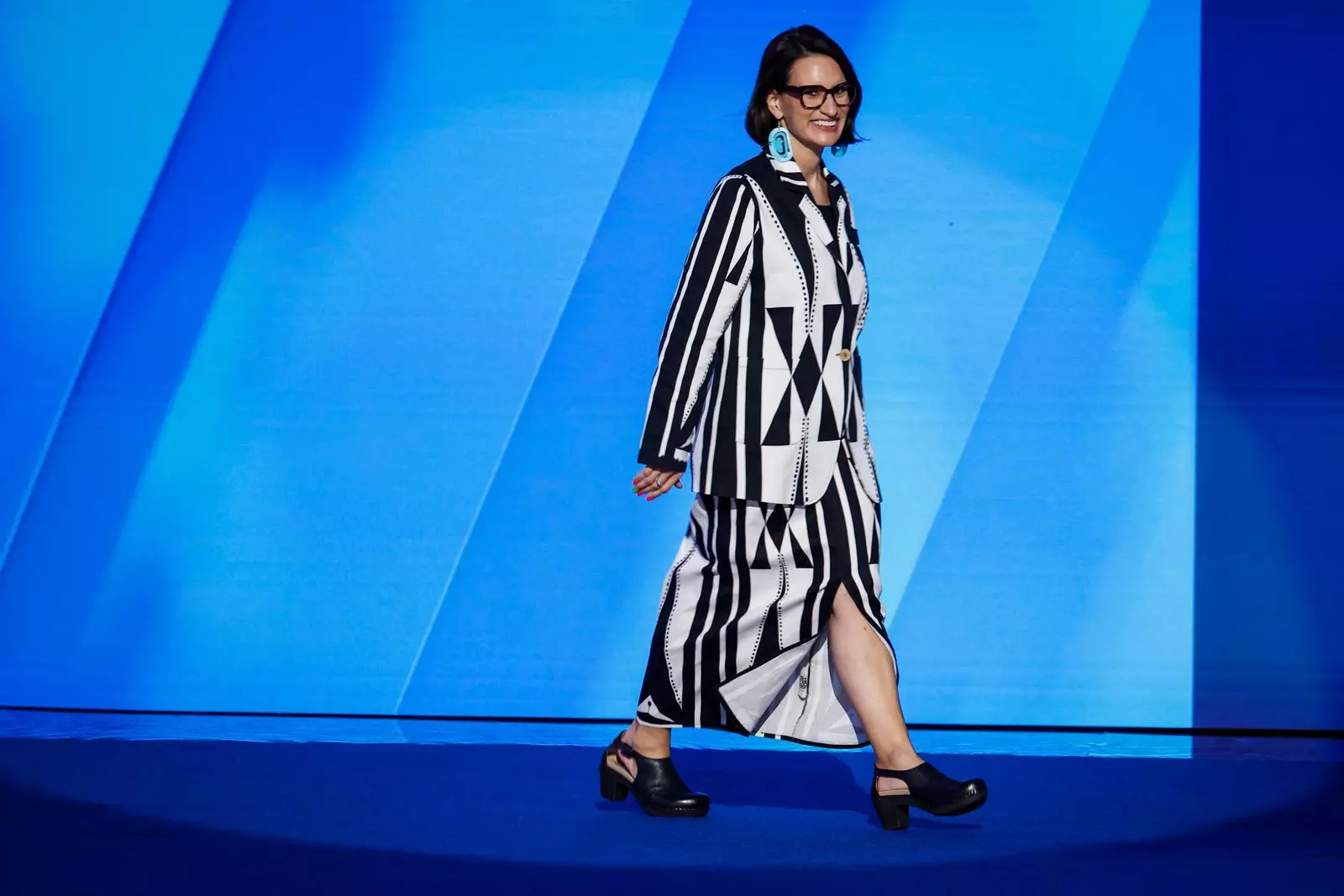
Peggy Flanagan's Fashion Choices: A Platform for Indigenous Design on the Campaign Trail
ByVivienne Westwood
Peggy Flanagan, Minnesota's current Lieutenant Governor and a member of the White Earth Band of Ojibwe, is making waves in the upcoming midterm elections. She is vying for a U.S. Senate seat, potentially becoming the first Indigenous woman to achieve this milestone. Beyond her policy platforms, which include affordable healthcare, climate action, reproductive rights, and protecting Indigenous communities, Flanagan has adopted a distinctive approach to her campaign wardrobe. She deliberately chooses to wear pieces by Indigenous designers, turning her public appearances into a showcase for Native artistry and culture.
Flanagan's fashion choices are a powerful statement. For instance, at the 2024 Democratic National Convention, she wore a striking Parfleche blazer and skirt by Jamie Okuma, a renowned Indigenous designer, paired with earrings from Copper Canoe Woman. This practice continued, with Flanagan consistently featuring Indigenous designs—from traditional ribbon skirts and moccasins to contemporary pieces like a red coat from Sky-Eagle Collection and beaded 'ICE OUT' earrings. Her commitment has even led to an Instagram account dedicated to her impactful earring collection, highlighting how her attire serves to introduce her culture's unique customs to a wider audience and celebrate the nation's finest Indigenous designers.
Flanagan is not alone in this thoughtful integration of cultural expression and politics; other Indigenous leaders, such as Secretary of the Interior Deb Haaland and Kansas Representative Sharice Davids, have also utilized their attire to reflect their heritage. As Flanagan approaches this potentially historic election, her vibrant and culturally rich ensembles symbolize more than just personal style. They represent a significant moment for Indigenous representation and a powerful celebration of Native identity and craftsmanship on the national stage.
Flanagan's journey demonstrates that personal expression, especially through cultural elements like fashion, can be a potent tool for advocacy and education. By deliberately showcasing Indigenous designers, she not only amplifies their work but also fosters greater understanding and appreciation of Native cultures. Her approach is a testament to how authenticity and cultural pride can enrich political discourse and inspire positive change, reminding us that every aspect of our public persona can convey a meaningful message and contribute to a more inclusive society.
About the author
Vivienne Westwood
Punk fashion icon and designer known for her activism and rebellious style writings.