The Unplanned Conclusion: Charles Schulz's Farewell to Peanuts
ByJane McGonigal
The beloved comic strip 'Peanuts', a cultural phenomenon created by Charles Schulz, concluded its nearly 50-year run in February 2000 under unexpected and poignant circumstances. Schulz's deteriorating health, including a diagnosis of colon cancer and significant vision impairment, compelled him to announce his retirement in December 1999. This abrupt decision meant that the iconic strip, which had never seen Schulz take a sabbatical or employ assistants throughout its 17,897 installments, came to an end without the grand, pre-planned finale many fans had envisioned. Instead, the final weeks mirrored the strip's everyday life, offering no definitive resolutions to its famous running gags, leaving a bittersweet sense of an era ending too soon.
For decades, 'Peanuts' captivated audiences with its unique blend of humor, philosophy, and relatable childhood struggles. Fans often speculated about how Schulz would eventually bring closure to the enduring questions: Would Charlie Brown finally kick the football? Would the Great Pumpkin ever appear? Would the mysterious red-headed girl make an appearance, or would Charlie Brown's baseball team finally win a game? However, Schulz's urgent need to prioritize his health meant these long-standing narrative threads remained untied. The comic simply ceased publication, leaving the characters in their familiar states of perpetual hope and occasional disappointment.
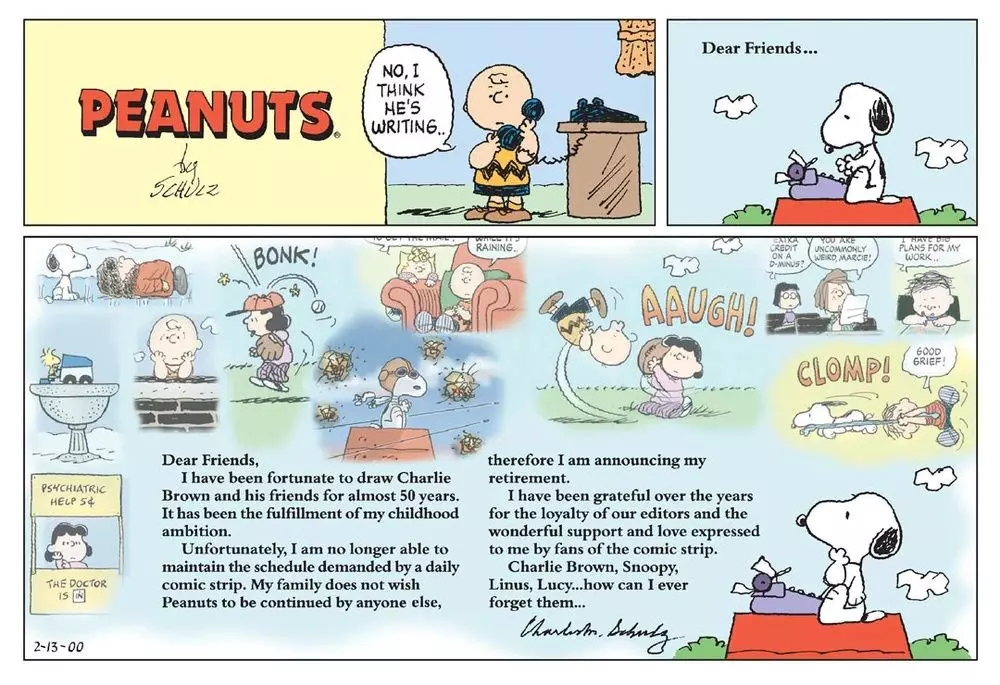
The concluding strip, published on February 13, 2000, the day after Schulz's passing, primarily featured a heartfelt farewell message from the creator himself. While Charlie Brown and Snoopy made brief appearances in the introductory panels, the preceding week's strip, dated February 6, 2000, served as the last full installment featuring Charlie Brown in a central role. This particular strip, a Valentine's Day themed narrative, perfectly encapsulated the essence of Charlie Brown's character: his persistent optimism despite consistent romantic setbacks.
In this final substantial strip, Charlie Brown is seen meticulously cleaning his mailbox, expressing a hopeful belief to Sally that a clean mailbox is essential for receiving a love letter. His subsequent wisdom about only receiving rejection letters during rainy weather, despite his own lack of romantic success, highlights a core comedic element of 'Peanuts': children creating their own convoluted rules for the world. This moment, imbued with an added layer of pathos due to the impending end, portrays Charlie Brown as he always was – striving for positivity amidst his inherent melancholy, a characteristic that resonated deeply with generations of readers.
The unplanned conclusion of 'Peanuts' ultimately solidified its legacy as a reflection of life's ongoing journey rather than a story with a neat ending. Schulz's final regret, expressed in a televised interview, about Charlie Brown never getting to kick the football, underscores the enduring empathy he held for his characters. This unfulfilled wish, coupled with the strip's sudden cessation, left a lasting impression, emphasizing that sometimes, life, much like the 'Peanuts' universe, simply continues without a grand resolution, leaving us with cherished memories and unresolved possibilities.
About the author
Jane McGonigal
Game designer and author who writes about using games to improve real life and solve problems.